Pages

Thursday, February 14, 2013


Mason jar chic: Sweet (and tasty) DIY Valentine's Day ideas


Rebecca Davis / TODAY

Make it a sweet Valentine's Day! Chelsa Skees shares a cute (and tasty) mason jar gift.

By Chelsa Skees, TODAY contributor

Valentine's Day is the perfect excuse to make some sweet, handmade gifts for your loved ones. For this round of DIY, I decided to go with a jar theme, for really no other reason than I just adore Mason jars and they are great to stuff full of sweets and flowers.

I don't think of Valentine's Day as strictly a couples holiday – these gifts are for everyone: parents, friends, or significant others!

First up, let's show our moms how much we love them by giving them an adorable cookie mix. These are great to give to anyone you know who loves to bake (or just loves to eat yummy treats!). Take your favorite recipe and add each ingredient so each layer is prevalent. Keep in mind that these jars look better the more textured layers you can add. I made mine festive by adding peanut butter M&M's in Valentine's day colors.

Ingredients (listed in the order they should go into the jar):
1 1/3 cup all purpose flour
1 teaspoon baking powder
1 teaspoon baking soda
1/4 teaspoon salt
1 cup cooking oats
1/4 cup peanut butter M&Ms (or plain chocolate, preferably in their Valentine's colors)
3/4 cup semi-sweet chocolate chips
1/2 cup brown sugar, packed
1/2 cup white sugar
1/3 – 1/2 cup chopped pecans

Directions:
After you add your cookie mix into the jar, decorate the outside with ribbon and use a small note card to write a handwritten message. Make sure it includes the following additional instructions: Combine all contents of the jar in a bowl with one beaten egg, 1/2 cup of melted butter, 1 teaspoon of vanilla. Mix all ingredients well, roll cookie dough into 1 1/2 inch balls on a cookie sheet, and bake for 10 minutes at 350 degrees.

Want a rundown of how it's done? Here's a super-fast version:


Sweet cocoa
Have a loved one living in a cold climate? Give some hot cocoa for two! To make it extra special, throw in some heart-shaped marshmallows. This gift can be as simple as putting your favorite cocoa in the jar with some store-bought marshmallows – or you can create your own mix if you’re feeling ambitious. I used an entire 16 oz. can of my favorite mix by Ghirardelli Chocolate Company.

The directions are simple: Just pour the mix into the jar and top with marshmallows! Decorate it however you'd like and don't forget to write sweet nothings on the card. It’s perfect for aprés-ski!


Rebecca Davis / TODAY


Rebecca Davis / TODAY

Flower power
Finally, I didn't want to leave out my girlfriends, so I made them vases complete with their favorite flowers. Since everyone has different taste in home décor, I customized each vase to fit their style.

You can create two different looks simply by using some spray paint and sand paper. All you'll need is 16 oz. or 24 oz. Mason jars. The first look – chic and modern – is a simple matte white vase. This is obviously really simple but does require some patience since you will have to spray a few different coats and rotate the jar several times to secure an even application. I set my jar on an old newspaper and started spraying (following the directions on the back of the paint can). Once dry, which typically takes about 10 minutes, rotate and repeat. You know you're done when the jar is evenly covered in its new white outfit.


Rebecca Davis / TODAY

The second look you can create has a very rustic feel to it and looks gorgeous with fresh flowers. Use the same method I explained above, but first spray paint your jar with a gold color. Once dry, add the matte white paint. After about 10 minutes – or when the paint is completely dry – use a small piece of sand paper and scrub away some of the white, letting the words "Mason Ball" as well as that rustic gold shine through. Before giving the jars away, make sure you clean their insides with warm water and soap to wash away any remnants of paint chemicals, so the flowers’ water doesn't get contaminated.

Another great gift for a friend is to repurpose old vases you may have laying around the house – add special words or messages using a hot glue gun! On a clean vase, write your message and once dry, spray over entire jar using the same method above. This is a super cute customized vase that will surely put a smile on anyone's face.


Rebecca Davis / TODAY

Enjoy your DIY project – and happy Valentine's Day!

Immigrant Son

1500_wrubio_0218
Peter Hapak for TIME


Oriales García Rubio knows how it feels to want more. When she was a girl in central Cuba in the 1930s, her family of nine lived in a one-room house with a dirt floor. Her dolls were Coke bottles dressed in rags. She dreamed of becoming an actress. Instead she married a security guard, moved with him to the U.S. and found work as a hotel maid. Her husband got a job as a bartender while starting a series of failed businesses—a vegetable stand, a dry cleaner, a grocery. They never had much. But their house had a real floor. Their daughters had real dolls. They sent all four of their children to college to chase their own dreams.

That’s why on the morning of Dec. 21, she called her youngest son, Marco Antonio Rubio, the 41-year-old Senator from Florida and great Hispanic hope of the Republican Party—or, as she calls him, Tony. She got his voice mail. “Tony, some loving advice from the person who cares for you most in the world,” she said in Spanish. “Don’t mess with the immigrants, my son. Please, don’t mess with them.” She reminded him that undocumented Americans—los pobrecitos, she called them, the poor things—work hard and get treated horribly. “They’re human beings just like us, and they came for the same reasons we came. To work. To improve their lives. So please, don’t mess with them.”

(PHOTOS: Marco Rubio, Republican Savior)

Rubio comes from a family of immigrants and married into another family of immigrants and lives in a neighborhood of immigrants, West Miami, the bilingual bedroom community where he came of age and began his dazzling ascent from city commissioner to state house speaker to U.S. Senator. Now, just two years after he arrived in Washington, the charismatic conservative often hailed as the Tea Party’s answer to Barack Obama has emerged as the most influential voice in the national debate over immigration reform. He’s also the key player in his party’s efforts to make up to Hispanic voters after a disastrous 2012 campaign featuring Republican candidates who proposed electric fences and alligators along the southern border, as well as Mitt Romney’s suggestion of “self-deportation” for the nation’s 11 million undocumented immigrants. GOP leaders know they have a demographic problem. They hope Rubio can help provide the solution, which is why they’ve chosen him to deliver the response to Obama’s State of the Union address on Feb. 12—in English and Spanish.

But while Rubio is a child of immigrants, he’s also a child of the conservative movement, an ambitious ideologue and former political operative who speaks partisan Republican with the fluency of a native. (Romney, by contrast, spoke it as a second language.) Like Paul Ryan, a potential 2016 rival, he’s part of a new generation of lean and hungry conservatives who grew up in the antigovernment Reagan era and entered politics after the scorched-earth Gingrich revolution. Bipartisan compromise is not usually his thing.

So he’s navigating a borderland of his own. He has endorsed a path to citizenship that he once derided as “code for amnesty,” risking a backlash from many loyal supporters who see los pobrecitos as freeloaders. But he has also pushed to make that path more arduous, demanding much tougher enforcement first, insisting he won’t get into a who-can-be-nicest bidding war with Obama and pledging to walk away from reform if the final legislation doesn’t reflect conservative principles. In an hour-long Feb. 1 interview with TIME, he emphasized that the undocumented have no right to stay in the U.S., vowed to oppose any bill that rewards them for breaking the law and defended the motives of hard-line “shamnesty” critics who say illegal immigrants are taking taxpayers for a ride. “Someone’s violated the law, and they’re receiving taxpayer benefits? That’s a legitimate reason to be upset,” Rubio says.

(MORE: Marco Rubio’s Agile Courtship of Conservative Media)

It’s a thin, hard line to walk: between the Republican establishment and the base, between compassion and the rule of law, between family and politics. And Rubio is walking it on an issue no politician has cracked in nearly two decades while testing the support of the grassroots Tea Party conservatives he will need if he seeks the White House in 2016. So far, though, he seems to be succeeding. After helping to craft bipartisan reforms in the Senate, he has served as their chief spokesman on right-wing radio and Fox News, getting remarkably sympathetic hearings from Rush Limbaugh, Sean Hannity and other talkers whose antiamnesty crusades helped kill similar efforts in the George W. Bush era. Almost all of them have praised his courage—Limbaugh called his work “admirable,” like a Pope granting absolution—and the backlash has yet to materialize. “I don’t know anyone else who could have broken through the conservative sound barrier on immigration,” says American Conservative Union chairman Al Cardenas, a Miami lawyer who gave Rubio his first job as an attorney. “Marco can do left brain, so you get the logic, and he can do right brain, so you feel it in your heart and soul.”

This is Rubio’s first leadership audition, his chance to show Republicans that he’s more than a compelling speaker with boyish good looks, that he’s not just geographically, demographically and ideologically correct. Immigration, he says, is tricky. Though he has evolved on the issue—flip-flopped, if you prefer—he says he’s still not sure he’s got it exactly right. The word he uses most is balance. That was his first thought after he played that voice mail from his mother on his iPhone.

“I have to balance that humanity with reality,” he says. “We have immigration laws. They have to be followed. But yeah, she reminded me that there’s a human element to this as well. As a policymaker, you have to strike a balance.” The result will shape the future of the nation and the dreams of millions of immigrants, not to mention the fate of the GOP and the ambitions of Marco Rubio.

“It’s Complicated”
In his autobiography, An American Son, Rubio says his closest boyhood friend was his cigar-smoking, Fidel Castro–hating grandfather, Pedro Víctor García, a proud Cuban exile who taught him to believe in Reagan, American exceptionalism and himself. Hobbled by childhood polio, more book-smart than business-savvy, Papa never achieved much material success. But he spent hours with his grandson reading Spanish-language newspapers, fulminating about communism and pushing the future Senator to expand his horizons beyond football. “He would scold me for performing poorly in school, but he never let me believe I was incapable of being successful,” Rubio wrote. “His dreams for us were his legacy.”

MORE: Can Marco Rubio Win More Latinos Over to the GOP?

In another book, The Rise of Marco Rubio, the journalist Manuel Roig-Franzia reveals that Papa was also, for a time, an undocumented immigrant. After fleeing Cuba in 1962, he was detained at the Miami airport and later ordered deported. But he was never sent home, and eventually he qualified for residency under the Cuban Adjustment Act of 1966, which still ensures Cuban refugees special treatment in the U.S. Rubio says he never knew his grandfather had lived in the U.S. illegally. But he told TIME that Papa’s situation illustrated the moral quandaries surrounding immigration, which he wrestles with today.

“He didn’t have a legal right to be here, but America wasn’t going to deport an elderly man to a communist dictatorship,” Rubio says. “It equates to these kids who were brought here when they were 5 or 6 and have no memory of the country where they were born. America is a compassionate country that says, ‘Let’s help these folks.’ But you have to do it in a way that doesn’t encourage people to bring their kids in the future, so they can get the same benefit. It’s complicated.”

Rubio’s journey on the issue has been complicated too. As a state legislator from the overwhelmingly Hispanic community of West Miami, he supported legislation that would allow undocumented students to qualify for in-state tuition. After being selected as house speaker in 2005, he scuttled several Republican efforts to crack down on undocumented immigrants. The obscure book he published laying out his agenda, 100 Innovative Ideas for Florida’s Future, included three ideas for preventing identity theft and zero about immigration.

(MORE: Exclusive Interview: Marco Rubio Challenges His Own Party on Latino Outreach)

But when he announced his underdog campaign for the Senate in 2010, Rubio became a hard-liner. He attacked then governor Charlie Crist’s support for reform as Obama-friendly liberal amnesty and opposed the Dream Act, which would have given legal status to those sympathetic immigrants brought here as kids. He started out 30 points behind, with the GOP establishment lined up behind the moderate Crist. While immigration wasn’t the big issue in the primary—Crist had embraced the Obama stimulus and even literally embraced Obama at a stimulus rally—it helped convince the party’s base of older, exurban Tea Partyers that the hip-hop-loving Cuban American was one of them. Crist was forced to quit the party to run as an independent. Rubio still buried him in the GOP midterm landslide and captured more than half the Hispanic vote.

In 2012, Rubio edged back toward compassion, proposing a scaled-back Dream Act. But before he could introduce a bill, the Obama Administration stole his thunder by unilaterally granting temporary legal status to the so-called Dreamers. That helped revive enthusiasm for Obama among Hispanics annoyed by the Administration’s record number of deportations. Romney ended up with a meager 27% of the Hispanic vote; had he matched Bush’s 40% share, he might be President today. His thrashing persuaded many Republican elites that as long as they’re perceived as unsympathetic obstacles to fixing a dysfunctional immigration system, the fastest-growing sector of the electorate won’t listen to anything they say.

Rubio is careful not to oversell immigration reform’s potential to revive the GOP brand: “If anyone is under the illusion that suddenly our percentage of Hispanic voters will double, let me dissuade them of that right now.” But he says many Hispanic Americans are forming their political identity in an era of Big Government and won’t even consider Republican arguments against it. “They’ve bought into the lie the left is putting out there that because we want to enforce immigration laws, we’re not welcoming,” he says. “It’s not true. It’s not fair. But it is what it is.” It’s no accident that Cubans, who enjoy more lenient rules than other immigrants, are more receptive to the GOP—or that non-Cuban Hispanics don’t always consider a Cuban-American politician one of them.

(MORE: Will Immigration Reform Work This Time?)

Now he wants to reform the system for all immigrants, and his impeccably nuanced positions have become the core of the Senate plan. He agrees that there is no way to round up and deport 11 million people living in the shadows, but he worries that excessive generosity could end up attracting 11 million more. So he backs a path to citizenship—the current situation, he says, amounts to “de facto amnesty”—but only if the borders are secure and an employment-verification system is in place first, and then only if it isn’t quicker or easier than the path for applicants who play by the rules. And while he is willing to grant probationary legal status to undocumented immigrants who register and pay fines, he insists they go to the back of the line for green cards and refuses to allow them to collect food stamps or other federal benefits.

Obama has announced similar principles, but Rubio has still blasted him for soft-pedaling the need to step up enforcement, among other issues. Some of this is Beltway theater; reform could become toxic for Republicans if it’s perceived as Obama-friendly. But there also will be very real differences over details involving guest farmworkers, high-skilled immigrants, same-sex couples and the path to citizenship itself. It’s a lot easier to agree that wait times should be reasonable or that the border should be secure than to draft legislation determining what those things mean. This shrewd political operator will have to decide how far he’s willing to bend to get a deal done with Obama or whether he’s content just to get credit for trying.

How It Is
Rubio still teaches a class at Florida International University, and one recent morning he was telling his students—almost all Hispanic immigrants or children of immigrants—how politics really works. His topic was the Florida House of Representatives, and he didn’t need notes to explain why the legislative body he once led is so partisan and polarized. “If you know the only way to lose your seat is to get out-conservatived in a primary, you’ll never let anyone get to your right,” Rubio said. He’s clearly a political animal. “I’m not telling you this is how it should be,” he said with a grin. “But it’s how it is. This isn’t a good-government class. This is a politics class.”

MORE: Does Marco Rubio Want To Create Second-Class Citizens?

Rubio’s detractors, and even some admirers, suggest that his career so far has been less about good government than politics and self-promotion. His autobiography recounts virtually no substantive achievements beyond a hometown tree-planting project. In the class, he devoted much of his time to recounting the machinations that persuaded his colleagues to elect him speaker: “You raise money for them. You befriend them. You make sure your kids are friends with their kids. And then you cut the best deal you can.” He didn’t mention that the deal he reportedly cut to secure North Florida support for his candidacy revised funding formulas at the expense of his South Florida constituents.

“Marco Rubio’s going to do whatever’s good for Marco Rubio,” says former Hialeah mayor Raul Martinez, a Democratic rival in Florida’s rough-and-tumble exile politics.

Given his previous wobbles on immigration, there’s a broad consensus that political calculations will help drive Rubio’s position on reform but no consensus about where. He has continued to toe the Tea Party line on everything else—opposing the fiscal-cliff deal, refusing to raise the debt ceiling, describing Obamacare as economic suicide—so perhaps immigration gives him a chance to prove he can work across the aisle, get something big done and help save his party. But he could also cement his status as a conservative stalwart by rejecting a deal, especially if he manages to dump the blame on Obama.

(MORE: The Economics of Immigration: Who Wins, Who Loses and Why)

There’s even a case to be made that Rubio might be a likelier Republican nominee in 2016 if his lily-white party hasn’t addressed its policy problems with Hispanics. What’s not in doubt is his influence. The legislation’s fate in the Republican-controlled House as well as the Senate may depend on Rubio’s blessing. GOP elites often follow his lead on Hispanic issues; the party’s presidential candidates all boycotted a proposed Univision debate after he got into a spat with the network, and Ryan endorsed his immigration principles the day he announced them.

To hear Rubio talk, reform is certainly not a done deal, as the bipartisanship-loving media have suggested in recent weeks. It’s hard to move massive legislation, and he predicted that Obama will try to drag the package to the left in ways he and House Republicans can’t accept. He pushes back at my suggestion that everyone will have to make concessions. “The right has already made concessions,” he replies. “I’m not sure how much further we can go.” Maybe he is just negotiating, but he doesn’t sound overly optimistic—or overly eager—about a White House ceremony with Obama. “I’m not trying to throw cold water on the effort,” he says. “It’s a good effort, an important effort. But we have to be realistic about the pitfalls that lie ahead. This is a very difficult problem that the country hasn’t solved in over two decades.”

It won’t be easy for Rubio to thread the needle between a mother who doesn’t want him to mess with the immigrants and supporters who want him to do just that. For most of his colleagues, immigration is just another Washington policy issue. For Rubio, it follows him everywhere he goes—to the bakery, in the classroom, at home. But if he can put a conservative Republican face on reform while continuing to charm the anger-mongers of the airwaves, there will be lots of speculation about a first Hispanic President. “It’s the most difficult issue he’s dealt with, personally and politically,” says his senior political adviser Todd Harris. “But at the end of the day, he’s following his heart. I don’t think Marco could look himself in the mirror if he didn’t give everything he had to try to solve this.”

(SPECIAL: Marco Rubio – The World’s 100 Most Influential People of 2012)

Rubio says he has no idea what he’ll do in 2016—run for re-election, “run for something else” or return to the private sector. Some insiders remain dubious that he’ll seek the “something else” route so early in his career. He’s had some awkward personal-finance issues. One of his closest friends and allies, former Congressman David Rivera, is embroiled in a corruption scandal. And his political mentor, Jeb Bush, might seek the White House himself. Their friends assume Rubio would defer in that case, though it was curious that when I asked him whether he had discussed his immigration work with Bush, who has a book coming out on the subject, he said he sent a text message.

For now, though, Rubio says he’s content to stay where he is and try to help los pobrecitos secure a better life for their kids, just as his parents did for him. If that ends up helping his career, well, his parents wanted him to chase his dreams. “I’ve always viewed politics the following way: if you do a good job at the job you’re doing, you’ll have opportunities to do other things in the future,” Rubio says. “Maybe things you never envisioned.”

MORE: Rubio Gives a Smart Speech, But Can He Go Off-Script on Foreign Policy?

Correspondent tries 8,000-calorie Heart Attack Grill meal

At the recently opened Heart Attack Grill in Las Vegas, customers who tip the scales at more than 350 pounds eat free. The eatery specializes in food that's bad for you, including a so-called "quadruple bypass burger." NBC's George Lewis reports.


By George Lewis, NBC News correspondent

It's a place that mixes candor with calories. The Heart Attack Grill that opened last week in Las Vegas blatantly advertises food that's bad for you. And in case you don't get the message, the restaurant has a hospital theme, with an ambulance parked out front, servers dressed like nurses and an owner, Jon Basso, who refers to himself as "Dr. Jon."

"Give people what they want,” Basso told me. "But tell them the truth. And that's what we're doing here."

Never mind that there's an epidemic of obesity in America. The signature dish is the Quadruple Bypass — four half-pound burger patties topped with cheese, bacon and no lettuce (lettuce is for wimps). If you order it with the fries cooked in lard and the triple butterfat milkshake topped with a pat of real butter, you'll be getting 8,000 calories worth of food.

"If you have an 8,000-calorie meal, that's equivalent to five days worth of food for most people," said Laura Kruskall, director of nutrition sciences for the University of Nevada, Las Vegas.


NBC NEws
NBC's George Lewis prepares to try the 8,000-calorie burgers, fries and shake.

Anyone who walks into the Heart Attack Grill weighing in at more than 350 pounds gets to eat free of charge. Basso has been widely criticized for this policy, but he laughs it off. "Hey, we're all dysfunctional."

Basso had similar restaurants in the Dallas and Phoenix area but closed them in the face of protests and community pressure. A spokesperson for one of his previous restaurants, 575-pound Blair River, died in March of obesity-related illness.

Basso is hoping that the more permissive atmosphere in Las Vegas will permit his restaurant to thrive. "The calories you consume in Vegas," he said, grinning, "stay in Vegas."

I tried a few of those calories. The french fries cooked in lard were extremely salty, but tasty. The shake was thick and gooey and impossible to drink through a straw, and the burger meat was nicely done over an open flame. But there was no way I could put my mouth around the whole four-patty creation.

I only ate a few small bites. The pounds you put on in Vegas don't stay in Vegas; they go home with you. The average person burns about 100 calories walking a mile, which means you'd have to walk 80 miles to burn off that Quadruple Bypass with fries and a shake.

Officials hope to ID charred remains as those of ex-LAPD suspect Dorner


While LAPD awaits confirmation from the San Bernardino Sheriff's department as to whether the charred remains found at Big Bear Mountain are those of ex-cop Christopher Dorner, spokesman Andy Neiman says protective details will remain in place for officers close to the investigation who still feel threatened.

Wednesday, February 13, 2013

'Heart Attack Grill' spokesman dies at 29

575-pound man promoted burgers-and-fries restaurant with high-calorie menu


Luci Scott / AP
lair River, 29, of Mesa, Ariz., died Tuesday after gaining fame as the 575-pound spokesman for the Heart Attack Grill in Chandler, Ariz. Friends say he contracted pneumonia after a bout with the flu.

TODAY staff and wire
updated 3/4/2011 12:16:36 AM ET

PHOENIX — A 575-pound man who gained a measure of fame as spokesman for the Heart Attack Grill — a Phoenix-area restaurant that unabashedly touts its unhealthy, high-calorie menu — has died.

Friends of 29-year-old Blair River say he died Tuesday, possibly from contracting pneumonia after a bout with the flu.

Story: Heart Attack Grill serves bypass burgers, flatliner fries

Restaurant founder Jon Basso told The Arizona Republic that River was more than the larger-than-life caricature he portrayed in promoting the restaurant in Chandler, which includes huge hamburgers, milkshakes and fries cooked in lard on its menu


Basso said River was a creative genius who had been planning to take part in the shooting of a promotional spot called, "Heart Attack Grill: The Musical."

Breaded bliss: 7 crazy sandwiches

"Cynical people might think this (River's death) is funny," Basso said. "But people who knew him are crying their eyes out. There is a lot of mourning going on around here. You couldn't have found a better person."

The 6-foot-8 River was an Arizona state high school heavyweight wrestling champion in 1999 and played football at Mesa Community College.


Heart Attack Grill 'spokesman' dies after apparent heart attack

 
heartattackgrill.com

The Heart Attack Grill's unofficial spokesman, John Alleman, died after suffering an apparent heart attack, the restaurant's owner told NBC News.


By JoNel Aleccia, Staff Writer, NBC News

A 54-year-old man who spent his days touting the greasy pleasures of the Heart Attack Grill in Las Vegas has died of an apparent heart attack, the restaurant’s owner said.

John Alleman was waiting for a bus outside the downtown grill last week when he collapsed, Jon Basso told NBC News. Alleman was hospitalized for several days, but died on Monday at Sunrise Hospital and Medical Center, a spokeswoman confirmed.

He’s the second unofficial spokesman for the unabashedly unhealthy restaurant to die in the past two years, according to press reports.

For the past 18 months, Alleman spent part of virtually every day at the grill, standing outside the doors, urging customers to come in and try the restaurant’s renowned “Coronary Dog” or a side of “Flatliner Fries.” The place is known for flagrantly fattening entrees, including the "Quadruple Bypass Burger" that weighs in at 9,983 calories.

“He did it for free,” Basso said. “He wouldn’t accept a dollar. He wouldn’t even accept a free burger.”

Alleman was relatively slender, but had a family history of heart disease, Basso said. He apparently lost both of his parents in their early 50s. He is survived by a brother, Paul Alleman, who also lives in Las Vegas, records show.

He is the second unofficial spokesman for one of Basso’s restaurants to die, according to press reports. Blair River, who stood 6-foot-8 and weighed 575 pounds was known as the “Gentle Giant” at the Heart Attack Grill in Chandler, Ariz., according to the Arizona Republic newspaper. He died in March 2011 from complications of flu-related pneumonia. He was 29.

Alleman was known at the Las Vegas restaurant as “Patient John,” a nod to the grill’s hospital-themed gimmick where waitresses clad in skimpy costumes are called “nurses” and Basso refers to himself as the “head surgeon.” A caricature of Alleman is a staple on Heart Attack Grill menus, clothing and other merchandise. His real job was as a security guard at a local skyscraper, Basso said.

Basso seemed shaken by Alleman’s death in a telephone interview. He said he was with Alleman before he died and didn’t know quite what to do with a bag of Alleman’s clothing and personal belongings a hospital staffer told him to take home.

The grill will go on, said Basso, who was fielding media calls during a bartending shift on Tuesday. A former owner of a diet center, he said he grew tired of lying to people about weight-loss. The restaurant may have another spokesman, but, for now, Basso said he was missing his friend.

“Normally, I’m a lot more jovial,” he said. “I’m sorry.”

Dorner carjacking victim: 'He came up to me with his gun pointed at me'


A man who was carjacked by alleged cop killer Christopher Dorner in California's Big Bear mountains on Tuesday escaped only seconds before a deadly shootout began.

"I was happy that he let me go and had me take my dog,'' Rick Heltebrake told Savannah Guthrie on TODAY Wednesday. "I got to tell you, not more than 10 seconds after that I was walking up the road, and that's when I heard a volley of gunfire. At that point I bailed into the snow and hid behind a tree and called the local deputy up here on his personal cell phone and told him what was going on. That's when everything started happening and then I found out later what was happening with those gunshots.''

Late Tuesday, investigators found charred human remains in a California mountain cabin where they believe Dorner was holed up. The former Los Angeles police officer is accused of killing three people in a rampage that started on Feb. 3 and was the target of the largest manhunt in Los Angeles history.


Dorner is believed to have tied up two women who came to clean the cabin, which is across the street from a police station, and then stole their car. After crashing the car, authorities then believe he encountered Heltebrake and stole his truck. Heltebrake was about half a mile from the highway checking a property on which he runs a Boy Scout camp.

"I saw him right away," Heltebrake said. "I saw a vehicle that was trashed behind him in the snow. He came up to me with his gun pointed at me. I stopped my truck, put it in park, raised my hands, and he said, 'I don't want to hurt you; just get out and start walking up the road and take your dog,' which is what I did.

"He was very calm. I stayed calm. It was a pretty serious situation based on recent events around here. Wasn't a lot of panic. Basically he told me what he wanted me to do and I did it."

Dorner was dressed in camouflage and was wearing some type of ballistic vest with unknown items in the pockets, according to Heltebrake.

"He was dressed for action.''

'Ugliest woman in the world' buried 150 years after end of tragic life


Universalimagesgroup / Getty Images
Julia Pastrana, the "ugliest woman in the world," suffered from congenital hirsutism combined with gingival hyperplasia. Her manager displayed her in the U.S. as a circus attraction and the result of union between a woman and a bear.
 

By Gabriel Stargardter, Reuters

MEXICO CITY -- The "ugliest woman in the world" was buried in her native northern Mexico on Tuesday, more than 150 years after her death and a tragic life spent exhibited as a freak of nature at circuses around the world.

Born in Mexico in 1834, Julia Pastrana suffered from hypertrichosis and gingival hyperplasia, diseases that gave her copious facial hair and a thick-set jaw. These features led to her being called a "bear woman" or "ape woman."

During the mid-1850s, Pastrana met Theodore Lent, a U.S. impresario who toured the singing and dancing Pastrana at freak shows across the United States and Europe before marrying her.

In 1860, Pastrana died in Moscow after giving birth to Lent's son, who inherited his mother's condition. The son died a few days later, and Lent then toured with the mother and son's embalmed remains. After changing hands over the ensuing decades, both bodies ended up at the University of Oslo in Norway.


Reuters
People stand next to the coffin containing the remains of Julia Pastrana in Sinaloa de Leyva on Tuesday.

"Imagine the aggression and cruelty of humankind she had to face, and how she overcame it. It's a very dignified story," said Mario Lopez, the governor of Sinaloa state who lobbied to have her remains repatriated to her home state for burial.

"When I heard about this Sinaloan woman, I said there's no way she can be left locked away in a warehouse somewhere," he said.

Crowds flocked to the small town of Sinaloa de Leyva on Tuesday to pay their respects to Pastrana, who was buried in a white coffin adorned with white roses.

"The mass was beautiful," said New York-based Mexican artist Laura Anderson Barbata, who has led a nearly decade-long campaign to have Pastrana returned to Mexico for a proper Catholic burial. "I was very moved. In all these years I've never felt so full of different emotions."

Victims of gun violence drowned out by those imagining gun confiscation: Jarvis DeBerry

gabriellegiffords.jpg

Former Arizona Rep. Gabrielle Giffords, who was seriously injured in the mass shooting that killed six people in Tucson, Ariz. two years ago, arrives on Capitol Hill in Washington, Wednesday, Jan. 30, 2013, for a hearing of the Senate Judiciary Committee hearing on gun violence. She is escorted by her husband, Mark Kelly, right, a retired astronaut, Committee Chairman Sen. Patrick J. Leahy, D-Vt., second from left, and the committee's ranking Republican, Sen. Chuck Grassley, R-Iowa, left. (Photo by The Associated Press)
Jarvis DeBerry, NOLA.com | The Times-Picayune By Jarvis DeBerry, NOLA.com | The Times-Picayune
on February 09, 2013 at 9:00 AM, updated F


tired astronaut Mark E. Kelly began his Jan. 30 testimony to a Senate committee by describing the changes he's observed in his wife, Gabrielle Giffords, who was representing Arizona's 8th Congressional District two years ago when a gunman shot her in the head with a semiautomatic handgun. Kelly said Giffords' "gift of speech is a distant memory. She struggles to walk, and she is partially blind. Her right arm is completely paralyzed." Then, after praising his wife's resilience, Kelly said, "We aren't here as victims. We're speaking to you today as Americans."

When did those two words -- American and victim -- become antonyms? Didn't the Senate Judiciary Committee convene a hearing called "What Should America Do About Gun Violence?" because too many Americans have fallen victim to gunshots? Didn't they invite Kelly because his wife was one of America's most famous and highest-ranking victims of gun violence? Yes, Giffords survived her attack, but we know from Kelly's opening remarks and from Giffords' own halting testimony at the hearing that she's not the same person. She's suffering now in ways she didn't before. There's no shame in acknowledging that she's a victim. As an American victim of gun violence, Giffords has plenty of company.

Perhaps we could have a more civil conversation regarding guns if we reminded ourselves that there are victims out there -- many of them dead, many of them alive but scarred mentally, physically or both. However, judging by the volume of the protests, one could easily get the impression that the real victims aren't the ones who've been injured, or the ones who've been killed but are those who imagine the government coming to take their guns away. And some of them would rather keep our attention turned away from those who've had uncomfortably close experiences with gunfire.

Before last week's Super Bowl, a choir from Sandy Hook Elementary School in Newtown, Conn., took to the Superdome turf and sang "America the Beautiful" with Grammy-award winner Jennifer Hudson. It was at their school on Dec. 14 that 20-year-old Adam Lanza killed 20 of their schoolmates and six adults who worked at the school. Some critics had argued before the game that the plan to have the children sing before an international audience exploited them. Beyond that, some complained that the children were being trotted out to make a political statement. But what statement exactly? What political position is being advanced by having them appear in public and sing their love for America?


If the children's visibility gives an advantage to those seeking gun restrictions, wouldn't keeping them out of sight help those who think a more thoroughly armed citizenry is the solution? That's not to say the expressed concern for these children is frivolous. Could they be exploited? Of course, even by those who are well intended. At the same time, it doesn't seem right for adults to have a debate prompted by a school shooting and refuse to let children be seen or heard. To the contrary; their victimization ought to be foremost in our minds.

The folks fighting more gun restrictions don't want children killed any more than those demanding tougher laws. This debate does not pit those who love children against those who don't. Rather, it pits those who think gun violence can be reduced with more guns against those who think that goal's more likely to be achieved with more restrictions.

What role should victims of gun violence play in the national debate on gun control?
  • There should be more restraint practiced because victim appearances make the debate overly emotional.
  • They should be as visible as possible, lest we lose sight of the stakes.
vote and review results


In his written testimony to the Senate committee, David B. Kopel, a constitutional lawyer at Denver University, makes a fairly strong case for why many gun control proposals would be meaningless. But in his argument against limiting the size of ammunition magazines, he unwittingly makes a point for those afraid of more armed personnel on campus. In a written transcript of his testimony, Kopel tells the committee that "in stressful circumstances, police as well as non-police civilians often miss when firing a handgun even at close range (so) having the extra rounds can be crucially important in some defensive contexts."

It's the thought of would-be heroes not just missing their target but hitting the wrong ones that makes some folks skeptical of ideas to bring more guns into schools. Righteousness has no bearing on marksmanship. If police at close range are often inaccurate, what might we expect from those with less training? Let's not replace the intended victims of a criminal with the unintended victims of a good guy.

And let us stop making "victim" a dirty word. Let's instead commit ourselves to seeing those victims and their injuries. We owe them nothing less.


Obama's State of the Union proposals could impact Louisiana in a big way

(Gallery by The Associated Press)
Bruce Alpert, NOLA.com | Times-Picayune By Bruce Alpert, NOLA.com | Times-Picayune
on February 12, 2013 at 9:28 PM, updated February 13, 2013 at 7:27 AM


WASHINGTON -- President Barack Obama's State of the Union Address offered new initiatives that, if adopted, will significantly impact Louisiana, including those in the state who make the minimum wage, the oil and gas industry and the state's structurally deficient bridges. It was a bold speech, one that cheered many Democrats, but led Republicans to complain about an expensive, big government agenda that can't be sustained.

In his first State of the Union address of his second term, Obama Tuesday night called for a "Fix-it-First program to put Americans to work on the nation's most urgent repairs, such as the 70,000 structurally deficient bridges across the United States. According to the Federal Highway Administration, 11.5 percent of the nation's bridges are structurally deficient, but it's 12.9 percent in Louisiana.

The president also took aim at the "soaring cost" of higher education, saying his administration on Thursday will release a new "college scorecard," telling Americans where they can get the most bang for their educational buck.

On energy, the president proposed to use some oil and gas industry revenue to help finance an Energy Security Trust to drive research and technology "to shift our cars and trucks off oil for good."

On the minimum wage, now $7.25, the president proposed an increase to $9 and after that adjusting the wage to the annual cost of living increase - something he says his Republican presidential opponent Mitt Romney advocated during the 2012 campaign.

"The single step would raise the incomes of millions of working families," Obama said. "This single step would raise the incomes of millions of working families...For businesses across the country; it would mean customers with more money in their pockets."

He also called for developing, along with the states a plan to make quality pre-school available to every child in America. Questions remain how much of the cost would be picked up the federal government and how much by state and local governments.

"Study after study shows that the sooner a child begins learning, the better he or she does down the road," the president said. "But today, fewer than 3 in 10 four-year-olds are enrolled in a high-quality preschool program. Most middle-class parents can't afford a few hundred bucks a week for private preschool and for poor kids who need the help the most; this lack of access to preschool education can shadow them for the rest of their lives."

And he made an emotional appeal for a universal background checks for gun purchases, and getting "weapons of war and massive ammunition magazines off our streets." Police, he said, are tired of being outgunned.

"If you want to vote no, that's your choice," Obama said. "But these proposals deserve a vote. Because in the two months since Newtown, more than a thousand birthdays, graduations and anniversaries have been stolen from our lives by a bullet from a gun."

Sen. Mary Landrieu, D-La., had mixed views, praising the president's commitment to continued natural gas development, but questioning his call to target the oil and gas producers for higher taxes. She stood out in the Senate chamber with her colorful Mardi Gras beads.

"I was glad to hear the President focus on the benefits of natural gas development," Landrieu said. "This is truly a game changer for our country that is bringing us to the verge of energy independence and has the potential to create millions of good jobs across our country. It also gives us an advantage in the manufacturing sector and is helping attract big business to America because of this cheaper source of energy."

Though the president said his proposals would not add to the federal deficit, Republicans were skeptical.

"It was pretty shocking," said Rep. Steve Scalise, R-Jefferson. "The president says on one hand the deficit situation is a manufactured crisis when we keep reaching the debt limit because we're spending money we don't have. And yet here he is proposing 20 new federal spending programs and he still calls for higher taxes. This just shows he is out of touch with the realities of the spending problems in Washington."

Scalise, who wore a Mardi Gras tie, has been a leading critic of the president's call for reduced carbon emissions to deal with global warming. Scalise calls global warming unproven.

Obama went after the skeptics during his State of the Union address.

"Yes, it's true that no single event makes a trend," Obama said. "But the fact is, the 12 hottest years on record have all come in the last 15," Obama said. "Heat waves, droughts, wildfires, and floods - all are now more frequent and intense. We can choose to believe that Superstorm Sandy, and the most severe drought in decades, and the worst wildfires some states have ever seen were all just a freak coincidence. Or we can choose to believe in the overwhelming judgment of science - and act before it's too late."

On global warming, Scalise said carbon emissions are coming down, yet the president still calls for "more crippling" EPA regulations and is putting too many restrictions on clean burning natural gas.

Rep. Cedric Richmond, D-New Orleans, said he was pleased the president made a commitment in his speech to improving the nation's ports, and presented proposals that can "significantly" benefit Louisiana.

"This shouldn't be all about, as Republicans suggest, the cost, but what the return on investment is," Richmond said. If anything, Richmond said, he believes the president low balled the benefits of early childhood education, saying the return of former Gov. Mike Foster's early-child education initiative was more like 9-1, than the seven to one figure cited by the president.

He said the president extended an "olive branch," to Republicans, but based on Florida Sen. Marco Rubio's Republican response, "it doesn't appear" the GOP is willing to work with him, Richmond said.

On Twitter, Sen. David Vitter, R-La., wrote: "There's a lot we can do to create jobs w/out more spending - including producing energy jobs right here in America."

Republican Gov. Bobby Jindal, a potential 2016 presidential candidate, complained that Obama offered too much government.

"Tonight, President Obama doubled down on failed policies from the past while outlining his shortsighted vision for the future," Jindal said. "Instead of committing his second term to growth and prosperity, the president confirmed that we have gone from the greed of Wall Street to the greed of government. It's about more, more, more. More government, more spending and more economic uncertainty."

Rep. Bill Cassidy, R-Baton Rouge, reacted negatively to the president's speech.

"America has a spending problem that is creating unsustainable debt, contributing to high unemployment and all the while Medicare and Social Security are going bankrupt," Cassidy said. "President Obama wants to increase taxes without offering a plan to decrease the debt or to preserve Medicare and Social Security. America needs real reforms that control spending while focusing on job creation and preserving the programs seniors have earned."

Rep. Rodney Alexander, R-Quitman, also slammed the speech.

"Tonight's speech centered around America's sluggish economy, and with it ideas on how to get it moving at a faster rate," Alexander said. "Proposals for investments in infrastucture, manufacturing, clean energy, education were heard among others. However, these promises were more of the same we've all heard before, and more of the same still largely unfilled."

Bourbon Street shooting suspect identified, 2 more sought

bourbon-street-shooting-suspects
The NOPD released photos that they say show three suspects in the Bourbon Street shooting that wounded four people -- three of them innocent bystanders -- on Saturday night during Mardi Gras 2013 festivities. (Photo by NOPD)
Mary Kilpatrick, NOLA.com | The Times-Picayune By Mary Kilpatrick, NOLA.com | The Times-Picayune
on February 10, 2013 at 7:10 PM, updated February 11, 2013 at 1:05 AM


Latest New Orleans crime stories

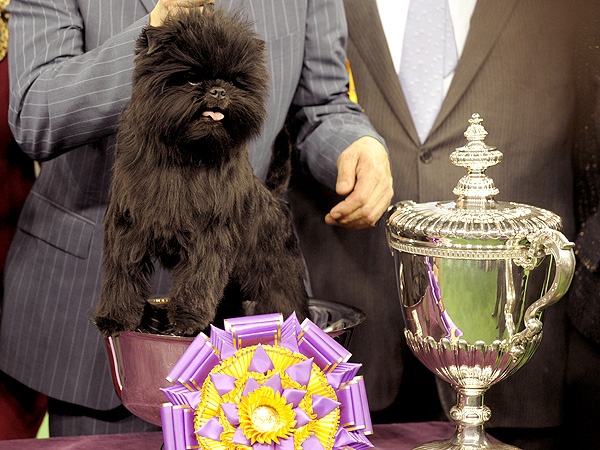
Westminster Names Affenpinscher Banana Joe Best in Show

02/12/2013 at 11:55 PM EST
Westminster 2013 Names Affenpinscher Banana Joe Best in Show
Banana Joe
Stan Honda/Getty
Westminster has its top dog!

After two days of meticulous primping, prizes and the less-pretty realities of any spirited championship, the 137th Annual Westminster Kennel Club Dog Show came to its finale Tuesday night, declaring Affenpinscher Banana Joe the best in show.

The competition proved fur-rocious as the pint-sized, black-haired furball bested six other finalists (and 2,721 entries total) for the honor, including Old English Sheepdog Swagger, who was named the reserve best in show. It’s the first time the breed has ever taken home the top prize in Westminster history.

Earning top marks at Westminster is the latest accolade in Banana Joe's storied run. The paw-dorable pooch, who is 5 years old, has been named best in show 86 times in his career, and his Westminster win will go down as his last.


"It's all so indescribable. It's just a wonderful thing as a tribute for a small breed with such a big heart," handler Ernesto Lara said post-victory. "The plans for him now is for him to retire back home where he was born, and that's in the Netherlands."

Describing his little buddy, Lara praised the breed for its commendable qualities as a canine companion.

"An Affenpinscher is a very human-like dog," he said. "It's definitely a breed you don’t want to tame or train, in the proper sense."

"You want to befriend it," Lara continued. "Once you gain the friendship, they're loyal just like a human friend."

As for Banana Joe's big victory, "Nobody told him he's small," said Lara, "and I don't think he'll believe that."