Pages

Saturday, June 23, 2012


The Georgia Guidestones may be the most enigmatic monument in the US: huge slabs of granite, inscribed with directions for rebuilding civilization after the apocalypse. Only one man knows who created them—and he's not talking.
Photo: Dan Winters
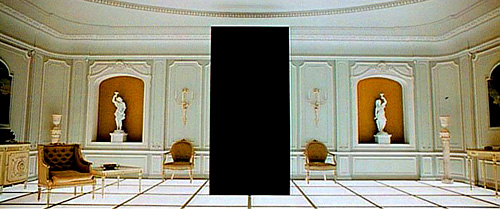
The strangest monument in America looms over a barren knoll in northeastern Georgia. Five massive slabs of polished granite rise out of the earth in a star pattern. The rocks are each 16 feet tall, with four of them weighing more than 20 tons apiece. Together they support a 25,000-pound capstone. Approaching the edifice, it's hard not to think immediately of England's Stonehenge or possibly the ominous monolith from 2001: A Space Odyssey. Built in 1980, these pale gray rocks are quietly awaiting the end of the world as we know it.
Called the Georgia Guidestones, the monument is a mystery—nobody knows exactly who commissioned it or why. The only clues to its origin are on a nearby plaque on the ground—which gives the dimensions and explains a series of intricate notches and holes that correspond to the movements of the sun and stars—and the "guides" themselves, directives carved into the rocks. These instructions appear in eight languages ranging from English to Swahili and reflect a peculiar New Age ideology. Some are vaguely eugenic (guide reproduction wisely—improving fitness and diversity); others prescribe standard-issue hippie mysticism (prize truth—beauty—love—seeking harmony with the infinite).
What's most widely agreed upon—based on the evidence available—is that the Guidestones are meant to instruct the dazed survivors of some impending apocalypse as they attempt to reconstitute civilization. Not everyone is comfortable with this notion. A few days before I visited, the stones had been splattered with polyurethane and spray-painted with graffiti, including slogans like "Death to the new world order." This defacement was the first serious act of vandalism in the Guidestones' history, but it was hardly the first objection to their existence. In fact, for more than three decades this uncanny structure in the heart of the Bible Belt has been generating responses that range from enchantment to horror. Supporters (notable among them Yoko Ono) have praised the messages as a stirring call to rational thinking, akin to Thomas Paine's The Age of Reason. Opponents have attacked them as the Ten Commandments of the Antichrist.
Whoever the anonymous architects of the Guidestones were, they knew what they were doing: The monument is a highly engineered structure that flawlessly tracks the sun. It also manages to engender endless fascination, thanks to a carefully orchestrated aura of mystery. And the stones have attracted plenty of devotees to defend against folks who would like them destroyed. Clearly, whoever had the monument placed here understood one thing very well: People prize what they don't understand at least as much as what they do.


The story of the Georgia Guidestones began on a Friday afternoon in June 1979, when an elegant gray-haired gentleman showed up in Elbert County, made his way to the offices of Elberton Granite Finishing, and introduced himself as Robert C. Christian. He claimed to represent "a small group of loyal Americans" who had been planning the installation of an unusually large and complex stone monument. Christian had come to Elberton—the county seat and the granite capital of the world—because he believed its quarries produced the finest stone on the planet.
Joe Fendley, Elberton Granite's president, nodded absently, distracted by the rush to complete his weekly payroll. But when Christian began to describe the monument he had in mind, Fendley stopped what he was doing. Not only was the man asking for stones larger than any that had been quarried in the county, he also wanted them cut, finished, and assembled into some kind of enormous astronomical instrument.
What in the world would it be for? Fendley asked. Christian explained that the structure he had in mind would serve as a compass, calendar, and clock. It would also need to be engraved with a set of guides written in eight of the world's major languages. And it had to be capable of withstanding the most catastrophic events, so that the shattered remnants of humanity would be able to use those guides to reestablish a better civilization than the one that was about to destroy itself.


Monumental Precision

Built to survive the apocalypse, the Georgia Guidestones are not merely instructions for the future—the massive granite slabs also function as a clock, calendar, and compass.
The monument sits at the highest point in Elbert County and is oriented to track the sun's east-west migration year-round.
On an equinox or solstice, visitors who stand at the west side of the "mail slot" are positioned to see the sun rise on the horizon.
An eye-level hole drilled into the center support stone allows stargazers on the south side to locate Polaris, the North Star.
A 7/8-inch hole drilled through the capstone focuses a sunbeam on the center column and at noon pinpoints the day of the year.
Text: Erik Malinowski; illustration: Steve Sanford

Fendley is now deceased, but shortly after the Guidestones went up, an Atlanta television reporter asked what he was thinking when he first heard Christian's plan. "I was thinking, 'I got a nut in here now. How am I going get him out?'" Fendley said. He attempted to discourage the man by quoting him a price several times higher than for any project commissioned there before. The job would require special tools, heavy equipment, and paid consultants, Fendley explained. But Christian merely nodded and asked how long it would take. Fendley didn't rightly know—six months, at least. He wouldn't be able to even consider such an undertaking, he added, until he knew it could be paid for. When Christian asked whether there was a banker in town he considered trustworthy, Fendley saw his chance to unload the strange man and sent him to look for Wyatt Martin, president of the Granite City Bank.
The tall and courtly Martin—the only man in Elberton besides Fendley known to have met R. C. Christian face-to-face—is now 78. "Fendley called me and said, 'A kook over here wants some kind of crazy monument,'" Martin says. "But when this fella showed up he was wearing a very nice, expensive suit, which made me take him a little more seriously. And he was well-spoken, obviously an educated person." Martin was naturally taken aback when the man told him straight out that R. C. Christian was a pseudonym. He added that his group had been planning this secretly for 20 years and wanted to remain anonymous forever. "And when he told me what it was he and this group wanted to do, I just about fell over," Martin says. "I told him, 'I believe you'd be just as well off to take the money and throw it out in the street into the gutters.' He just sort of looked at me and shook his head, like he felt kinda sorry for me, and said, 'You don't understand.'"
Martin led Christian down the street to the town square, where the city had commissioned a towering Bicentennial Memorial Fountain, which included a ring of 13 granite panels, each roughly 2 by 3 feet, signifying the original colonies. "I told him that was about the biggest project ever undertaken around here, and it was nothing compared to what he was talking about," Martin says. "That didn't seem to bother him at all." Promising to return on Monday, the man went off to charter a plane and spend the weekend scouting locations from the air. "By then I half believed him," Martin says.
When Christian came back to the bank Monday, Martin explained that he could not proceed unless he could verify the man's true identity and "get some assurance you can pay for this thing." Eventually, the two negotiated an agreement: Christian would reveal his real name on the condition that Martin promise to serve as his sole intermediary, sign a confidentiality agreement pledging never to disclose the information to another living soul, and agree to destroy all documents and records related to the project when it was finished. "He said he was going to send the money from different banks across the country," Martin says, "because he wanted to make sure it couldn't be traced. He made it clear that he was very serious about secrecy."
Before leaving town, Christian met again with Fendley and presented the contractor with a shoe box containing a wooden model of the monument he wanted, plus 10 or so pages of detailed specifications. Fendley accepted the model and instructions but remained skeptical until Martin phoned the following Friday to say he had just received a $10,000 deposit. After that, Fendley stopped questioning and started working. "My daddy loved a challenge," says Fendley's daughter, Melissa Fendley Caruso, "and he said this was the most challenging project in the history of Elbert County."

Construction of the Guidestones got under way later that summer. Fendley's company lovingly documented the progress of the work in hundreds of photographs. Jackhammers were used to gouge 114 feet into the rock at Pyramid Quarry, searching for hunks of granite big enough to yield the final stones. Fendley and his crew held their breath when the first 28-ton slab was lifted to the surface, wondering if their derricks would buckle under the weight. A special burner (essentially a narrowly focused rocket motor used to cut and finish large blocks of granite) was trucked to Elberton to clean and size the stones, and a pair of master stonecutters was hired to smooth them.
Fendley and Martin helped Christian find a suitable site for the Guidestones in Elbert County: a flat-topped hill rising above the pastures of the Double 7 Farms, with vistas in all directions. For $5,000, owner Wayne Mullinex signed over a 5-acre plot. In addition to the payment, Christian granted lifetime cattle-grazing rights to Mullinex and his children, and Mullinex's construction company got to lay the foundation for the Guidestones.
With the purchase of the land, the Guidestones' future was set. Christian said good-bye to Fendley at the granite company office, adding, "You'll never see me again." Christian then turned and walked out the door—without so much as a handshake.
From then on, Christian communicated solely through Martin, writing a few weeks later to ask that ownership of the land and monument be transferred to Elbert County, which still holds it. Christian reasoned that civic pride would protect it over time. "All of Mr. Christian's correspondence came from different cities around the country," Martin says. "He never sent anything from the same place twice."
Daybreak: A carefully cut slot in the Guidestones' center column frames the sunrise on solstices and equinoxes.
Photo: Dan Winters


The astrological specifications for the Guidestones were so complex that Fendley had to retain the services of an astronomer from the University of Georgia to help implement the design. The four outer stones were to be oriented based on the limits of the sun's yearly migration. The center column needed two precisely calibrated features: a hole through which the North Star would be visible at all times, and a slot that was to align with the position of the rising sun during the solstices and equinoxes. The principal component of the capstone was a 7\8-inch aperture through which a beam of sunlight would pass at noon each day, shining on the center stone to indicate the day of the year.
The main feature of the monument, though, would be the 10 dictates carved into both faces of the outer stones, in eight languages: English, Spanish, Russian, Chinese, Arabic, Hebrew, Hindi, and Swahili. A mission statement of sorts (let these be guidestones to an age of reason) was also to be engraved on the sides of the capstone in Egyptian hieroglyphics, classical Greek, Sanskrit, and Babylonian cuneiform. The United Nations provided some of the translations (including those for the dead languages), which were stenciled onto the stones and etched with a sandblaster.
By early 1980, a bulldozer was scraping the Double 7 hilltop to bedrock, where five granite slabs serving as a foundation were laid out in a paddle-wheel design. A 100-foot-tall crane was used to lift the stones into place. Each of the outer rocks was 16 feet 4 inches high, 6 feet 6 inches wide, and 1 foot 7 inches thick. The center column was the same (except only half the width), and the capstone measured 9 feet 8 inches long, 6 feet 6 inches wide, and 1 foot 7 inches thick. Including the foundation stones, the monument's total weight was almost 240,000 pounds. Covered with sheets of black plastic in preparation for an unveiling on the vernal equinox, the Guidestones towered over the cattle that continued to graze beneath it at the approach of winter's end.
The monument ignited controversy before it was even finished. The first rumor began among members of the Elberton Granite Association, jealous of the attention being showered on one of their own: Fendley was behind the whole thing, they said, aided by his friend Martin, the banker. The gossip became so poisonous that the two men agreed to take a lie detector test at the Elberton Civic Center. The scandal withered when The Elberton Star reported that they had both passed convincingly, but the publicity brought a new wave of complaints. As word of what was being inscribed spread, Martin recalls, even people he considered friends asked him why he was doing the devil's work. A local minister, James Travenstead, predicted that "occult groups" would flock to the Guidestones, warning that "someday a sacrifice will take place here." Those inclined to agree were hardly discouraged by Charlie Clamp, the sandblaster charged with carving each of the 4,000-plus characters on the stones: During the hundreds of hours he spent etching the guides, Clamp said, he had been constantly distracted by "strange music and disjointed voices."

The team that built the Guidestones didn't know who was financing the project—just that it was the biggest monument in county history. Local banker Wyatt Martin inspects the English lettering with sandblaster Charlie Clamp before the 1980 unveiling.
Photo: Courtesy of Fendley Enterprises Inc.

The unveiling on March 22, 1980, was a community celebration. Congressmember Doug Barnard, whose district contained Elberton, addressed a crowd of 400 that flowed down the hillside and included television news crews from Atlanta. Soon Joe Fendley was the most famous Elbertonian since Daniel Tucker, the 18th-century minister memorialized in the folk song "Old Dan Tucker." Bounded by the Savannah and Broad rivers but miles from the nearest interstate—"as rural as rural can be," in the words of current Star publisher Gary Jones—Elberton was suddenly a tourist destination, with visitors from all over the world showing up to see the Guidestones. "We'd have people from Japan and China and India and everywhere wanting to go up and see the monument," Martin says. And Fendley's boast that he had "put Elberton on the map" was affirmed literally in spring 2005, when National Geographic Traveler listed the Guidestones as a feature in its Geotourism MapGuide to Appalachia.
But many who read what was written on the stones were unsettled. Guide number one was, of course, the real stopper: maintain humanity under 500,000,000 in perpetual balance with nature. There were already 4.5 billion people on the planet, meaning eight out of nine had to go (today it would be closer to 12 out of 13). This instruction was echoed and expanded by tenet number two: guide reproduction wisely—improving fitness and diversity. It didn't take a great deal of imagination to draw an analogy to the practices of, among others, the Nazis. Guide number three instructed readers to unite humanity with a living new language. This sent a shiver up the spine of local ministers who knew that the Book of Revelations warned of a common tongue and a one-world government as the accomplishments of the Antichrist. Guide number four—rule passion—faith—tradition—and all things with tempered reason—was similarly threatening to Christians committed to the primacy of faith over all. The last six guides were homiletic by comparison. protect people and nations with fair laws and just courts. let all nations rule internally resolving external disputes in a world court. avoid petty laws and useless officials. balance personal rights with social duties. prize truth—beauty—love—seeking harmony with the infinite. be not a cancer on the earth—leave room for nature—leave room for nature.
The message of the American Stonehenge also foreshadowed the current drive for Sustainable Development. Any time you hear the phrase "Sustainable Development" used, you should substitute the term "socialism" to be able to understand what is intended. Later in this syllabus you will read the full text of the Earth Charter which was compiled under the direction of Mikhail Gorbachev and Maurice Strong. In that document you will find an emphasis on the same basic issues: control of reproduction, world governance, the importance of nature and the environment, and a new spirituality. The similarity between the ideas engraved on the Georgia Guidestones and those espoused in the Earth Charter reflect the common origins of both.
Yoko Ono, the widow of John Lennon, was recently quoted as referring to the American Stonehenge, saying:
"I want people to know about the stones ... We're headed toward a world where we might blow ourselves up and maybe the globe will not exist ... it's a nice time to reaffirm ourselves, knowing all the beautiful things that are in this country and the Georgia Stones symbolize that. " (1) 

What is the true significance of the American Stonehenge, and why is its covert message important? Because it confirms the fact that there was a covert group intent on

(1) Dramatically reducing the population of the world.

(2) Promoting environmentalism.

(3) Establishing a world government.

(4) Promoting a new spirituality.

Certainly the group that commissioned the Georgia Guidestones is one of many similar groups working together toward a New World Order, a new world economic system, and a new world spirituality. Behind those groups, however, are dark spiritual forces. Without understanding the nature of those dark forces it is impossible to understand the unfolding of world events.
The fact that most Americans have never heard of the Georgia Guidestones or their message to humanity reflects the degree of control that exists today over what the American people think. We ignore that message at our peril.
Copies are available for researchers from Radio Liberty.


The Age of Reason was a book written by Thomas Paine. Its intent was to destroy the Judeo-Christian beliefs upon which our Republic was founded.


The hole that you see in the stone was drilled in the Center Stone so that the North Star could be visualized through it at any moment. This was one of several requirements stipulated by R.C.Christian for the building of the American Stonehenge and reflects his obsession with the alignment of the stars, the sun, and the moon. Occultists often worship the alignment and movement of heavenly bodies as part of their religious ceremonies
Even as locals debated the relative merits of these commandments, the dire predictions of Travenstead seemed to be coming true. Within a few months, a coven of witches from Atlanta adopted the Guidestones as their home away from home, making weekend pilgrimages to Elberton to stage various pagan rites ("dancing and chanting and all that kind of thing," Martin says) and at least one warlock-witch marriage ceremony. No humans were sacrificed on the altar of the stones, but there are rumors that several chickens were beheaded. A 1981 article in the monthly magazine UFO Report cited Naunie Batchelder (identified in the story as "a noted Atlanta psychic") as predicting that the true purpose of the guides would be revealed "within the next 30 years." Viewed from directly overhead, the Guidestones formed an X, the piece in UFO Report observed, making for a perfect landing site.
Visitors kept coming, but after several failed investigations into the identity of R. C. Christian, the media lost interest. Curiosity flared again briefly in 1993, when Yoko Ono contributed a track called "Georgia Stone" to a tribute album for avant-garde composer John Cage, with Ono chanting the 10th and final guide nearly verbatim:
 "Be not a cancer on Earth—leave room for nature—leave room for nature." 
A decade later, however, when comedienne Roseanne Barr tried to work a bit on the Guidestones into her comeback tour, nobody seemed to care.
Christian kept in touch with Martin, writing the banker so regularly that they became pen pals. Occasionally, Christian would call from a pay phone at the Atlanta airport to say he was in the area, and the two would rendezvous for dinner in the college town of Athens, a 40-mile drive west of Elberton. By this time, Martin no longer questioned Christian's secrecy. The older man had successfully deflected Martin's curiosity when the two first met, by quoting Henry James' observations of Stonehenge: "You may put a hundred questions to these rough-hewn giants as they bend in grim contemplation of their fallen companions, but your curiosity falls dead in the vast sunny stillness that enshrouds them." Christian "never would tell me a thing about this group he belonged to," Martin says. The banker received his last letter from Christian right around the time of the 9/11 terrorist attacks and assumes the man—who would have been in his mid-eighties—has since passed away.

Joe Fendley of Elberton Granite Finishing posing with his masterpiece.
Photo: Courtesy of Fendley Enterprises Inc.


The mysterious story of R. C. Christian and the absence of information about the true meaning of the Guidestones was bound to become an irresistible draw for conspiracy theorists and "investigators" of all kinds. Not surprisingly, three decades later there is no shortage of observers rushing to fill the void with all sorts of explanations.
Among them is an activist named Mark Dice, author of a book called The Resistance Manifesto. In 2005, Dice (who was using a pseudonym of his own—"John Conner"—appropriated from the Terminator franchise's main character) began to demand that the Guidestones be "smashed into a million pieces." He claims that the monument has "a deep Satanic origin," a stance that has earned him plenty of coverage, both in print and on the Web. According to Dice, Christian was a high-ranking member of "a Luciferian secret society" at the forefront of the New World Order. "The elite are planning to develop successful life-extension technology in the next few decades that will nearly stop the aging process," Dice says, "and they fear that with the current population of Earth so high, the masses will be using resources that the elite want for themselves. The Guidestones are the New World Order's Ten Commandments. They're also a way for the elite to get a laugh at the expense of the uninformed masses, as their agenda stands as clear as day and the zombies don't even notice it."
Ironically, Dice's message has mainly produced greater publicity for the Guidestones. This, in turn, has brought fresh visitors to the monument and made Elbert County officials even less inclined to remove the area's only major tourist attraction.
Phyllis Brooks, who runs the Elbert County Chamber of Commerce, pronounced herself aghast last November when the Guidestones were attacked by vandals for the first time ever. While Dice denies any involvement in the assault, he seems to have inspired it: Spray-painted on the stones were messages like "Jesus will beat u satanist" and "No one world government." Other defacements asserted that the Council on Foreign Relations is "ran by the devil," that the 9/11 attacks were an inside job, and that President Obama is a Muslim. The vandals also splashed the Guidestones with polyurethane, which is much more difficult to remove than paint. Despite the graffiti's alignment with his views, Dice says he disapproves of the acts. "A lot of people were glad such a thing happened and saw it as standing up against the New World Order," Dice says, "while others who are unhappy with the stones saw the actions as counterproductive and inappropriate."
Martin winces every time he hears Dice's "Luciferian secret society" take on the Guidestones. But while he disagrees, he also admits that he doesn't know for sure. "All I can tell you is that Mr. Christian always seemed a very decent and sincere fella to me."

A worker uses a special burner to finish a slab of Pyramid Blue granite.
Photo: Courtesy of Fendley Enterprises Inc.

Dice, of course, is far from the only person with a theory about the Guidestones. Jay Weidner, a former Seattle radio commentator turned erudite conspiracy hunter, has heavily invested time and energy into one of the most popular hypotheses. He argues that Christian and his associates were Rosicrucians, followers of the Order of the Rosy Cross, a secret society of mystics that originated in late medieval Germany and claim understanding of esoteric truths about nature, the universe, and the spiritual realm that have been concealed from ordinary people. Weidner considers the name R. C. Christian an homage to the legendary 14th-century founder of the Rosicrucians, a man first identified as Frater C.R.C. and later as Christian Rosenkreuz. Secrecy, Weidner notes, has been a hallmark of the Rosicrucians, a group that announced itself to the world in the early 17th century with a pair of anonymous manifestos that created a huge stir across Europe, despite the fact that no one was ever able to identify a single member. While the guides on the Georgia stones fly in the face of orthodox Christian eschatology, they conform quite well to the tenets of Rosicrucianism, which stress reason and endorse a harmonic relationship with nature.
Weidner also has a theory about the purpose of the Guidestones. An authority on the hermetic and alchemical traditions that spawned the Rosicrucians, he believes that for generations the group has been passing down knowledge of a solar cycle that climaxes every 13,000 years. During this culmination, outsize coronal mass ejections are supposed to devastate Earth. Meanwhile, the shadowy organization behind the Guidestones is now orchestrating a "planetary chaos," Weidner believes, that began with the recent collapse of the US financial system and will result eventually in major disruptions of oil and food supplies, mass riots, and ethnic wars worldwide, all leading up to the Big Event on December 21, 2012. "They want to get the population down," Weidner says, "and this is what they think will do it. The Guidestones are there to instruct the survivors."
On hearing Weidner's ideas, Martin shakes his head and says it's "the sort of thing that makes me want to tell people everything I know." Martin has long since retired from banking and no longer lives in Elberton, yet he's still the Guidestones' official—and only—secret-keeper. "But I can't tell," the old man quickly adds. "I made a promise." Martin also made a promise to destroy all the records of his dealings with Christian, though he hasn't kept that one—at least not yet. In the back of his garage is a large plastic bin (actually, the hard-sided case of an IBM computer he bought back in 1983) stuffed with every document connected to the Guidestones that ever came into his possession, including the letters from Christian.
For years Martin thought he might write a book, but now he knows he probably won't. What he also won't do is allow me to look through the papers. When I ask whether he's prepared to take what he knows to his grave, Martin replies that Christian would want him to do just that: "All along, he said that who he was and where he came from had to be kept a secret. He said mysteries work that way. If you want to keep people interested, you can let them know only so much." The rest is enshrouded in the vast sunny stillness.

Friday, June 22, 2012

House panel recommends Holder be found in contempt of Congress


WASHINGTON -- The House Committee on Oversight and Government Reform voted to find Atty. Gen. Eric H. Holder Jr. in contempt of Congress for failing to provide subpoenaed documents in the flawed Fast and Furious gun-tracking case, just hours after President Obama asserted executive privilege and backed the attorney general’s refusal to release the material.

The vote for contempt and the White House insertion into the growing Southwest border “gun-walking” scandal set up a significant constitutional clash between the two branches of the federal government, one that ultimately may not be resolved until it reaches the courts.

The Republican-led committee, headed by Rep. Darrell Issa (R-Vista), voted strictly along party lines in finding Holder in contempt. It now sends the matter to the full House for a floor vote to ask the U.S. attorney in Washington, D.C., or a special prosecutor to force the Obama administration to provide the documents.

“The committee has uncovered serious wrongdoing by the Justice department,” Issa said of his investigation into Fast and Furious, in which several thousand illegally purchased firearms were circulated on both sides of the Southwest border and many wound up with Mexican drug cartels. “That wrongdoing has cost lives on both sides of the border.”

But Rep. Elijah E. Cummings of Maryland, the top Democrat on the panel, said the Republicans caused the standoff by demanding the release of internal Department of Justice records. “The administration was forced into this position by the committee’s unreasonable insistence on pressing forward, “ he said.
Rep. Carolyn B. Maloney (D-N.Y.), put it on a more personal level and said she was “extremely disgusted” that her committee had come to this. “I am horrified you are going through with this contempt charge,” she said. “This shouldn’t be a witch hunt.”

All 23 Republicans on the panel voted for contempt, and all 17 Democrats against the contempt resolution.

As they cast their votes, however, President Obama’s claim of executive privilege loomed large over the House committee hearing room, suggesting that Holder or some other high administration official discussed Fast and Furious with the president, and that he agrees about 1,300 pages of documents under subpoena should not be made public.

House Speaker John A. Boehner(R-Ohio) and Majority Leader Eric Cantor (R-Va.) released a statement immediately after the vote.

“While we had hoped it would not come to this, unless the Attorney General reevaluates his choice and supplies the promised documents, the House will vote to hold him in contempt next week,” they said.


What led to Fast and Furious rebuke of Holder?

June 20, 2012|By Richard Simon


House Oversight and Government Reform Chairman Darrell Issa (R-Calif.) gavels to order a mark up hearing on Capitol Hill in Washington.
House Oversight and Government Reform Chairman Darrell Issa (R-Calif.)… (Chip Somodevilla / Getty…)
WASHINGTON — The House Oversight and Government Reform Committee has voted to pursue a contempt of Congress charge against Atty. Gen. Eric H. Holder Jr. over his refusal to turn over documents related to the committee’s investigation of the Fast and Furious operation. Here is a look at the issues:
What is Fast and Furious?
It was a flawed operation run by the Phoenix office of the Bureau of Alcohol, Tobacco, Firearms and Explosives. The ATF allowed illegal purchases of about 2,500 guns and then lost track of most of them while trying to trace them to Mexican drug cartel leaders. Two of the firearms were found at the scene where Border Patrol Agent Brian Terry died in a firefight.

What is the committee investigating?
Rep. Darrell Issa (R-Vista), the committee chairman, said the panel had “uncovered serious wrongdoing by the Justice Department.” He called into question the ATF’s ability “to carry out its statutory mission and the ability of the Department of Justice to adequately supervise it.”
Issa drafted the contempt resolution after Holder declined to turn over all of the 1,300 documents that the committee subpoenaed. Issa said the information was needed to consider legislative remedies to restructure the ATF. Critics contend that the GOP-led investigation is politically motivated.

How does President Obama’s use of his executive privilege affect the issue?
Presidents from both parties have asserted executive privilege in the past and have refused to provide information to Congress, reasoning that doing so could hurt the president’s ability to obtain candid advice from aides.
“The president, no less than members of Congress and federal judges, needs the protection of a principle that shields his close advisors from open-ended inquiry by another branch of government,” Fred F. Fielding, President George W. Bush’s counsel, wrote in 2007 to  lawmakers investigating the firing of eight U.S. attorneys.

What is the penalty for contempt of Congress?
It is a misdemeanor, punishable by up to a $100,000 fine and one year in jail.

What happens now?
The full House must approve the contempt charge. If approved, the matter probably will go to the U.S. attorney for the District of Columbia, who would decide whether to prosecute. But in the past, the Justice Department — under Democratic and Republican presidents — has taken the position that it will not allow a U.S. attorney to pursue charges if the department has determined that executive privilege was well-founded.
Lawmakers could attempt to pressure the Justice Department to appoint a special counsel to investigate whether to bring charges.
If the Justice Department declines to pursue contempt charges, the House could file suit, sending the matter to the courts.
The House Republican leaders have called for a vote next week, but Congress watchers wonder whether they will try to work out an agreement with Holder rather than take up the contempt charge at a time when the economy is uppermost on voters’ minds and amid public displeasure with Washington’s hyper-partisanship.

What are a few examples of what has happened in the past during struggles involving executive privilege?
In 1982, the House voted to hold in contempt Anne M. Gorsuch Buford, head of the Environmental Protection Agency, for refusing to produce documents concerning enforcement of laws on hazardous waste cleanup. President Reagan had ordered her not to produce the documents. The Justice Department declined to prosecute, saying that Congress was overstepping its bounds.
In 2008, the House voted to file suit after the George W. Bush Justice Department refused to bring contempt charges against White House Chief of Staff Joshua B. Bolten and former White House Counsel Harriet E. Miers.
The privilege is perhaps best known as the legal claim that President Nixon invoked, ultimately unsuccessfully, to block release of the Watergate tapes that drove him from office.

The Myth of Mitt: Was Romney the Right Man for the Job?


Apr 19th 2012


It happens a lot.

Following a hard-fought race for his party’s presidential nomination, one candidate steps aside and—in the name of unity—endorses a former rival. But it may have taken a little extra pride swallowing for former Utah Gov. Jon M. Huntsman Jr. to throw his support behind Republican frontrunner Mitt Romney. That’s because, unlike the other candidates, clashes between Romney and Huntsman began long before the current presidential contest.

The politicans first squared off in 1999 in the wake of Salt Lake's Olympic scandal. But it wasn’t much of a fight.
SLOC Chairman Robert Garff submitted Romney, a recently failed Senate candidate, for consideration. No one else got so much as a hard look. Huntsman Sr. cried foul, telling the Deseret News the process had not been “open, fair and honest,” and criticized Romney’s selection of organization leaders as “cronyism at its peak.”

A decade later, during the battle for the presidential nomination, Huntsman’s campaign adviser Doug Foxley took these sentiments further, denigrating Romney’s claims that he had saved the Games. “Any well trained chimpanzee could have come in and had a successful Olympics,” he said.

Romney got his chance to shoot back when, during a debate, he called Huntsman out for his role as ambassador to China under President Barack Obama.“I was serving my country,” Huntsman bristled.


The Myth of Mitt: Scandal, Terrorism and Budget Disasters


Apr 19th 2012

Did Mitt Romney rescue, as he claims, a Winter Olympiad that was “sullied by scandal” and “on the brink of financial disaster?" Here’s a better question: When are the Olympics not “sullied” and “on the brink"? Throughout history, the Olympics have been laced with scandal and tragedy, often far worse than the Salt Lake’s bidding controversy.
Russia 2014
As early as 2008, the government of Georgia was already calling for a boycott of the Games over the involvement of Russia in the battle for South Ossetia.

Vancouver 2010
With four years to opening ceremonies, the British Columbian auditor general found that the Games were on pace to exceed the original estimated price tag by nearly $2 billion.

Beijing 2008
Health experts feared that the thick gray haze that covers China’s capital would spell respiratory doom for Olympic athletes.

Torino 2006
Italian authorities raided the Olympic Village, seeking evidence of doping.


Athens 2004
With 100 days to go, the Greeks hadn’t finished the metro station to the stadium and the entire city was a construction zone.

Sydney 2000
An investigation revealed that Australia’s bid committee had broken the rules with its “extravagant” hospitality, including expensive gifts to delegates without which, the independent query found, Sydney may not have won the Games.

Nagano 1998
The Japanese spent $26 million in gifts for International Olympic Committee members.

Atlanta 1996
A 40-pound pipe bomb exploded during a concert at Centennial Olympic Park. Two were killed and more than 100 were injured.

Lillehammer 1994
Tonya Harding achieved infamy after her ex-husband conspired to attack competitor Nancy Kerrigan during a practice session for the U.S. Figure Skating Championships. By Games time, Harding was crying her way through her routine over a broken lace, placing eighth to Kerrigan’s silver.

Los Angeles 1984
The Soviet Union led 14 other nations in a boycott of the Los Angeles Games.

Moscow 1980
U.S. President Jimmy Carter ordered a boycott of the 1980 Summer Games in Moscow in protest of the Soviet Union’s invasion of Afghanistan. More than 60 nations declined to participate in the Games.

Lake Placid 1980
Protests mounted when New York state released plans to turn Olympic housing facilities into a prison after the Games.


Montreal 1976
Twenty-two African nations boycotted the Games in protest after the IOC refused to ban New Zealand from participating. The Kiwis had previously sent a rugby team to South Africa, breaking the cultural embargo in place as an international stance on apartheid.

Munich 1972
Two weeks into the Games, the Black September terrorist group took Israeli athletes and coaches hostage, killing 11. Five hostage takers were killed by German police.

Japan 1972
An ego contest between Austrian skier Karl Schranz and IOC president Avery Brundage culminated with Schranz’ disqualification from the Games. Why? A sponsorship faux pas. He wore a shirt with a coffee logo on it while attending a soccer match.

Mexico City 1968
Ten days before the Games, thousands of students and supporters in Mexico City amassed in the Plaza de las Tres Culturas in the Tlatelolco section of Mexico City to protest their authoritarian government. Police forces crushed the demonstrators, killing scores and arresting more than 1,300 others.


Melbourne 1956
Seven countries, including China, boycotted the Games for various political reasons.

Tokyo 1940
The IOC revoked Japan’s right to host, gave the Games to Helsinki, then canceled the event altogether due to the Soviet war with Finland. It also canceled the 1944 Games due to World War II.

Berlin 1936
The Summer Olympics were presided over by Adolf Hitler.


Next>> Was Romney the Right Man for the Job?

The Myth of Mitt: By the Numbers


Apr 19th 2012

Big and Small, these figures defined Salt Lake's 2002 Winter Games

$1 (Canadian)
Buried under the ice at the then E Center by Canadian “ice technicians.” The loonie was lucky: Canada’s men and women both won gold.

2
Gold medals won by Australia in the first Winter Games in which a team from the southern hemisphere took first

34
Medals won by the United States (including 10 gold)

53
Nations that failed to medal

2,399
Athletes that competed in the Games

$190,000
Total compensation for Utah Athletic Foundation president Colin Hilton in 2009, according to IRS documents

$6.8 million
Total money lost
(expenses over revenues) in 2009 by the Utah Athletic Foundation

$70 million
Salt Lake Organizing Committee “profits” given to the Utah Athletic Foundation to maintain Utah’s Olympic venues in perpetuity


Next>>Scandal, Terrorism and Budget Disasters

The Myth of Mitt: The Scandal Lives On


Apr 19th 2012


The challenges faced by the SLOC hardly rate in comparison to other Games. But with the exception of the Munich Summer Games in 1972—when 11 Israeli athletes and coaches were killed by a Palestinian paramilitary group—no Olympiad is so inextricably linked to bad news. Punch “Olympic scandal” into Google and the second hit (after the obligatory Wikipedia register of every Olympic indignity) is about the 2002 Games. Search “2002 Winter Olympics” and the second reference is about the scandal.

Alas, Anderson says, Salt Lake’s association with scandal “may be continually reinforced by the fact that people are still touting Romney’s role in turning things around.”

That’s the torch that Utahns will always bear.

Next>>By the Numbers

The Myth of Mitt: 'Savior' of the Games


Apr 19th 2012

There’s not a lot of debate about the quality of Romney’s Olympic management. Even former Salt Lake City Mayor Rocky Anderson—a rival presidential candidate (for the fledgling Justice Party) and polar political opposite of the socially conservative multi-millionaire—said Romney was “a great leader” of the Games. But Romney hasn’t branded himself as simply a great leader, but rather as a turnaround specialist. The story of his Olympic experience is an indispensable part of that meme. Within weeks of returning to Massachusetts, Romney was in full campaign mode, and already reminding folks in the Bay State (and telling those that hadn’t heard) that the Olympic Games had been on the brink of disaster and "beset by red ink and a lack of public confidence" until he took over.


And thus was born the first of many flips for a man who has come to be known for his flops.

Romney’s Sept. 27, 2002 newsletter to supporters somewhat blurrily recalled “how he erased a $379 million budget deficit, organized 23,000 volunteers, galvanized community spirit and restored integrity to the Games.”

Romney’s subordinates and supporters were even more gratuitous in their assessment of Romney’s Olympic role. Eric Fehrnstrom, Romney’s deputy campaign manager, told the Boston Globe that the former Olympic chief “rescued the Olympics and restored pride in the United States at a critical time in our history.”

Once the Olympic-saving aura was fixed, Romney didn’t have to say much at all. The media began doing it for him, describing his time as head of the Games as “triumphant” and calling him the “savior.” Romney could have let it ride. Instead he doubled down.
In 2004 Romney released his first book. He called it Turnaround: Crisis, Leadership and the Olympic Games. The inside cover read: “Sullied by scandal, on the brink of financial disaster, and with federal investigators, bankers and the press at its door, the Salt Lake Organizing Committee’s senior managers admitted the organization was paralyzed. But Romney had too much American patriotism to let it become a catastrophe for his country. So he accepted the biggest turnaround challenge of his life.”

And in his runs for the Republican presidential nomination in 2008 and 2012, Romney once again highlighted the scandal, describing it as a major crisis. In one television ad during the first run Romney said he “took on the bankrupt Olympics and turned them around.” On his campaign website, earlier this year, Romney claimed to have “salvaged the 2002 Winter Olympic Games from certain disaster.”

That’s a motif that Romney supporter Frasier Bullock—a partner in Romney’s venture capital firm who served as chief financial officer for the games at Romney’s behest—continues to advance today, providing the candidate room to use more humble words when speaking of the Games. At an event in Salt Lake City in February, Bullock told a crowd of former SLOC members that Romney was “the greatest leader in the history of the Olympics."

Former International Olympic Committee executive Dick Pound won’t go that far, but he believes Romney does deserve quite a bit of credit for the leadership he exhibited in Utah. The Salt Lake Organizing Committee “was really sucking wind at the point Romney took over,” Pound says. “They needed somebody to step in who was not part of the old gang, who hadn’t been a part of the bidding process.”

But had the scandal brought the Games to the brink of collapse?

“There certainly was no concern that would happen,” Pound says, noting that even before Romney arrived on the scene, the IOC had put its full support behind Salt Lake. To understand in proper context the challenge Romney faced in 2002, it might be helpful to revisit the Games his father was unable to secure for Michigan.

In the wake of the deadly Detroit riots of 1967, some expressed relief Olympic leaders had passed over Michigan’s largest city four years earlier. But the truth was that Mexico City had even bigger problems. In the summer of 1968, just 10 days before the Games were to begin, scores of student protestors and bystanders were killed during a protest that involved, among other complaints, the amount of money the government was spending while so many Mexicans were suffering without work or food. The government’s violent crackdown brought swift international condemnation and calls for a cancellation of the Games.

But the show went on. And more than 600 million people watched as Mexican hurdler Norma Enriqueta Basilio de Sotelo became the first woman to light the Olympic cauldron; as U.S. high jumper Dick Fosbury introduced the world to his revolutionary “flop”; as Tanzania’s John Stephen Akhwari completed a marathon on a dislocated knee; and as African American sprinters Tommie Smith and John Carlos took a shoeless, black-gloved stand for human rights after medaling in the 200-meter race.

In short, the Games were a success and left a lasting legacy on sports, culture and politics.

Since the Greeks lit the modern Olympic flame in 1896, every host city has been besieged by some degree of scandal, ill-preparedness or tragedy. The Games have survived two World Wars, The Great Depression, a series of Cold War boycotts and several instances of terrorism. And in almost all cases naysayers worried, as the torch came nearer, that the next iteration of the Games would be a colossal failure.

With just 100 days to go before the start of the 2004 Summer Games, Athens was in a state of total disarray. “The metro station to the park wasn’t finished and the whole area was a scruffy building site,” a BBC correspondent wrote.

Would the Greeks dishonor their heritage by botching the Games? Not by a long jump. As the torch was passed along, IOC President Jacques Rogge told the closing ceremony crowd they’d witnessed the “Dream Games.”

It almost always works out that way.

In Beijing—where environmentalists and health experts feared that thick, gray haze would spell certain doom for athletes—competitors and spectators were treated to two weeks of mostly blue skies as the Chinese closed factories and limited car travel to secure a good environment for the international spectacle.

Four years before the 2010 Vancouver Winter Games, a British Columbian auditor general found the event was on pace to exceed by nearly $2 billion the original estimated price tag. The Games went on. And the biggest problem wasn’t organization but something that no Olympic host city can control: Weather was so warm that it was difficult to hold some events.
By contrast, consider what Romney inherited when he took over as head of the Salt Lake Organizing Committee in 1999: He had the full confidence of the IOC—leaders of which made it clear, as soon as the scandal broke, that Utah would still host the Games. He had tens of thousands of Olympic volunteers; $1 billion dollars in the coffers toward a $1.45 billion projected budget, with three years to go before show time; and a congressional sugar daddy named Sen. Robert Bennett, who alongside other senate colleagues helped direct federal funds to Utah projects in support of the Games. (Among the funds that stoked the ire of Sen. John McCain and other spending watchdogs was $2.2 million to improve Salt Lake’s sewer system, hidden inside an emergency appropriation to fund U.S. operations in Kosovo.)

Had the scandal really left a crisis worthy of the epic legend that has been built around it?

Anderson, who was brought onto the Salt Lake Organizing Committee after his election in 2000, said he never harbored any concern that the Games might fail.

That’s an assessment shared by his predecessor, Deedee Corradini. “I never felt the Games were at risk of not being successful,” she says.

Notwithstanding his fondness for Romney, Anderson says, “it’s not surprising that someone running for political office would raise his role in meeting the challenges we were facing.”

Next>>The Scandal Lives On


The Myth of Mitt: The Ethics of Bidding


Apr 19th 2012


The palm grease that helped make it happen wasn’t as extensive as what had come from Nagano—or any different than what had come from bidding cities going back for decades. Take Detroit’s bid to host the 1968 Summer Games: It was reportedly so excessive that it incited a backlash among the more scrupled voting members of the IOC, which chose Mexico City over Detroit by a vote of 30 to 14.

“The whole affair,” one member complained, according to press accounts in the fall of 1963, “had deteriorated to the level of a circus.”

Standing right under the big top was Mitt’s father Michigan Gov. George Romney, a crucial member of the team of civic leaders who fought to bring the Games to the Motor City. The elder Romney denied that Detroit had done anything untoward. He couldn’t explain, however, why Michigan needed to send 55 delegates to Germany to woo the 58 IOC members who were meeting there to choose a host city. According to minutes from the meeting, Norwegian IOC member Olaf Ditlev-Simonsen complained after the vote that rules should be in place to prevent bidding cities from “organizing cocktail parties” and “giving all kinds of presents.” Ditlev-Simonsen’s motion was sidelined to committee consideration. And the practices he railed against never seemed to stop.

That is, not until 1998. That’s when KTVX-TV reporter Chris Vanocur obtained a memo showing that the Salt Lake Organizing Committee was paying for the daughter of a Cameroonian IOC member to attend college at American University in Washington, D.C. The cards fell quickly after that. The IOC opened an investigation into the actions of its members. Ten were ultimately expelled from the organization. Welch had already left the Salt Lake Organizing Committee in 1997, and Johnson would resign soon after the IOC investigation was announced. And Romney—who recently had lost his bid to unseat Sen. Ted Kennedy in Massachusetts—was soon called into service by friends and business associates in Utah to act as the ultimate authority over all operations, marketing and fundraising for the Salt Lake Games.

 Welch and Johnson would later be indicted in U.S. District Court on charges that they illegally bribed IOC members for their votes. The problem was, they hadn’t done anything illegal at all. Not according to Judge David Sam who scolded prosecutors for a case he felt was entirely lacking “in criminal intent or evil purpose.” From the bench, Sam did everything but issue a formal letter of apology, noting that while Utahns partied with the world, Welch and Johnson had been deprived “of fully enjoying the fruits of your tireless efforts to bring the Olympics [to Utah].”

“My hope,” Sam told the defendants, “is that you will now be appropriately recognized and honored for your efforts.”

That never happened.

Fans of tend to think of the Olympics as pure athletic achievement in all its glory. Despite Sam's pardon and apology, it was unpalatable to many Americans that the Games could, in fact, be something to be bought. But the Olympics have long been a commercial and money-making machine, and Welch and Johnson played the field as it needed to be played to make Salt Lake's bid a success.

Still, Romney argued at a 2001 press conference that including the men on the Olympic Legacy Plaza's Wall of Honor “would send the wrong message to the citizens of the world about the ethical standards of our community.” And in order to establish and bolster his political image as the man with the right stuff to “turn around” the Olympics, Romney would have to continue to send that very same message.

And he did. Time after time. For a decade.


Next>>'Savior' of the Games
The Myth of Mitt


Apr 19th 2012

 
The opening ceremonies of the 2002 Winter Olympics were still months away, but already Mitt Romney was thinking about the legacy they would leave behind.

On a crisp Saturday afternoon in November, the Salt Lake Organizing Committee president and CEO stood in the middle of the newly constructed Gateway Mall, flanked by the Davis High School marching band and a dancing water fountain designed in the shape of the Salt Lake Winter Games’ snowflake logo. Nearby, a cascading stream of water trickled between two sets of concrete stairs.

The Olympic Legacy Plaza, Romney told a crowd of about 300 people, would stand as “a tangible memory” of this Olympics.

As part of that memory, the names of 28,000 Olympic workers and volunteers would be inscribed on the plaza’s west wall.

But under Romney’s orders, two names would be left out. The banishment of Tom Welch and Dave Johnson, the two men most responsible for bringing the Olympics to Salt Lake City, was, as it turns out, a rather ironic attempt to sanitize history. Because in the decade that followed, no one has done more to remind the world of the questionable ethical origins of the 2002 Olympics than Romney. Never mind that the scandal itself had little to do with Salt Lake City, never threatened the viability of the Games and was, in historical context, an Olympic-sized trifle.

Notes Robert Garff, former SLOC chairman, “I never thought there was a time when the Salt Lake Organizing Committee was in danger of failing in its duties.”

Since the late 1920s, civic leaders in Utah had been trying to bring the Olympics to Salt Lake City. In spite of winter conditions that were legendary among ski racers and jumpers, Utah’s provincial—even backwater—reputation always seemed to stand in the way.

But every four years the dreamers would start dreaming. And every decade or so, international interest would rise to the point that those dreams didn’t seem so dreamy. Salt Lake won the U.S. Olympic Committee’s blessing to bid on several occasions and volunteered to host the 1976 Games when Colorado voters abrogated in the face of soaring costs. Each time, the state’s proposal was rejected by the International Olympic Committee.

But in 1992, under the leadership of Welch, a lawyer, and Johnson, a car salesman, Salt Lake City came closer to holding the torch than ever before—losing to Nagano, Japan, by just four votes for the right to host the 1998 Olympiad. More than a decade later, a provincial investigation would reveal that Nagano had spent millions of dollars on an “illegitimate and excessive level of hospitality” for IOC members. The report estimated Nagano’s pot-sweetening expenditures at $24 million—or about $500,000 for each of the 46 votes it claimed.

But for Welch and Johnson, it didn’t take an investigation to know why Utah had lost out. The duo resolved to be the most gracious—and generous—of hosts when Olympic officials returned. The gifts they bequeathed on committee members in the following years included all-expenses-paid ski trips, cash payments, Super Bowl tickets, college scholarships and even plastic surgery.


And on June 16, 1995, in Budapest, Hungary, the IOC voted overwhelmingly to send the games to Utah.


Next>>The Ethics of Bidding


The next seven pages are the article in the Salt Lake Magazine
By
Matthew D. LaPlante