Pages

Friday, July 15, 2011

Debt Crisis Déjà Vu


Republicans once came under Democratic fire for boosting America’s debt ceiling, but now the situation is reversed. Howard Kurtz on the hype and hypocrisy when the two parties switch positions.


Democratic Sen. Kent Conrad is losing patience with arguments for raising the debt ceiling.
“The question is: Are we staying on this course to keep running up the debt, debt on top of debt, increasingly financed by foreigners, or are we going to change course?” he asked.
Click here to find out more!
But Republican Sen. Chuck Grassley says there is no alternative, with lawmakers facing “a choice between breaking the law by exceeding the statutory debt limit or, on the other hand, breaking faith with the public by defaulting on our debt.”
That was the state of play in 2006, when George W. Bush wanted to lift the debt ceiling from $8.2 trillion to $9 trillion and the Democrats were ripping his handling of the economy. In fact, every Senate Democrat—including Barack Obama and Joe Biden—voted against boosting the debt ceiling, while all but two Senate Republicans voted in favor. It was Bush’s fourth debt-ceiling hike in five years, for a total of $3 trillion.
Eric Cantor and John Boehner voted then to raise the ceiling, and on other occasions during the Bush administration; now they’re leading the opposition. Obama, who warned Tuesday in a CBS interview that he can’t guarantee Social Security checks will go out after the August 2 deadline, has said his 2006 vote was a mistake.
“That’s the beauty of being in the minority, you don’t have to be responsible,” says John Feehery, who served as a spokesman for Dennis Hastert when the Illinois Republican was House speaker. The Democrats “just voted against it and made us do all the heavy lifting … Hypocrisy is one of the coins of the realm.”
Obama Debt Showdown
Pablo Martinez Monsivais / AP Photo
Ari Fleischer, the former Bush White House spokesman, recalls working for Hill Republicans who routinely opposed debt-ceiling hikes during the Clinton years. “The problem this time is split government—it still has to get done somehow,” Fleischer says. “Which is why I view so much of this as ‘wake me at the last minute.’”
Democratic strategist Jenny Backus calls it a “Washington parlor game … It’s a lot easier to oppose raising the debt ceiling when you’re the party out of power because you don’t have the perceived responsibility. I don’t think I’d say it’s hypocrisy. I’d say it’s political reality. There are very few ways to make a statement about whether the economy’s on the wrong track.”
Today, of course, it’s the Obama administration pushing to raise the debt ceiling, and the Republicans strongly resisting a deal—except on their terms. “This debt-limit increase is his problem,” Boehner said Tuesday.
There is one critical difference, of course: When the Democrats voted against Bush’s requests, it was what Backus calls “a ‘gimme’ vote”; they knew the GOP-controlled Congress had the margins to pass the measures. This time, if the two parties can’t resolve (or at least paper over) their differences within three weeks, the federal government will actually default on its obligations. Senate Minority Leader Mitch McConnell threw a curveball Tuesday by suggesting that Congress grant Obama the authority to raise the debt ceiling on his own, provided that he propose spending cuts.


““That’s the beauty of being in the minority, you don’t have to be responsible.””
Republicans argue that the U.S. debt, at $14.3 trillion, is far worse than in 2004 or 2006. Democrats say that’s in part because Bush prosecuted two wars without paying for them and left his successor a financial crisis that required massive bailouts.
Back then, the rhetoric was reversed. In the fall of 2004, when the government hit the debt limit, Treasury Secretary John Snow had to delay contributing to a federal-employee pension system to avoid running out of cash. Democrats noted that Bush had run up more debt in 17 months than the country had accumulated from George Washington to Ronald Reagan.
The Republicans postponed the vote until after the election to avoid giving campaign ammunition. But there was little sense of crisis because GOP leaders made clear they would raise the ceiling during the lame-duck session, which they did.
“To pay our bills,” said John Kerry, who had just lost his presidential bid, “America now goes cup in hand to nations like China, Korea, Taiwan, and Caribbean banking centers. Those issues didn't go away on Nov. 3, no matter what the results.”
They still haven’t gone away; the major players have just switched positions. “Part of it is just naked politics,” Feehery says.

Stewart: Republicans Are Like Doctors Relying on Magic


In moments of political absurdity such as we're experiencing with astounding regularity these days, sometimes the most ridiculous analogies are the most appropriate.
Exhibit A: Jon Stewart, last night, comparing the GOP's completely clueless approach to the debt ceiling project to doctors attempting to use mystical cures to heal things like broken legs.
He had some especially withering words to offer about the GOP's introduction of lightbulb-related legislation (as did Minority Leader Nancy Pelosi on Twitter, here) rather than jobs or budget offerings.
Watch below:

By Sarah Seltzer | Sourced from AlterNet 

Posted at July 13, 2011, 9:26 am

What if Bachmann's "moment" actually lasts?


Thursday, July 14, 2011

Stock rally weakens as hopes dim for more stimulus


Stock rally fizzles as hopes fade for more Fed stimulus; Dow, S&P break a 3-day losing streak 


, On Wednesday July 13, 2011, 7:03 pm

Related Quotes

SymbolPriceChange
CAT108.64+1.71
Chart for Caterpillar, Inc. Common Stock
MCO36.65+0.36
Chart for Moody's Corporation Common Stoc

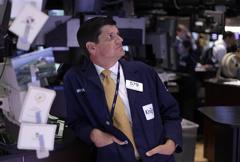
NEW YORK (AP) -- Comments from Fed Chairman Ben Bernanke set off a stock market rally early Wednesday, but it wasn't long before another Fed official helped cut it short.
In testimony before Congress, Bernanke said the central bank would be open to new economic stimulus measures, but only if the economy gets much worse. The remarks were far from a promise for more Fed action, but markets reacted immediately nonetheless. The Dow Jones industrial average jumped as many as 164 points, or 1.3 percent.
Most of those gains evaporated later in the day after Federal Reserve Bank of Dallas President Richard Fisher said in a speech that the Fed had already "pressed the limits of monetary policy."
The Standard & Poor's 500 index rose 4.08, or 0.3 percent, to close at 1,317.72. The Dow Jones industrial average rose 44.73, or 0.4 percent, to 12,491.61. The Nasdaq composite rose 15.01, or 0.5 percent, to 2,796.92. Indexes had fallen over the previous three days.
Stocks also took a hit in the afternoon when House Speaker John Boehner called into question whether lawmakers would agree to raise the government's borrowing limit by an Aug. 2 deadline. Failure to meet the deadline could result in a U.S. debt default, which would have disastrous effects for the economy and financial markets. Boehner, a Republican, said that dealing with Democrats on the issue has been like "dealing with Jell-O."
On Wednesday Moody's Investors Service threatened to cut the United States' credit rating. It said there is a small but rising risk that the government will default on its debt.
Bernanke spelled out specific steps the Fed might consider if the economy gets worse, including another round of bond purchases. He also detailed what the Fed would do should the economy improve.
Bernanke's position remains that the slowdown in the U.S. economy this spring is due largely to temporary factors including high gas prices and parts shortages caused by the earthquake in Japan. He said he still expects economic growth to pick up in the second half of the year.
Energy and materials stocks rose more than the overall market as investors bought companies that would benefit most from an upturn in the economy. Heavy equipment maker Caterpillar Inc. rose 1.6 percent, the most of any of the 30 stocks in the Dow average.
The Fed's policy of ultra-low interest rates and buying U.S. Treasury bonds on the open market has pushed stocks higher since last August. Many traders were disappointed when the Fed ended its second round of bond purchases in June.
Signs of healthy growth in China also helped push stocks higher. The Chinese government reported that the country's economy grew at a slower but still healthy rate of 9.5 percent last quarter. China is attempting to rein in its speeding expansion and ease inflation, but a sudden drop-off in growth could hurt the U.S. economy by cutting into demand for U.S. exports.
Markets also rose because fears abated that Italy would default on its debt. The S&P 500 fell 2.9 percent over the past three days as traders worried one or more European countries would fail to pay their debts, causing a global slowdown in lending.
A successful auction of Italian government debt and a pledge by that country's leaders to accelerate cost-cutting plans reassured markets that Europe's third-largest economy was not on the verge of becoming the latest European country to need emergency financial support to avoid a default. Italian stocks rallied 1.8 percent on relief that Italy's fiscal outlook was not as shaky as believed just a few days ago.
About two stocks rose for every one that fell on the New York Stock Exchange. Volume was relatively light at 3.3 billion shares.

Wednesday, July 13, 2011

Obama’s Race Trump Card


African-Americans are propping up the president's poll numbers despite their own rise in joblessness and the growing belief we're on the wrong track. Michael Medved on the paradox of Obama’s black support.


Since Barack Obama’s inauguration, his devoted defenders have invoked racism as the basis for the bitter opposition to his leadership.
Recent developments, however, make a better case that much of the remaining support for the administration’s faltering leadership actually stems from racial factors.
Click here to find out more!
Even before the release of devastating unemployment numbers for June, leading polls showed big majorities convinced that America is headed in the wrong direction. A Zogby Interactive Poll (July 1-5) indicated that only 23 percent of likely voters believe we’re going the right way, while Rasmussen (June 26-July 2) pegged that number as a mere 26 percent. The two surveys reported nearly identical numbers (67 percent and 68 percent, respectively) who say America is moving the wrong way.
Only one significant segment of the population expresses optimism about the nation’s current course and feels undiminished confidence in the president’s leadership: Rasmussen reported a startling 58 percent of black voters who think America is moving in the right direction. This compares with 24 precent of Hispanics and just 20 percent of whites who agree that the republic’s on the proper course.
In the language of public opinion surveys, this means that African-Americansrepresent an “outlier”—far removed from the national mainstream when it comes to their judgment on the state of the nation and the president’s leadership.
Does this rosy view reflect the reality of measurably improved circumstances for the black community since Barack Obama moved into the White House?
Obama Debt Showdown
President Barack Obama talks about the ongoing budget negotiations, Monday, July 11, 2011, in the briefing room of the White House in Washington., Pablo Martinez Monsivais / AP Photo
In fact, no significant statistics point to an improvement in African-American life since January 2009, nor is there the slightest evidence that the Obama administration has pursued policies showing favoritism, or even special consideration, for black people.
Consider the newly released unemployment numbers: black joblessness stood at levels recalling the darkest days of the Great Depression: 16.2 percent, exactly twice the white rate of 8.1 percent. Moreover, the crisis of African-American unemployment became far more acute under Obama’s watch, rising dramatically from 13.4 percent at the time of his inauguration.
In other words, far from faring better than the rest of the country, the black community actually fared much worse.
Clearly, the African-American conviction that the United States has been progressing down the road toward prosperity and justice owes more to personal admiration for Obama and pride in his achievement as the first non-white president, than to any real-world experience of improved conditions.
“
Far from faring better than the rest of the country, the black community actually fared much worse.
”
In a sense, all segments of the public experience some of the same cognitive dissonance when it comes to their reactions to the president. Zogby (who regularly polls for Democrats, by the way) published numbers showing only 23 percent agree that we’re “headed in the right direction” while nearly twice as many “approve of Obama’s job performance.”
This means that a significant portion of the public (as many as one-quarter of likely voters!) agrees that the nation is going to hell, but somehow applauds the president’s record of leading us there.
This anomaly exposes the biggest challenge for Republican candidates in 2012 and indicates an obvious counter-strategy for Democrats.
The GOP needs to pose the question ceaselessly: if the nation’s headed the wrong way (as Americans believe by margins of 3 to 1), doesn’t that mean we need a change of leadership at the top?
The current high-profile negotiations on the debt ceiling will make it increasingly difficult, if not impossible, for the president to dodge responsibility for crucial economic policies that he will, for better or worse, endorse. If there’s no deal, he’ll certainly share the blame and if there is some grand compromise (as the whole world expects) it will go down in history as Barack Obama’s achievement (or blunder), rather than the big budget reform of John Boehner.
If the agreement succeeds in restoring confidence and growth, and more Americans embrace the optimism of the black community, then Obama will decisively win reelection. If, on the other hand, the economic picture continues to look sour and stalled, Republicans need to reach out to those in every ethnic and socio-economic community who believe the nation’s going the wrong way and to persuade them to choose a different direction.
To place the situation in the simplest political terms, the GOP need not convince a majority of black people that the country’s headed down the road to ruin. Right now, a significant minority (some 40 percent) of African-American voters already agrees with that proposition. If Republicans could manage to win just half of these skeptics, that would mean an increase in the black GOP vote to 20 percent—more than four times the proportion won by John McCain, bringing almost 2 million new votes into the GOP column. Winning half the Hispanic voters who think the nation is headed the wrong way would also bring a significant increase from McCain’s anemic 31 percent.
Among self-described white voters (still expected to amount to more than 70 percent of 2012 voters), McCain won last time by a decisive 12 percent, and there is scant evidence that Obama can improve his showing. He must fight to prevent an even more decisive defeat and to avoid slipping below 40 percent of white support—a figure that would likely doom his reelection bid even if he holds his huge margins in minority communities.
For Obama and his allies, the best and perhaps only strategy involves convincing the public that even though we remain far from “happy-days-are-here-again” celebrations, the gloomiest days of economic suffering are over and we’ve begun to claw our way back to better times. If this seems implausible, then the Democrats will make a concerted attempt to blame someone else for the feeble and feckless nonrecovery, fingering Boehner, or Wall Streetmanipulators, or the greedy rich in general, or the lingering influence of the archvillain George W. Bush.
Could that blame-some-other-guy strategy succeed at a time of genuine economic distress? Very possibly, given the tendency in the black community (and, in fact, the rest of the country) to approve of Obama even while decrying the impact of his policies.
When so many Americans dread the nation’s direction but refuse to hold the president responsible (despite his command of overwhelming majorities in both houses of Congress for his first two years), then nonrational factors are clearly helping shape the contradiction.
At the moment, with rising unemployment and dire concerns about dangerous levels of debt, racial resentment plays little obvious role in undermining the president’s standing. Racial solidarity and sympathy, on the other hand, play an unmistakable part in protecting and sustaining a highly personalized popularity that his record indicates he doesn’t deserve.