Pages

Tuesday, July 27, 2010

Markey voices reservations about incoming BP CEO

By Michael O'Brien - 07/26/10 09:38 AM ET
A top Democrat expressed reservations on Monday toward BP's choice to replace outgoing CEO Tony Hayward with Managing Director Bob Dudley.

Rep. Edward Markey (Mass.), a leading Democrat on energy and environmental issues who helms several committees on those topics, said he was hopeful that Dudley could change the culture at BP, but held out some skepticism.

"Well, Bob Dudley was part of the team all along. And in fact, he's the one who announced that they would have the relief well completed by July 27, which also happened to be the day when the quarterly financial reports of BP are due," Markey said on "The Early Show" on CBS. "That was too much of a coincidence, in terms of limiting liability, increasing the share value of BP."
Reports emerged over the weekend that the gaffe-prone Hayward had finally negotiated a deal to leave as the top official at BP. Those same reports suggested that BP was likely to name Dudley, a Mississippi native, as its next chief executive.

Markey said that Hayward "had to go" because of his work at the company, which the Massachusetts Democrat said was too focused on BP's bottom line, and not enough on the relief and cleanup efforts in the Gulf of Mexico.

It was that culture that caused Markey some pause in fully endorsing Dudley.

"So I'm hopeful that Mr. Dudley will be more responsible, but a total change in culture of this company is necessary," he said on CBS.

"Ultimately, I think that many people in the Gulf of Mexico — and the United States — believe that BP has been much too interested in its own liability, and not the livability of the Gulf of Mexico," Markey said on ABC's "Good Morning America."

"Mr. Dudley now has to turn the page and move beyond the era that Mr. Hayward presided over," he added.

See the video of the CBS interview

Who Cooked the Planet?


Never say that the gods lack a sense of humor. I bet they’re still chuckling on Olympus over the decision to make the first half of 2010 — the year in which all hope of action to limit climate change died — the hottest such stretch on record.
Of course, you can’t infer trends in global temperatures from one year’s experience. But ignoring that fact has long been one of the favorite tricks of climate-change deniers: they point to an unusually warm year in the past, and say “See, the planet has been cooling, not warming, since 1998!” Actually, 2005, not 1998, was the warmest year to date — but the point is that the record-breaking temperatures we’re currently experiencing have made a nonsense argument even more nonsensical; at this point it doesn’t work even on its own terms.
But will any of the deniers say “O.K., I guess I was wrong,” and support climate action? No. And the planet will continue to cook.
So why didn’t climate-change legislation get through the Senate? Let’s talk first about what didn’t cause the failure, because there have been many attempts to blame the wrong people.
First of all, we didn’t fail to act because of legitimate doubts about the science. Every piece of valid evidence — long-term temperature averages that smooth out year-to-year fluctuations, Arctic sea ice volume, melting of glaciers, the ratio of record highs to record lows — points to a continuing, and quite possibly accelerating, rise in global temperatures.
Nor is this evidence tainted by scientific misbehavior. You’ve probably heard about the accusations leveled against climate researchers — allegations of fabricated data, the supposedly damning e-mail messages of “Climategate,” and so on. What you may not have heard, because it has received much less publicity, is that every one of these supposed scandals was eventually unmasked as a fraud concocted by opponents of climate action, then bought into by many in the news media. You don’t believe such things can happen? Think Shirley Sherrod.
Did reasonable concerns about the economic impact of climate legislation block action? No. It has always been funny, in a gallows humor sort of way, to watch conservatives who laud the limitless power and flexibility of markets turn around and insist that the economy would collapse if we were to put a price on carbon. All serious estimates suggest that we could phase in limits on greenhouse gas emissions with at most a small impact on the economy’s growth rate.
So it wasn’t the science, the scientists, or the economics that killed action on climate change. What was it?
The answer is, the usual suspects: greed and cowardice.
If you want to understand opposition to climate action, follow the money. The economy as a whole wouldn’t be significantly hurt if we put a price on carbon, but certain industries — above all, the coal and oil industries — would. And those industries have mounted a huge disinformation campaign to protect their bottom lines.
Look at the scientists who question the consensus on climate change; look at the organizations pushing fake scandals; look at the think tanks claiming that any effort to limit emissions would cripple the economy. Again and again, you’ll find that they’re on the receiving end of a pipeline of funding that starts with big energy companies, like Exxon Mobil, which has spent tens of millions of dollars promoting climate-change denial, or Koch Industries, which has been sponsoring anti-environmental organizations for two decades.
Or look at the politicians who have been most vociferously opposed to climate action. Where do they get much of their campaign money? You already know the answer.
By itself, however, greed wouldn’t have triumphed. It needed the aid of cowardice — above all, the cowardice of politicians who know how big a threat global warming poses, who supported action in the past, but who deserted their posts at the crucial moment.
There are a number of such climate cowards, but let me single out one in particular: Senator John McCain.
There was a time when Mr. McCain was considered a friend of the environment. Back in 2003 he burnished his maverick image by co-sponsoring legislation that would have created a cap-and-trade system for greenhouse gas emissions. He reaffirmed support for such a system during his presidential campaign, and things might look very different now if he had continued to back climate action once his opponent was in the White House. But he didn’t — and it’s hard to see his switch as anything other than the act of a man willing to sacrifice his principles, and humanity’s future, for the sake of a few years added to his political career.
Alas, Mr. McCain wasn’t alone; and there will be no climate bill. Greed, aided by cowardice, has triumphed. And the whole world will pay the price.

Why are there 435 in the House?

"The Constitution states that the number of representatives is one for every 30,000 people. How is it now limited to 435?" — Randall Woodman, Dallas, Texas


You're right. The Constitution states that "the Number of Representatives shall not exceed one for every thirty thousand, but each state shall have at least one representative."
The key here is that the founders set a maximum number, not a minimum.
With a current U.S. population of over 300 million, that would work out to about 10,000 representatives — not to mention the chiefs of staff, legislative analysts and spokesmen for each of them.
Until the 20th century, the size of the House increased after each census to reflect the growth in the country's population.
Over time, the growth in new states and the country's population threatened to make the House too large to be a workable legislative body in the views of many in D.C.
After the 1910 census, Congress fixed the size of the House at 435, where it remains today. Congress later made the cap official when it passed the Permanent Apportionment Act of 1929, which also established a procedure for automatically reapportioning seats after every census.
The cap on the House's size has made battles over how they are distributed inevitable.
A new complication arose after the 1920 census showed that for the first time there were more Americans living in cities than in rural areas.
Rural representatives fought a reapportionment that would have granted more representation to urban states while cutting House seats in rural states, arguing that people who lived on farms and in small towns were the heart and soul of America.
The battle between the rural and urban factions caused the House to fail to reapportion itself throughout the 1920s. When reapportionment finally did take place after the 1930 census, 21 states lost at least one House seat, while California nearly doubled its delegation.
That trend continued over the course of the 20th century due to population growth, migration and immigration. Ohio, for instance, has gone from a high of 24 representatives to 18, while Pennsylvania has dropped from 36 to 19.
California's delegation, on the other hand, has grown from 11 members in the 1920s to 53 today. Florida, Texas and Arizona have also seen similar exponential jumps.
The cap on the House's size also affects small states in unusual ways.
In 1950, Congress adopted "the method of equal proportions" which allocates House seats according to a complicated mathematical formula designed to minimize population variation among districts.
But the variance in size of congressional districts is still a source of controversy.
Seven states have only one member, but the population of those states is widely varying. Montana, which has only one at-large representative in the House, has a population of nearly a million, while Wyoming's at-large member represents roughly half as many constituents.
— Frances Symes, Congress.org

Schumer promises flurry of votes on Disclose Act until passage

By Jordan Fabian and Michael O'Brien - 07/27/10 03:18 PM ET
Sen. Charles Schumer, the sponsor of the stalled campaign finance bill, promised Tuesday that Democrats would hold round-after-round of votes on it until it passes.
Schumer (D-N.Y.) spoke to reporters following the weekly caucus luncheons, slamming Republicans for holding up the response to the Citizens United Supreme Court case, which allowed unlimited political spending by corporations and unions.
"And we will go back at this bill again and again and again until we pass it," he said. "It's that vital, not to Democrats, not to Republicans, but to the future of people's faith in the functioning of this government."
Schumer made his comments just before the Senate was scheduled to vote to invoke cloture on the measure. The vote was expected to fail.
Sen. Joe Lieberman (I-Conn.) was absent heading into the vote, while centrist GOP Sen. Olympia Snowe (Maine), whose vote was closely watched on the issue, said the bill wasn't in a position yet where she could support it.
The Senate's 59 Democrats need at least one Republican to advance the bill and avoid a filibuster. Unless a Republican comes onboard, Democrats will almost certainly need to make changes to the legislation to win a GOP backer.
Schumer said that the legislation's failure would do harm to the health of U.S. democracy.
"It's the amount of money, not who you are, that is affected. And so we've seen a campaign of desperation, of full muscle, to try to do everything they can to stop this bill because they realize, as already in some campaigns we have seen, how this will fundamentally change the balance of American politics," he said. "It will make the average citizen feel more and more remote from his or her government. It will hurt the fabric of our democracy."

Take a Break: Behind-the-Scenes Video with the Jonas Brothers

Last month, President Obama awarded Paul McCartney  the annual Library of Congress Gershwin Prize for Popular Song. Artists from all the genres and backgrounds paid tribute to the music legend with a concert hosted by the President and First Lady at the White House. Take a break and go behind-the-scenes with the Jonas Brothers as they prepare for and perform the Beatles classic “Drive My Car” for President Obama and Sir Paul.


Don’t miss the “In Performance at the White House" music special with performances by McCartney himself, Jonas Brothers, Stevie Wonder, Elvis Costello, Herbie Hancock, Corinne Bailey Rae, Dave Grohl, Faith Hill, Emmylou Harris, Lang Lang and Jack White, with remarks by Jerry Seinfeld on Wednesday, July 28, 2010 at 8:00 PM EDT on PBS stations nationwide. Check your local listings here.

Antiwar groups mobilize

They are protesting Tuesday's vote to fund more troops in Afghanistan.


Antiwar groups prepared for a major vote on war spending expected Tuesday.
As the House decides whether to fund additional troops in Afghanistan, activists called lawmakers and planned an evening protest.
"If you vote yes, plan on getting a different job in January," activists with the War Is a Crime coalition said in an e-mail urging supporters to call Congress about H.R. 4899.
The group also backed Reps. Dennis Kucinich (D-Ohio) and Ron Paul (R-Texas) on the resolution they planned to introduce demanding that all U.S. troops leave Pakistan.
The activists acknowledged that the funding is likely to go through anyway, but they urged voters to treat the votes as a litmus test.
"We will now be able to identify clearly and unambiguously the war supporters and war opponents," they said. "They will need to be punished and rewarded while they're home for August and at the polls in November."
Antiwar activists also plan to gather for a protest Tuesday evening as the vote approaches. Code Pink, a group known for its brightly colored attire and theatrical approach to protest, is leading the effort.
-- Ambreen Ali, Congress.org

House strongly rejects measure urging removal of troops from Pakistan

By Jordan Fabian - 07/27/10 06:01 PM ET
The House on Tuesday overwhelmingly opposed a resolution demanding the withdrawal of U.S. troops from Pakistan.
The measure, sponsored by anti-war Reps. Dennis Kucinich (R-Ohio) and Ron Paul (R-Texas), was in reaction to reports that the government is running a secret war in Pakistan, which the lawmakers say violates the War Powers Act.
It was voted down 38-372. Thirty-two Democrats and six Republicans voted for the measure. Four congressmen voted "present," three Democrats and one Republican.
The vote took place days after newspapers published leaked documents suggesting that Pakistani intelligence has cooperated with Islamic extremist groups while simultaneously accepting U.S. aid to fight terror.
Though the resolution was expected to fail, it gave Kucinich and Paul floor time to criticize the war in Afghanistan, which they both oppose.
“It is important to debate our presence in Afghanistan and Pakistan now as the website Wikileaks yesterday released more than 90,000 classified reports on the war in Afghanistan," Kucinich said in a statement Monday. "These documents provide a fuller picture of what we have long known about Afghanistan: The war is going badly. Nine years on, and we are still uncovering evidence that our presence is counterproductive in Afghanistan. Now we want to further expand drone attacks and the presence of U.S. Special Forces in Pakistan? Congress must act to nip in the bud any attempt to expand the war across the border into Pakistan."
The Obama administration has strongly condemned the leak as a danger to national security, but war critics have used the information to argue the conflict has is increasingly becoming unwinnable. The vote took place just before the House took up a bill providing $33 billion in funds for the Afghanistan and Iraq wars.
Kucinich introduced a similar resolution earlier this year to force the withdrawal of U.S. troops from Afghanistan immediately. It was easily defeated.

Oil pipeline leak pollutes major Michigan river

BATTLE CREEK, Mich. – Crews were working Tuesday to contain and clean up more than 800,000 gallons of oil that poured into a creek and flowed into the Kalamazoo River in southern Michigan, coating birds and fish.
Authorities in Battle Creek and Emmett Township warned residents about the strong odor from the oil, which leaked Monday from a 30-inch pipeline built in 1969 that carries about 8 million gallons of oil per day from Griffith, Ind., to Sarnia, Ontario.
Crews waded in oily water as they worked to stop the oil's advance downstream. Oil-covered Canada geese walked along the banks of the Kalamazoo River, and photos showed dead fish floating in the spill. The Kalamazoo River eventually flows into Lake Michigan, but officials didn't expect the oil to reach the lake.
"This is just a disaster," said Raymond Woodman, 33, of Emmett Township, who watched workers use a vacuum truck to suck oil from the water at the Ceresco Dam, downstream from leak. "It shouldn't matter how much it costs to clean this up. They need to clean it up."
Calgary, Alberta-based Enbridge Inc.'s affiliate Enbridge Energy Partners LP of Houston estimated about 819,000 gallons of oil spilled into Talmadge Creek before the company stopped the flow. Enbridge crews and contractors deployed oil skimmers and absorbent booms to minimize its environmental impact.
"We are going to do what it takes to make this right," Enbridge's president and CEO Patrick D. Daniel said during a news conference in Battle Creek.
The company had begun testing the air near the spill, with the primary concern being the possible presence of the cancer-causing chemical benzene. On Tuesday, the company said it hadn't found any levels that would be of concern in residential areas. Groundwater testing also was planned. Authorities evacuated two homes near the leak, and some locals said they were concerned about the fumes. But there were no reports of sickened residents.
As of Tuesday afternoon, oil was reported in about 16 miles of the Kalamazoo River downstream of the spill, said Mary Dettloff, spokeswoman for the Michigan Department of Natural Resources and Environment. She said state officials were told during a company briefing that an estimated 877,000 gallons spilled — a figure more than 50,000 gallons higher than the company's public estimate.
U.S. Rep. Mark Schauer, D-Mich., said he discussed the spill with President Barack Obama. Schauer called the spill a "public health crisis," and said he plans to hold hearings to examine the response.
"The company was originally slow to respond and it is now clear that this is an emergency," Schauer told reporters on a conference call.
Obama has pledged a swift response to requests for assistance, White House spokesman Matt Lehrich said.
The cause of spill was under investigation. The site is in Calhoun County's Marshall Township, about 60 miles southeast of Grand Rapids. Michigan Gov. Jennifer Granholm activated the State Emergency Operations Center.
"Our focus is protecting Michigan citizens and our environment by providing any needed state resources to expediently address the situation," Granholm said in a written statement.
Enbridge said it had about 200 employees and contractors working on the spill. Local, state and federal agencies also were involved, and the National Transportation Safety Board launched an investigation. The pipeline was shut down Monday and isolation valves were closed, stopping the source of the oil, the company said.
The Kalamazoo River eventually bisects the city of Kalamazoo and meanders to Saugatuck, where it empties into Lake Michigan. Officials didn't think the oil would spread past Morrow Lake, which has a dam upstream of Kalamazoo, Dettloff said.
The river already faced major pollution issues. An 80-mile segment of the river and five miles of a tributary, Portage Creek, were placed on the federal Superfund list of high-priority hazardous waste sites in 1990. The Kalamazoo site also includes four landfills and several defunct paper mills.
The Michigan Department of Community Health warned the public to stay away from the creek and river during the cleanup. It also said people shouldn't eat fish from the waterways or have contact with the water, and farmers and homeowners who use the water for irrigation or livestock should stop.
___
Associated Press Writer David Runk in Detroit contributed to this report.

MEET THE PRESS July 25, 2010


The economy and jobs top the minds of many Americans this summer as two major pieces of financial legislation were signed into law this week. First, after a seven week stalemate, President Obama signed a bill Thursday restoring and extending unemployment benefits for more than 2.5 million jobless Americans. But Republicans say the new measure will only increase the federal deficit. Are they right? Will this act tip our already shaky economy over the edge? And when will all those searching for jobs finally get back to work? Plus, on Wednesday the President signed a sweeping Wall Street reform bill. Will this finally bring consumers the protections they need and help strengthen the economy? We ask the man charged with overseeing the nation's financial well-being: Treasury Secretary Tim Geithner.


Roundtable: Brooks, Dionne, Dunn, Morial, Santelli
Meet the Press
William B. Plowman/NBC Universal
A teachable moment? The rush to judgment and subsequent firing of a USDA federal employee over perceived racist comments has sparked a discussion on several fronts: race relations, the politics of governing, and the media - including conservative outlets, the Tea Party, and the overall tone in Washington.  We look at all facets of this story that overshadowed so much in politics this week.  Plus - the very latest on Decision 2010 with: The New York Times' David Brooks; The Washington Post's E.J. Dionne; Former Obama White House Communications Director Anita Dunn; National Urban League President Marc Morial and a man often credited with helping to spark the tea party movement, CNBC's Rick Santelli.

Women on the Verge

Robert Kuttner

Posted: July 25, 2010 07:55 PM

The campaign to get Elizabeth Warren appointed to head the new Consumer Financial Protection Bureau got me thinking -- why is it that so many of the heroic leaders who have pushed the Obama administration to be more steadfastly progressive on financial issues just happen to be female?
That honor roll would begin with Warren; it would include Sheila Bair, who heads the FDIC; House Speaker Nancy Pelosi; Senator Maria Cantwell of Washington State; former commodities regulator Brooksley Born; and Heather Booth who spearheaded Americans for Financial Reform.
Inside the administration, the member of the senior economics team who has pushed hardest for a more expansive approach to economic recovery is the chair of President Obama's Economic Council, Christina Romer.
What these people have in common is that they are not members of the financial old boys' club, in both senses. They are neither one of the boys, nor did they come out of the Wall Street milieu.
And two of the three Republican senators who broke ranks to provide the sixty votes to pass financial reform, Senators Olympia Snowe and Susan Collins of Maine, are also women. The third, Senator Scott Brown, who must run for re-election in liberal Massachusetts in 2012, in less fluky circumstances than the special election of January 2010, is not so much a profile in courage as an expedient politician.
It's not that all the good guys are female -- Rich Trumka and Damon Silvers of the AFL-CIO have played a heroic role, too; as has Paul Volcker; as well as other leading Senate progressives such as Dick Durban, Jeff Merkley, and Ted Kaufman.
But Warren and the other female members of the Administration's loyal opposition have displayed real bravery. Warren surely knew that when she was asking hard questions of Treasury Secretary Tim Geithner, she was reducing the chances that she would be welcomed into the administration. But she never pulled her punches.
Sheila Bair, when she was resisting Geithner's plans to bail out and prop up banks without drastically reforming them at the same time, made herself the odd woman out. Read any of the several books on the financial crisis that rely on insider background interviews, and you will read the same putdowns of Bair emanating from the Geithner camp. Yet Bair has remained steadfast.
Gender, of course, is no guarantee of progressive politics, clear thinking, or political bravery. One of the odd things of our era is that two generations after radical feminists began battering down barriers to full participation, some of the most visible beneficiaries are rightwing women, many of them truly whacked out in their views. The fact that Sarah Palin can thank Gloria Steinem is small comfort.
For instance, the prize for the most disingenuous commentary on the Shirley Sherrod affair has to go to that female pioneer, Peggy Noonan, former speechwriter for Ronald Reagan. Writing in Saturday's Wall Street Journal, and spinning the Sherrod affair to suggest symmetrical blame, Noonan began,
"She was smeared by rightwing media, condemned by the NAACP, and canned by the Obama Administration. It wasn't pretty, what was done this week to Shirley Sherrod."
But in the entire piece, which took up nearly half of the Journal's op-ed page, you never learn what actually happened. The details of the doctored video and the Fox pile-on are left out, suggesting that the entire establishment just happened to gang up on poor Sherrod, while good old Noonan, a paladin of the respectable right, is seeking lessons of redemption.
Shamelessness evidently knows no bounds of gender. Sherrod, by contrast, was a picture of dignity and bravery, as she has been throughout her career.
It would be comforting believe that greater gender equality, per se, will produce a more constructive substantive politics. Linda Tarr-Whelan has written an important book titled Women Lead the Way. Her research demonstrates that when women hit a tipping point of about 30 percent in leadership roles in organizations of all kinds, the dynamic changes and there is more receptivity to fresh thinking.
But we are a long way from that magic number in the House or the Senate, nor in large corporations, nor among President Obama's top financial officials. (Still, it is to Obama's credit that his first two selections for the Supreme Court have been women, as have two of his three recent appointees to the powerful Federal Reserve Board.)
The Atlantic recently ran one of its patented cover pieces that combine serious exploration of a complex topic with pop-culture hyperbole. This one, titled "The End of Men," speculated that something about post-industrial society at last will overthrow male dominance ("What if the economics of the new era are better suited to women?"), and that the displacement of males is already well advanced. But this breathless proclamation of writer Hanna Rosin may be a bit premature.
Wall Street, after all, is the ultimate post-industrial redoubt -- they don't make anything, they just manipulate paper -- and it doesn't get much more male. The typical trading floor is pure frat-house. And the crowd making financial policy in Washington are only a shade more in touch with their inner-woman.
Elizabeth Warren would be a serious offset to the usual financial Animal House. Alas, that's why her nomination remains something of a long shot.

Robert Kuttner's new book is A Presidency in Peril. He is co-editor of The American Prospect and a senior fellow at Demos.

Elizabeth Warren and Her Discontents

Richard (RJ) Eskow

Posted: July 26, 2010 04:38 PM

Somebody really, really doesn't want Elizabeth Warren to run the new Consumer Protection Financial Bureau, or "CFPB," which she first envisioned and proposed. Who? The big banks, for sure, as well as others who don't want their misbehavior brought to light. And Tim Geithner, whose vision of Wall Street and its problems is fundamentally different from Warren's. There are others, too -- ideologues like Megan McArdle of the Atlantic, who has made something of a cottage industry out of attacking Warren on specious grounds.
The President's attempting to split the baby when it comes to appointing Ms. Warren, but the facts and public perception are aligned and present him with a stark reality: He must choose between appointing Ms. Warren or placating the big banks. There is no Third Way. Unfortunately for the President, Elizabeth Warren is a yes or no question.
The ideological opposition to Warren's appointment is usually grounded in the false notion that the relationship between, say, a bank and a lender, is a symmetrical exchange between equals taking place in a mythical "free market." They've failed to heed the lesson taught by Freud in Civilization and its Discontents: "Civilization ... obtains mastery over the individual's dangerous desire for aggression by weakening and disarming it and by setting up an agency within him to watch over it, like a garrison in a conquered city."
An agency outside the individual is necessary to a well-functioning civilization, too, especially when confronting an oligopolistic banking system with a history of fraud and predation.
There have been at least two empty and ineffective lines of attack against Elizabeth Warren: The first is that she's opposed to "financial innovation," and the second is that she lacks the necessary "managerial experience." Ms. McArdle attempts to open a third: That Prof. Warren is a bad scholar. McArdle fails miserably, misquoting or misunderstanding other academic papers and Warren's own work while failing some basic analytical challenges. She does succeed, however, in showing the lengths to which some will go to block this appointment.
Despite the fact that McArdle is " the business and economics editor for The Atlantic," numbers don't seem to be her thing. She infamously miscalculated the effect of repealing Bush's tax cuts for each American by a factor of 10, arriving at $25 instead of $250 per person, and then blithely explained: "The calculator on my computer won't go into the billions, and I truncated incorrectly. The main point stands; even a very optimistic set of assumptions doesn't yield huge net benefit." Actually, $250 for every man, woman, and child in the US -- and that's only for the next two years -- is serious money. And as for that calculator problem, Ms. McArdle, there's only one word for that: spreadsheets. You've heard of them, I trust.
Spreadsheets are particularly handy when you're making statements like this: "Does it matter if we have a regulator that can use data consistently?" In this piece McArdle leans on an old Wall Street Journal anti-tax screed by Todd Wysocki. "More weird metrics for Elizabeth Warren," her headline quavers. McArdle eagerly repeats Wysocki's suggestion that family living expenses are actually less than they were in the 1970s. But Wysocki's stacking the deck (and making a completely different point) by using pre-tax rather than after-tax figures. Warren's point is that two-earner families have less disposable income today than one-earner families did in the seventies, even with both adults working.
She's right. I used a spreadsheet (highly recommended) to look at the increases in expenses, using the figures Wysocki (and the McArdle) cites. Here's what I found: Mortgage costs increased from 18% to nearly 20% of after-tax income. Health insurance premiums increased from 3.5% to 3.63%. (That doesn't include increases in out of pocket expenses like copays and deductibles.) And there was a whopping new expense of nearly 20% for day care, which wasn't needed with a one-earner family. Add in car payments and the expenses Wysocki cites went from 39% of after-tax income to 62.3% -- which pretty effectively underscores Prof. Warren's point, don't you think?
McArdle saves her real "firepower," such as it is, for a piece she calls "Considering Elizabeth Warren, the Scholar." It's a blend of deception, misdirection, and poor analysis, chock full of comments like this one about Warren's book on two-earner families: "... Warren simply fails to grapple with what her thesis suggests ... Admittedly, I don't quite know what to say, but at least I can acknowledge that it's a pretty powerful problem for the current family model. Warren kind of waves her hands and mumbles about social programs and more supportive work environments. There is no possible solution outside of a more left-wing government."
Got it? McArdle says Warren's book is a failure because a) Warren fails to solve one of the problems she identifies, b) not that McArdle knows what the answer is, but c) "Warren kind of waves her hands" (get me a rewrite!) and "d) mumbles about social programs etc." -- which means she does propose solutions, but they're ones that involve e) "more left-wing government." Which McArdle doesn't think is the solution, even though she acknowledges that she doesn't have a solution.
Does it matter if we have a "business and economics editor" who can use data ... and logic ... consistently?
McArdle then suggests that Warren doesn't understand numbers because Warren asserts that (says McArdle) "housing consumption hasn't increased much ... by less than a room per house." McArdle conclues that this is a "twenty percent" increase, given a starting size of five rooms per house, although if consumption's gone up by less than a room per house it's less than twenty percent per house (no calculator needed for that one!) And that's with two people working full-time instead of one.
"The square footage of new homes has increased dramatically since 1960," writes McArdle. But how much of that is McMansions and other high-end homes? She doesn't say, presumably because she doesn't know. Since we're talking about housing consumption among middle- and lower-income working families, a basic understanding of "mean," "median," and "average" would make that kind of information critical to McArdle's argument.
But McArdle's main line of attack is on the papers that Warren has co-authored on medical bankruptcy. Yet at times she's not criticizing the paper itself, but what Warren's co-authors may or may not have told the press. As for the article itself, it's entitled "Illness And Injury As Contributors To Bankruptcy," and comes replete with appropriate cautions like these: " We cannot presume that eliminating the medical antecedents of bankruptcy would have prevented all of the filings we classified as 'medical bankruptcies.'" Yet McArdle repeatedly claims Warren et al. suggested medical bills were the sole cause of these bankruptcies, then beating this nonexistent claim to death.
McArdle also makes the analyst's most basic mistake -- fallacy based on anecdote -- by repeatedly saying that by definition "Patty Barreiro" is a "medical bankruptcy" case. Barreiro is the wife of Edmund Andrews, the financial writer who wrote about their own bankruptcy. She's become a bete noir for all of those who believe that bankruptcy is most commonly a character defect, not an unfortunate combination of circumstances. McArdle's fixation on her isn't just bizarre. It's also bad analysis. The definition Warren et al. use for "medical bankruptcy" is $5,000 or 10% of income, and those are appropriately high figures for anyone familiar with the real world.
(McArdle also grossly mis-states the contents of another academic paper, but fortunately this piece does the heavy lifting on that misrepresentation - hat tip Atrios.)
For those who argue that Warren lacks managerial experience, I have three words: "Chief Administrative Officer." Warren understands the mission better than anyone, and she'll be able to hire someone to handle the logistics. And, as for her alleged hostility to "financial innovation," there's no sign of that. Some "financial innovations" destroyed the economy, and she's right to be a little "hostile" to them.
Elizabeth Warren's view of what needs to be done to fix Wall Street is fundamentally different from Tim Geithner's or Larry Summers'. Her view is correct -- and it's also more popular politically. The President's attempt at a "nuanced" solution -- that Elizabeth Warren will "play a role" even if she's not appointed to lead CFPB - is a nonstarter. The banks, and the public, would see that decision for what it is: A surrender to financial interests at the expense of the American consumer.
The Megan McArdles of this world will wail and gnash their teeth If Elizabeth Warren is appointed, but that doesn't matter. What does matter is that if Warren doesn't run CFPB, the same regulators who mismanaged the economy in general - and consumer protection in particular - will still have the upper hand. Any answer but "yes" to the Warren question would be a disaster, both on its merits and politically. You don't need a spreadsheet to figure that out.

Al Franken Endorses Elizabeth Warren For Consumer Protection Bureau


First Posted: 07-25-10 12:08 AM   |   Updated: 07-25-10 12:11 AM
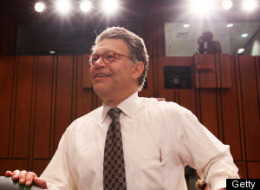
Sen. Al Franken (D-Minn.) joined the effort to persuade President Obama to appoint Elizabeth Warren to head the Consumer Financial Bureau in an interview with the Huffington Post on Saturday. Earlier that day, Sen. Jeff Merkley (D-Oregon) said he was endorsing Warren for the position and has made his position known to the White House, as has Sen. Bernie Sanders (I-Vt.). More than 60 House members have called on the president to nominate Warren and more than 160,000 people have signed an online petition. "I really like Elizabeth Warren," said Franken, adding that he often had her on as a guest on his talk-radio show. "Her work on bankruptcy is what put her on our radar at the show in 2005." Sen. Chris Dodd (D-Conn.) has questioned whether she'd be able to get 60 votes to overcome a filibuster, though the statute would allow the president to appoint her on an indefinite basis until a nominee is confirmed. Franken said he wasn't sure whether the White House wanted the fight. "The White House has to decide if they want a confirmation fight. I don't know what their considerations are. In my consideration, I think Elizabeth would be the best," he said.
Jeff Merkley For Warren: I've Told The White House To Appoint Her
The gathering of online and progressive activists at the Netroots Nation convention this year has produced a fairly overt and direct campaign to get Elizabeth...
Gibbs: Elizabeth Warren Is A 'Terrific Candidate'
Elizabeth Warren is a "terrific candidate" to lead the newly created Consumer Financial Protection Bureau and is "very confirmable" for the job, White House spokesman...
Barney Frank: Elizabeth Warren Should Head CFPB, By Recess Appointment If Necessary
If President Obama fears Elizabeth Warren won't be confirmed by the Senate to head the new Consumer Financial Protection Bureau, he should just appoint her...
Elizabeth Warren Backed By Consumer Protection Advocates, Editorial Cartoons (PICTURES)
Elizabeth Warren faces significant obstacles if she wants to lead the Consumer Financial Protection Bureau, but some consumer advocates think she's got them covered. Via...
Dems Line Up To Back Elizabeth Warren, 'She Predicted What Was Going To Happen'
Democratic lawmakers are lining up to back the appointment of Elizabeth Warren to head the newly created Consumer Financial Protection Bureau. Sens. Tom Harkin (D-Iowa)...


July 22, 2010
Sen. Sanders took part in a Capitol Hill press conference on to call for the appointment of Prof. Elizabeth Warren to lead the new consumer financial protection bureau.