Pages

Friday, March 30, 2012

GOP identity crisis worsened Romney's primary struggle


With more endorsements by prominent Republicans and a new poll showing him leading next week’s Wisconsin primary, Mitt Romney is on the cusp of becoming the party’s presumptive nominee.
Yet it’s taken Romney far longer to win the nomination than most observers expected, especially against under-funded and under-organized competitiors.
Why?
Republicans and analysts point to several culprits: the proportional delegate system, Romney’s gaffes, his flip-flops, his message, even his Mormon faith.
But he's also been plagued this primary season by a Republican Party still in the midst of an identity crisis, which has made things rocky for the former governor (and former moderate) from Massachusetts.

First Thoughts: Romney to wrap it up?

A wave of conservative enthusiasm -- with the new “Tea Party” movement as its leading edge -- propelled Republicans to record victories in the 2010 midterm elections, which delivered them control of the House and gains in the Senate.
The new freshman class, though, demanded more purity from their leaders. The very enthusiasm that helped Republicans win back part of Congress hampered their ability to govern; House Speaker John Boehner encountered great difficulties in convincing the newly elected ideologues to join in legislative compromises.
These fratricidal squabbles continued into the presidential campaign, where conservatives have resisted, at virtually every turn until now, the opportunity to get onboard with the establishment-favored candidate who’s regarded as most electable: Romney.
“There's clearly a bit of a crisis,” said former Delaware Rep. Mike Castle, a moderate Republican who was considered a shoo-in to win his state’s Senate seat in 2010 before losing a primary to the Tea Party-backed Christine O’Donnell.
“The division and savagely attacking of other Republicans when they don't vote the right way I think is very counterproductive,” added Castle, who is supporting Romney (ironically, along with O’Donnell). “I don't think that has appealed to some Republicans, and I'm sure it doesn't appeal to independents and Democrats.”

breaking news, world news, and news about the economy

The Daily Rundown's Chuck Todd previews Tuesday's Wisconsin primary and explains whether Rick Santorum will leave the GOP race if he loses.


Other reasons why Romney has been unable to gel conservatives behind his candidacy are probably more technical. Republicans cite his campaign's shoddy work in courting conservatives, the new primary rules that prolong the nominating process, and the candidate's gaffes at key points in the campaign. Romney also struggled to shake his image as a “flip-flopper” at points in the campaign, an image underscored by a senior aide’s recent comment likening the candidate’s pivot to the general election to an Etch A Sketch.
But while Romney is hardly a perfect candidate for today’s Republican Party, such a mythical creature might not exist anywhere on the planet. In some important respects, Romney's troubles stem from a party that is re-fighting its internal struggles from 2010.
“I think it's directly attributable to the spirit of 2010,” said Ken Buck, one of the Tea Party-linked Senate candidates that year, said in reference to the former Massachusetts governor’s struggles.
While the Tea Party -- a group of especially conservative activists angered by the bailouts to the financial industry and President Barack Obama’s health care law -- helped give kindling to the GOP in 2010, its insistence on ideological fealty in Republican candidates was seen as a factor that limited their success.
Republicans were successful in retaking the House but fell short of winning the necessary seats in the Senate, where Tea Party-backed nominees in Nevada, Delaware, and Colorado lost in opportunities Republicans had hoped to gain.
(Other candidates backed by the Tea Party were able to win in states like Utah, Kentucky and Florida, however.)

NBC/Marist poll: Romney leads ahead of Wisconsin primary

But the fallout hasn’t been limited to those primaries; Boehner’s struggles to win the votes of conservative freshmen elected in 2010 are well-documented. Those freshmen have pushed their leader to hew to strictly conservative positions at major junctures in the last year and a half, fueling a perception of Republicans in Congress as an intransigent lot, while weakening the speaker’s bargaining position in fights over spending cuts and the debt ceiling.
The tug of war between ideological purity and practical politics has been on display, again, during the campaign for Republicans to pick their nominee versus Obama.
Romney has long been considered the tentative frontrunner to become the GOP’s nominee, and he appears poised now to accrue the necessary delegates to accomplish that task.
But this primary has been defined, if nothing else, than by the flailing search by conservatives to identify a more palatable alternative to Romney.
While he’s stayed steady in primary voter polls, a veritable merry-go-round of challengers -- Michele Bachmann, Rick Perry, Herman Cain, Newt Gingrich, Rick Santorum, Gingrich again, and now, Santorum again -- have overtaken him in the polls before fading.

                   Visit msnbc.com for breaking news, world news, and news about the economy

The National Journal's Major Garrett and Hotline's Reid Wilson join Andrea Mitchell Reports to discuss.


Moreover, exit polls of the primary contests to date have borne out Romney’s struggles in winning over self-described “very conservative” primary voters -- the core of the modern Republican Party.
While Republicans of all stripes express confidence that the party will rally around the eventual nominee, the conservative wing of the party has been nothing less than dogged in its resistance to Romney.
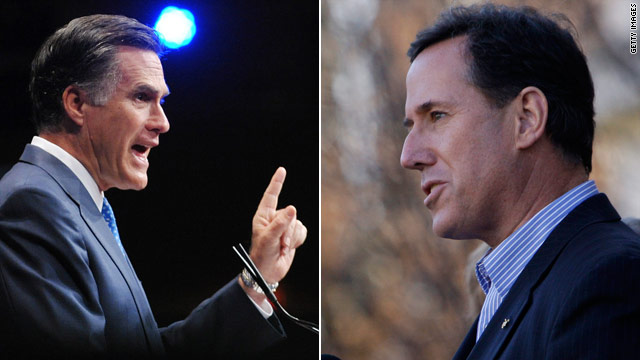
Romney and his current main rival, Santorum, “reflect different parts of the Republican Party,” said Oklahoma Rep. Tom Cole, one of the GOP’s veteran political strategists, who has remained neutral in the primary fight.
“Both of them have proven remarkably tough and durable -- it's like watching a great bar room fight. That's the kind of punching match that we're in right now,” Cole said. “In a sense, Republican voters want to be assured that whoever emerges is tough enough to go toe to toe with the president.”
Bachmann, the Minnesota congresswoman who represented the Tea Party in her presidential bid, acknowledged last week on “Morning Joe” that the Republican Party is “factionalized” at the moment.
But some Republicans argue that Romney’s struggles were essentially avoidable, and they blamed his campaign for doing a poor job of reaching out to conservatives.

Poll: Majority of GOP says Gingrich, Paul should end campaigns

A former chairman of a major state Republican Party, who is sympathetic to Romney’s candidacy and requested to speak anonymously in order to offer more candid analysis, argued that the former Massachusetts governor’s struggles were directly related to poor outreach.
“They’ve been unwilling or unable to close the deal among conservatives,” the chairman said of the Romney campaign.
“Why don’t they send someone to Grover’s meeting in D.C.?” added that person, referring to the weekly meeting of conservative activists hosted by anti-tax advocate Grover Norquist.
The suggestion was that Romney’s campaign was basically self-involved and did little to show conservatives that Romney was one of them -- an especially curious strategy given Romney’s presidential run in 2008, which was staked on running as the conservative alternative to John McCain.
“There’s no history there; they’ve never dated,” said Craig Shirley, a Reagan biographer whose public relations firm did work for the Gingrich campaign for a stretch this primary. “It’s a little hard to ask people to marry you when you haven’t courted them first.”
The Romney campaign’s strategy, though, has sought to maintain the candidate’s viability for the general election to the best of their ability. The Romney campaign has been nothing if not careful in navigating Romney through the briar patch of conservatives’ demands on the candidate.
But the primary campaign appears to have taken its toll; a Washington Post/ABC News poll released Wednesday had Romney’s unfavorable ratings at an all-time high. Romney will no doubt pivot toward the center in the general election, but he has more ground to make up than many Republicans would like.
“The question becomes: Can the eventual Republican candidate, diminished by the primary, come back and win the election,” said Castle.
But Buck, perhaps illustrating conservatives’ ambivalence toward Romney, said it would be “fascinating” to see really how competitive Romney would be versus Obama.
“The question is, which Mitt Romney?” he asked.

Sean Gardner / Reuters
Republican presidential candidate Mitt Romney addresses supporters during a "Repeal & Replace Obamacare" campaign in Metairie, Louisiana March 21, 2012.

Not-So-Smooth Operator

Obama increasingly comes across as devious and dishonest.


Something's happening to President Obama's relationship with those who are inclined not to like his policies. They are now inclined not to like him. His supporters would say, "Nothing new there," but actually I think there is. I'm referring to the broad, stable, nonradical, non-birther right. Among them the level of dislike for the president has ratcheted up sharply the past few months.
It's not due to the election, and it's not because the Republican candidates are so compelling and making such brilliant cases against him. That, actually, isn't happening.
What is happening is that the president is coming across more and more as a trimmer, as an operator who's not operating in good faith. This is hardening positions and leading to increased political bitterness. And it's his fault, too. As an increase in polarization is a bad thing, it's a big fault.

noonan0331Getty Image

The shift started on Jan.20, with the mandate that agencies of the Catholic Church would have to provide services the church finds morally repugnant. The public reaction? "You're kidding me. That's not just bad judgment and a lack of civic tact, it's not even constitutional!" Faced with the blowback, the president offered a so-called accommodation that even its supporters recognized as devious. Not ill-advised, devious. Then his operatives flooded the airwaves with dishonest—not wrongheaded, dishonest—charges that those who defend the church's religious liberties are trying to take away your contraceptives.
What a sour taste this all left. How shocking it was, including for those in the church who'd been in touch with the administration and were murmuring about having been misled.
Events of just the past 10 days have contributed to the shift. There was the open-mic conversation with Russian President Dmitry Medvedev in which Mr. Obama pleaded for "space" and said he will have "more flexibility" in his negotiations once the election is over and those pesky voters have done their thing. On tape it looked so bush-league, so faux-sophisticated. When he knew he'd been caught, the president tried to laugh it off by comically covering a mic in a following meeting. It was all so . . . creepy.
Next, a boy of 17 is shot and killed under disputed and unclear circumstances. The whole issue is racially charged, emotions are high, and the only memorable words from the president's response were, "If I had a son he'd look like Trayvon" At first it seemed OK—not great, but all right—but as the story continued and suddenly there were death threats and tweeted addresses and congressmen in hoodies, it seemed insufficient to the moment. At the end of the day, the public reaction seemed to be: "Hey buddy, we don't need you to personalize what is already too dramatic, it's not about you."
Now this week the Supreme Court arguments on ObamaCare, which have made that law look so hollow, so careless, that it amounts to a characterological indictment of the administration. The constitutional law professor from the University of Chicago didn't notice the centerpiece of his agenda was not constitutional? How did that happen?
Maybe a stinging decision is coming, maybe not, but in a purely political sense this is how it looks: We were in crisis in 2009—we still are—and instead of doing something strong and pertinent about our economic woes, the president wasted history's time. He wasted time that was precious—the debt clock is still ticking!—by following an imaginary bunny that disappeared down a rabbit hole.
The high court's hearings gave off an overall air not of political misfeasance but malfeasance.
All these things have hardened lines of opposition, and left opponents with an aversion that will not go away.
I am not saying that the president has a terrible relationship with the American people. I'm only saying he's made his relationship with those who oppose him worse.
In terms of the broad electorate, I'm not sure he really has a relationship. A president only gets a year or two to forge real bonds with the American people. In that time a crucial thing he must establish is that what is on his mind is what is on their mind. This is especially true during a crisis.
From the day Mr. Obama was sworn in, what was on the mind of the American people was financial calamity—unemployment, declining home values, foreclosures. These issues came within a context of some overarching questions: Can America survive its spending, its taxing, its regulating, is America over, can we turn it around?
That's what the American people were thinking about.
But the new president wasn't thinking about that. All the books written about the creation of economic policy within his administration make clear the president and his aides didn't know it was so bad, didn't understand the depth of the crisis, didn't have a sense of how long it would last. They didn't have their mind on what the American people had their mind on.
The president had his mind on health care. And, to be fair-minded, health care was part of the economic story. But only a part! And not the most urgent part. Not the most frightening, distressing, immediate part. Not the 'Is America over?' part.
And so the relationship the president wanted never really knitted together. Health care was like the birth-control mandate: It came from his hermetically sealed inner circle, which operates with what seems an almost entirely abstract sense of America. They know Chicago, the machine, the ethnic realities. They know Democratic Party politics. They know the books they've read, largely written by people like them—bright, credentialed, intellectually cloistered. But there always seems a lack of lived experience among them, which is why they were so surprised by the town hall uprisings of August 2009 and the 2010 midterm elections.
If you jumped into a time machine to the day after the election, in November, 2012, and saw a headline saying "Obama Loses," do you imagine that would be followed by widespread sadness, pain and a rending of garments? You do not. Even his own supporters will not be that sad. It's hard to imagine people running around in 2014 saying, "If only Obama were president!" Including Mr. Obama, who is said by all who know him to be deeply competitive, but who doesn't seem to like his job that much. As a former president he'd be quiet, detached, aloof. He'd make speeches and write a memoir laced with a certain high-toned bitterness. It was the Republicans' fault. They didn't want to work with him.
He will likely not see even then that an American president has to make the other side work with him. You think Tip O'Neill liked Ronald Reagan? You think he wanted to give him the gift of compromise? He was a mean, tough partisan who went to work every day to defeat Ronald Reagan. But forced by facts and numbers to deal, he dealt. So did Reagan.
An American president has to make cooperation happen.
But we've strayed from the point. Mr. Obama has a largely nonexistent relationship with many, and a worsening relationship with some.
Really, he cannot win the coming election. But the Republicans, still, can lose it. At this point in the column we usually sigh.

George Zimmerman lost job as party security guard for being too aggressive, ex-co-worker says

Zimmerman at center of firestorm for fatally shooting unarmed teen Trayvon Martin last month

Comments (391)


Trayvon Martin was shot along a dark walkway just behind Cheryl Brown's apartment while her son Austin was walking the family dog in Sanford, Fla.

CNN.COM

Robert Zimmerman, Jr., the brother
of George Zimmerman, on CNN
Thursday night.


Kevin Hagen for New York Daily News

Cheryl Brown, the mother of 13-year-old
shooting witness Austin Brown, speaks
about her son's experience outside their
home on Thursday in Sanford, Fla.


George Zimmerman was fired from his job as an under-the-table security guard for “being too aggressive,” a former co-worker told the Daily News.
Zimmerman, at the center of a firestorm for shooting an unarmed black teenager a month ago, worked for two different agencies providing security to illegal house parties between 2001 and 2005, the former co-worker said.

TEEN WITNESS TO TRAYVON MARTIN'S SHOOTING 'COULDN'T SEE ANYTHING:' MOM

STUDENT ARTIST LEAVES PAPER OVER TRAYVON MARTIN CARTOON

RACE ISSUES IN TRAYVON MARTIN CASE ARE NOT QUITE BLACK AND WHITE

GEORGE ZIMMERMAN'S FATHER CLAIMS TRAYVON MARTIN ATTACKED HIS SON

“Usually he was just a cool guy. He liked to drink and hang with the women like the rest of us,” he said. “But it was like Jekyll and Hyde. When the dude snapped, he snapped.”
The source said Zimmerman, who made between $50 and $100 a night, was let go in 2005.
“He had a temper and he became a liability,” the man said. “One time this woman was acting a little out of control. She was drunk. George lost his cool and totally overreacted,” he said. “It was weird, because he was such a cool guy, but he got all nuts. He picked her up and threw her. It was pure rage. She twisted her ankle. Everyone was flipping out.”
The year 2005 was a bad one for Zimmerman: he was arrested for fighting with a cop trying to arrest his friend for underage drinking, and he and his ex-fiancée took out protective orders against each other.
The former co-worker, who is no longer in touch with Zimmerman, said he was shocked to hear what happened Feb. 26 in a gated community in Sanford, Fla.
“He definitely loved being in charge. He loved the power. Still, I could never see him killing someone. Never,” he said.
Zimmerman, who was working as an insurance agent and liked to patrol his neighborhood, killed 17-year-old Trayvon Martin after calling 911 to report a suspicious person. The teenager, who was staying with his father, went out to buy a bag of Skittles and an iced tea.
Zimmerman claimed self-defense and was not arrested. He has gone into hiding.
Zimmerman’s father, a former magistrate judge, came forward Wednesday night to defend his son, alleging that Trayvon said “you’re going to die now” before decking Zimmerman and battering his head into the sidewalk.
He discounted newly revealed video shot in the police station that night showing his son free of bruises, blood or bandages.
“I know his nose was broken and his scalp was cut in two different places. They may have cleaned him up, I don’t know,” Robert Zimmerman told the Fox affiliate in Orlando.
Zimmerman lawyer Craig Sonner also played down the video, saying George Zimmerman’s wounds had been cleaned up.
His older brother, Robert Zimmerman Jr., told CNN’s Piers Morgan that his sibling acted in self-defense.
“He prevented his firearm from being taken from him and used against him,” he said. “That’s called saving your life.”
In another twist, the Daily News learned that a key witness whose account has been used to back Zimmerman’s story saw less than has been attributed to him.
Police have said that Austin Brown, 13, who went out to walk his dog near where Trayvon was shot, saw Zimmerman lying in the grass crying for help just before the slaying.
But Austin’s mom, Cheryl Brown, told The News that when cops interviewed her son eight days after Trayvon’s death, he told them he saw only one person lying in the grass and he couldn’t tell who it was because it was too dark.
“He said he couldn’t see the race or anything. He never saw a second person,” Brown said.
“Then they asked him if he saw what the man was wearing. They gave him a multiple-choice question and gave him three colors. He said, ‘I think it was red.’” Zimmerman was wearing a red and black jacket. Trayvon was wearing a gray hoodie.
“Knowing my son, I believe he felt pressured to give the color,” Brown said.
A new witness interviewed on CNN cast doubt on Zimmerman’s story, saying that he looked out his window, glimpsed two men scuffling in the dark, heard “an excruciating kind of yell” and saw what he thought was Zimmerman on top of Trayvon.
“After the larger man got off, then there was a boy, obviously now dead, on the ground, facing down,” the witness told CNN.
“After the shot, one man got up,” the man said. “He was walking towards where I was watching and I could see him a little bit clearer, and see that he was a Hispanic man and he was, you know, he didn’t appear hurt or anything else, he just seemed very worried.”
Meanwhile, filmmaker Spike Lee paid off Elaine and David McClain, the elderly Florida couple who were terrorized when he mistakenly tweeted their address as George Zimmerman’s. Lee called them to apologize and paid them an undisclosed sum for “the disruption to their lives,” his lawyer said.
The McClains, in their 70s, had to flee their home for a hotel due to harassment from people angry that George Zimmerman remains free.

Trayvon Martin Video's


Visit msnbc.com for breaking news, world news, and news about the economy


Martin family attorney Benjamin Crump talks with Rev. Al Sharpton about the family’s reaction to the video of George Zimmerman, that shows him shortly after Trayvon was killed.

Visit msnbc.com for breaking news, world news, and news about the economy


Visit msnbc.com for breaking news, world news, and news about the economy


Security Video of George Zimmerman fuels debate


Visit msnbc.com for breaking news, world news, and news about the economy


Trayvon Martin Video Shows No Blood or Bruises on George Zimmerman

There are more videos on another blog page


 Trayvon Martin, 17, was fatally shot by neighborhood watch leader George Zimmerman
A police surveillance video taken the night that Trayvon Martin was shot dead shows no blood or bruises on George Zimmerman, the neighborhood watch captain who says he shot Martin after he was punched in the nose, knocked down and had his head slammed into the ground.


  video platform
  video management
  video solutions
  video player


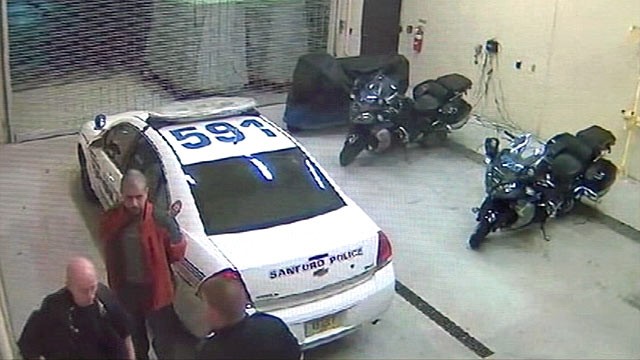
The surveillance video, which was obtained exclusively by ABC News, shows Zimmerman arriving in a police cruiser. As he exits the car, his hands are cuffed behind his back. Zimmerman is frisked and then led down a series of hallways, still cuffed.
Zimmerman, 28, is wearing a red and black fleece and his face and head are cleanly shaven. He appears well built, hardly the portly young man depicted in a 2005 mug shot that until a two days ago was the single image the media had of Zimmerman.

The initial police report noted that Zimmerman was bleeding from the back of the head and nose, and after medical attention it was decided that he was in good enough condition to travel in a police cruiser to the Sanford, Fla., police station for questioning.
His lawyer later insisted that Zimmerman's nose had been broken in his scuffle with 17-year-old Martin.
In the video an officer is seen pausing to look at the back of Zimmerman's head, but no abrasions or blood can be seen in the video and he did not check into the emergency room following the police questioning.
 Zimmerman was not arrested although ABC News has learned that the lead homicide investigator filed an affidavit urging Zimmerman be charged with manslaughter. The prosecutor, however, told the officer to not file the charge because there was not enough evidence for conviction.
Zimmerman said he was heading back to his car when Martin attacked him. His lawyer, Craig Sonner, said his client felt "one of them was going to die that night," when he pulled the trigger.
Martin's girlfriend, who was on the phone with him in his final moments, told ABC News in an exclusive interview that she has not been interviewed by police, despite Martin telling her he was being followed.
The 16-year-old girl, who is only being identified as Dee Dee, recounted the final moments of her conversation with Martin before the line went dead.
"When he saw the man behind him again he said this man is going to do something to him. And then he said this man is still behind him and I said run," she said.
Phone records obtained by ABC News show that the girl called Martin at 7:12 p.m., five minutes before police arrived, and remained on the phone with Martin until moments before he was shot.
DeeDee said Martin turned around and asked Zimmerman why he was following him.
"The man said what are you doing around here?" DeeDee recalled Zimmerman saying.
She said she heard someone pushed into the grass before the call was dropped.
Zimmerman, who had called 911, was asked by the dispatcher if he was following the teen. When Zimmerman replied that he was, the dispatcher said, "We don't need you to do that."
Martin's death has sparked protests across the country and prompted President Obama to say that if he had a son, he would look like Martin.
Over the past few days, leaks have emerged suggesting Martin was dogged by discipline problems.
Martin had been slapped with a 10 day school suspension after a bag with suspected marijuana was found in his backpack, Benjamin Crump, the family's attorney, said.
Last year the teen was suspended for spraying graffiti on school grounds. The Miami Herald reported that the school guard who stopped him searched his backpack and found 12 items of women's jewelry and a flathead screw driver that the guard believed to be a "burglary implement." But Martin was never charged or specifically disciplined for the incident.
Crump alleged that the Sanford police had leaked damaging information about Martin in order to muddy the case, calling it a "conspiracy." Crump called the school disciplinary problems "irrelevant" to the case that "an unarmed 17 year kid was killed."


Trayvon Martin funeral director speaks


Nancy Grace|Added on March 28, 2012

Piers Morgan Interviews George Zimmerman’s Brother About Night Of Trayvon Martin Shooting


video

On Thursday, Robert Zimmerman, brother of George Zimmerman, spoke — for the first time — on Piers Morgan Tonight. Defending his brother’s involvement in the Trayvon Martin case, Zimmerman said his brother would have been dead had he not acted — and that the “pulled out a gun and shot him” narrative is simply not true.
“Why are you here?” Morgan asked.
Zimmerman replied: “I think the tide has turned. There’s a lot of loose ends to this story, some of them have to do with the events of that night and the investigation. Some of them have moved on to a lot of hate speech, people like the McClain family having to flee their home, people putting emotions ahead of fact, and putting our family, and other families, in danger.”
He confirmed the family has received death threats, and that he himself was “contacted by law enforcement too because there was credible intelligence that could have threatened me.” Zimmerman continued:
It is a mythology that’s been built up. … it’s not because [George] doesn’t have supporters, it’s because people who love and support George, his family name, also support the system, the judicial system and the legal system, that we have in America.
Morgan then went on to ask him about his brother’s character. Zimmerman said George “is the neighbor that everybody would want to have, he’s the kind of guy that sees somebody struggling with changing a tire and stops to help them. Or helps older people with their groceries. He goes out of his way to help people and he always has.”
Playing devil’s advocate, Morgan said viewers might then ask why such a kind person would “get into some kind of altercation” with a young boy.
Zimmerman quickly got defensive:
When you say chasing after and getting into an altercation, there’s a lot of ways that people get into altercations. I believe that if you wanted to reach over this table and assault me badly enough, you could be armed with Chapstick and a toothpick and still put me in fear, in reasonable fear, of my life. He didn’t get into an altercation, people don’t just get into altercations. There are aggressors.
Zimmerman said he heard from his brother within 24 hours of the incident and the idea that he chased Martin is “absolutely false.” Morgan countered, saying the 911 call shows him saying he wants to pursue Martin, and is told not to. But then he “says okay,” Zimmerman said. “And anything past that is conjecture by the media.”
Morgan played the call and asked how Zimmerman knows George stopped following Martin. He said it’s in the police reported, to which Morgan quickly added, the police report is based off what George told the police.
Zimmerman said if Martin was allegedly close to his home, and was being pursued, “I don’t know how he couldn’t make it home.” Martin “somehow snuck up on him,” he said. Furthermore, he said George was reaching for his cell phone to say the person he stopped following had confronted him, but he “never got to make that call” because Martin attacked him.
Regarding the new video, Zimmerman said some injuries take 24 or 36 hours to “show the bruising,” and sometimes when the nose breaks, blood is swallowed. “We’re confident the medical records are going to explain all of George’s medical history,” he said.
George “has very severe emotional injuries,” he said. “He didn’t call his family and express anything but sadness [...] he had changed, he wasn’t the same [...] he was very disappointed that none of the neighbors had come out and helped.”
Also claiming self-defense, he said George “prevented his firearm from being taken from him and used against him, and that’s called saving your life.” It “would have been George dead had he not acted decisively and instantaneously,” he said.
The scream on the 911 call, he said, was George. But he didn’t blame Martin’s family for believing it’s Martin’s voice. Nonetheless, he insisted it’s George. Despite those screams, he said it was sad that no one came to help. If someone had come out, the situation potentially could have been avoided, Zimmerman said.
“It sounds just like my voice,” he added. And said technology would sort it out.
Regarding the possible racial slur, he said George could have said anything, noting that he speaks two languages fluently. And said that specific audio is not in the original 911 tape. A point which Morgan said is factually incorrect. Zimmerman said he didn’t believe they’re words, but rather, utterances under his breath. Morgan pressed further, but Zimmerman didn’t budge.
Morgan said a slur would add a racial element. The “whole hoodie thing,” Zimmerman said, is not what caused this.
Going further, he said George found Martin suspicious in context of what was going on in the neighborhood.
Morgan went on to ask if George had ever lied to Zimmerman, to which he responded, “not to my knowledge.” He’s the most honest brother, he said.
Asked what he’d say to Martin’s family, Zimmerman said, “This is a tragedy, her son was lost. I feel very badly about that. And I want, in the end, not for her son’s memory to be seen as how we degraded our system and turned into mob rule, and went into a hate speech, carnival of hatred.”
Take a look, via CNN (Part 1):   Part 2 next page:


Piers Morgan Interviews George Zimmerman’s Brother About Night Of Trayvon Martin Shooting

Zimmerman: That was my brother screaming
Piers Morgan
|Added on March 30,


Gun rights advocates start Zimmerman defense fund
A group of gun rights advocates who run a website called Legalboom.org are starting a legal defense fund for George Zimmerman.
They say he's been convicted in the court of public opinion and want to make sure he gets a fair trial if he's taken to court. Legalboom.org
is run by a group of four partners.
One of them, Chris Kossmann, spoke with FOX 35 about why he's stepping into this controversial story.


New Trayvon Martin Witness Speaks To Anderson Cooper About Night Of Shooting

video
ments

On his show Thursday night, Anderson Cooper spoke to a new witness in the Trayvon Martin case. The witness, whose identity remains anonymous, described seeing “scuffling” and heard a “painful” scream. As many have been saying, the witness also said George Zimmerman seemed unharmed following the shooting.
Cooper asked, “Can you tell me what you saw and what you heard the night Trayvon Martin was killed?”
“It would have to be starting with hearing voices, but not seeing, but after the voices, opening the window, and seeing two men, or two people, on the ground. On top of each other,” he said. Asked what made him pay attention to the voices, the witness continued:
At first I heard the voices with my window closed. And pretty much in that area, people walk their dogs, and you’ll hear people talking, and you can hear them very clearly even when they’re not talking loud. So I thought it was rather loud, but I had just shut my window (because it started raining) … and I thought, oh my gosh who’s out there walking their dog in the rain? And I didn’t look. And then I did something else, and then I heard the loud voices again, and then I thought, well, let me see who that is. And I opened up my window … and it definitely was a very loud, predominant voice. I couldn’t hear the words, but I was like, okay this is not a regular conversation. This is someone aggressively, you know, yelling at someone.
The witness said there was “definitely” a gap of time between hearing the voices the first time and the second time when he opened the window. He observed the following after opening the window:
I saw two men on the ground, on top of each other, obviously thinking, okay something really horrible is happening. And at that point, not looking out the window, I heard a yell for help, and then I heard … another excruciating type of yell. It didn’t even almost sound like ‘help,’ it almost sounded so painful. But I wasn’t watching out the window. [...] Next time I looked out the window, there same thing, two men on the grass, on top of each other [...] I couldn’t see a lot of movement because it was very dark, but I felt like they were scuffling. And then I heard gunshots, which to me, were more like pops.
Cooper said, “You say gunshots plural. Was there more than one, do you remember?” The witness replied, “It was more like a pop, and it definitely was more than one. So I don’t know if it was an echo or anything else, but it definitely made more than one pop.”
After the shot, he said, one man got up. And then he “was walking toward where I was watching, and I could see him a little bit clearer, and I could see that it was a Hispanic man. And he was, um, you know, he didn’t appear hurt, or anything else. He just kind of seemed very [...] worried or whatever. [...] And another man came out with a flashlight.”
Not a police officer, he specified. He couldn’t say whether the shot went off during the scuffle, but added, “I wouldn’t say it was a lot of movement when I heard the shot.”
Logically, he said, he’d guess Zimmerman was the man on the top, but he could not say for sure since it was dark outside. Both struggles, he said, were in the same location on the grass.
Take a look at the segment, via CNN:

Witness details Trayvon Martin's killing

March 29, 2012|From Vivian Kuo, CNN


Someone has stepped up, reporting to have witnessed last month's shooting of Trayvon Martin, an unarmed 17-year-old whose death has sparked nationwide controversy. The witness detailed to CNN the Florida incident from what initially sounded like an argument to its fatal conclusion.
"It would have to be starting with hearing voices, but not seeing, and then, after the voices, opening a window and then seeing -- with two men or two people on the ground, one on top of each other," the witness, who has asked not to be identified, even by gender, told CNN's Anderson Cooper about the February 26 incident in a gated community in Sanford, Florida.
The witness reported hearing through a closed window voices from an area where residents typically walk their dogs. "I thought it was rather loud, but I had just shut my window because it had just started pouring out rain," the witness said. "And then I thought, 'Oh, my gosh, who's out there walking their dog in the rain?'"
But the witness did not immediately look outside to see what the commotion was about, according to the account. "I went and did something else, and then I heard the loud voices again," said the witness, who reported opening the window. "It definitely was a very loud, predominant voice," the witness said. "I couldn't hear the words but it was like, OK, this is not a regular conversation. This is someone aggressively, you know, yelling at someone."
The witness recounted seeing two men on the grass, one on top of the other. "And at that point, not looking out the window, I heard the yell for help, one yell for help, and then I heard another ... excruciating type of yell. It didn't almost sound like 'help.' It just sounded so painful. But I wasn't watching out the window during that. And then the next time I looked out the window, there's the same thing: two men on the grass, one on top of each other. I couldn't see a lot of movement. It was very dark, but I felt like they were scuffling. And then I heard the gunshots, which, to me, were more like pops than they were like a bang."
The witness recalled hearing more than one shot. "It definitely was more than one pop noise, so I don't know if it was an echo or anything else. But it definitely made more than one pop."
The witness said the shots were audible as one man was on top of the other. But the witness recalled not having been able to see clearly which man was on top because it was dark.
Within a couple of seconds after the shots, one of the men "was walking toward where I was watching, and I could see him a little bit clearer. Could see that it was a Hispanic man. He didn't appear hurt or anything else."
But the man, who by now had left the grass and was walking on the sidewalk, did seem worried, "with his hand up to his forehead," the witness said. "Now, a couple of seconds later, in the dark, you see that person that's alive walk away; you know, obviously, OK, he must've got up and he walked away, where the other person is still laying there, face down."
The person who was walking away did not appear hurt, said the witness, who has told police of the incident. "You're thinking, wow, I'm looking at the person that just shot someone," the witness said.
George Zimmerman has told police he shot Martin in self defense.
Zimmerman's father told CNN on Thursday that Martin threatened to kill Zimmerman and then beat him so badly Zimmerman was forced to shoot.
"Trayvon Martin said something to the effect of, 'You're going to die now' or 'You're going to die tonight,' something to that effect," Robert Zimmerman told Orlando TV station WOFL. "He continued to beat George. At some point, George pulled his pistol. Did what he did."
A surveillance video from the Sanford police headquarters the night of the incident raises questions about the description of a beating.
It shows Zimmerman, his hands cuffed, exiting a patrol car and being led into the police station. First broadcast Wednesday by ABCNews.com, the video does not provide close-ups, but also does not show clear signs of injuries on Zimmerman.
Sanford, Florida, is a divided town, struggling with stigma
Joe Oliver, a friend of Zimmerman's, said Zimmerman told him he was "cleaned up by cops at the scene" that night before being taken to the station.
Oliver also said it was discovered the next day that Zimmerman's nose was broken.
Craig Sonner, George Zimmerman's legal adviser, said Thursday the video does not support or contradict Robert Zimmerman's description. It is "very grainy," he told NBC's "Today" show. Sonner also said the injuries Zimmerman said he suffered were "later cleaned up."
A police report says Zimmerman was bleeding from the nose and the back of his head when police arrived at the scene of the killing. He was given first aid in the police car, the report says.
Sonner noted that at one point in the video, an officer appears to be looking at the back of Zimmerman's head.
Asked whether Zimmerman is able to leave his home, given the death threats he has received, Oliver said no.
Martin's death has sparked outrage and protests across the United States, moved President Barack Obama to call it a tragedy and prompted a federal investigation.
Zimmerman's father defended the shooting in the interview with WOFL, but asked that his face be obscured because he fears for his safety.

In Depth: CNN peels back the layers
Robert Zimmerman told the news station that Martin confronted his son first and pummeled his son.
"He was punched in the nose. His nose was broken," Robert Zimmerman said. "He was knocked to the concrete. Trayvon Martin got on top of him and just started beating him. In the face. In his nose, hitting his head on the concrete." That account appears to differ from the one provided by the witness, who said the tussle occurred on grass.
Robert Zimmerman, who was not there the night of the shooting, did not say how he knew the details of the altercation.
The elder Zimmerman's account was disputed by Martin's family attorney and several legal experts who looked at the video.
"The injuries that made it sound as though he really should have been on a stretcher are not apparent in this tape at all," said Marcia Clark, the former prosecutor in the O.J. Simpson trial. "He moves freely. He moves fluidly, not like someone who has just been through a beating in any way, shape or form, someone whose head has been pounded on the pavement as hard as described, someone whose nose was broken and bleeding. That tells you a great deal."
Evolution of the hoodie
Sybrina Fulton, Martin's mother, said the video is among other evidence that proves her son was killed unjustly.
"I believe that this video is the icing on the cake," she said. "This is not the first part of the evidence that they have had. They have had the 911 tapes and they also have witnesses. This is in addition to what the Sanford Police Department has always had. There is no problem with this case and he needs to be arrested."
George Zimmerman, a neighborhood watch volunteer, said he shot Martin in self-defense after the teen attacked him. Martin, who was walking through the gated community back to the house of his father's fiancee, was wearing a hoodie in the rain and carrying Skittles candy and a can of iced tea he had purchased from a nearby convenience store.
Authorities have said Zimmerman has not been charged because there are no grounds to disprove his account that he acted in self-defense. Critics say Zimmerman, who is Hispanic, racially profiled Martin, who was black.
Spike Lee apologizes for retweet error
Robert Zimmerman said his son is having a hard time dealing with the criticism.
"I never foresaw so much hate coming from the president, the Congressional Black Caucus, the NAACP. Every organization imaginable is trying to get notoriety or profit from this in some way," Robert Zimmerman told WOFL. "But there's so much hate that I have never been involved in hate and George hasn't. It's really unbelievable."
Robert Zimmerman said his son is not racist and that race had nothing to do with the incident.
"He would do anything to help anybody at any time. He's colorblind when it comes to any race," Robert Zimmerman said.
Tracy Martin, Trayvon Martin's father, said Wednesday that the 911 tape shows Zimmerman was profiling his son.
In a recording of Zimmerman's call to police, some people have said they hear what sounds like a possible racial slur. CNN enhanced the sound of the 911 call, and several members of CNN's editorial staff repeatedly reviewed the tape, but could reach no consensus on whether Zimmerman used a slur.
Angela Corey, the special prosecutor assigned to investigate the case, said Tuesday that investigators would look into the allegations that Zimmerman used a racial slur.
Martin, who lived in Miami, was visiting Sanford after receiving a 10-day suspension from school, a family spokesman has said. An empty plastic bag found in his book bag had been determined to contain marijuana residue.
Benjamin Crump, Martin's parents' attorney, said information regarding the suspension is irrelevant and amounts to a smear campaign against the teen.
Florida law allows the use of deadly force anywhere a person feels a reasonable fear of death or serious injury. It has been cited in a number of justifiable homicide cases in Florida.
But as more information surfaces, the picture of what happened between Martin and Zimmerman becomes more complicated.
What the witnesses are saying
Despite the twists and turns, Fulton, Martin's mother, says she still has faith in authorities investigating her son's case.
"I feel confident that they're going to do a thorough investigation," Fulton said. "We're trying to be patient, even though it's been over a month. We're trying to be patient, and we're trying to press on for justice."


Daily Caller Sees Possible Head Injury In George Zimmerman Police Video


The release of surveillance footage, by the Sanford Police Dept. to ABC News, of Trayvon Martin shooter George Zimmerman showing little or no signs of injury the night of the incident has been called a “game changer” by our own Dan Abrams, and others, because it undercuts Zimmerman’s version of events. However, according to conservative website The Daily Caller‘s “analysis,” the tape might show “a vertical laceration or scar several inches long.”
From The Daily Caller‘s Matthew Boyle:
Surveillance video of George Zimmerman arriving at a Sanford, Fla. police station indicates what may be an injury to the back of his head, a Daily Caller analysis shows.
The Daily Caller’s “analysis” seems to have consisted of taking a screengrab of ABC’s video, then hitting the “sharpen” button on their image editing software. Here’s a comparison of The Daily Caller’s unenhanced screenshot (on the right) with another frame of the video that shows the same spot on Zimmerman’s head, from a different angle:

Viewers can decide for themselves, but reviewing the video, rather than isolating single frames, seems to pretty clearly show that what The DC identifies as a possible “laceration” is actually a dark spot created by variations in the density of Zimmerman’s hair, the curvature of his skull, and the lighting and angle of the shot. That spot on his head is visible and well-lit in other spots on the tape, but nothing is visible. Lacerations don’t disapppear depending on how you light them.
Still, you have to give The Daily Caller credit for being thorough. Actually, a review of The Daily Caller’s coverage of the Trayvon Martin story shows a pattern of a certain kind of thoroughness.
While they were a little bit late to the story (mainstream cable channels began reporting on the story on March 13, but the story broke wide open with the release of the 911 tapes on March 16. Fox News ran its first Trayvon segment on March 19), their priorities were clear from the start. The first story listed under The Daily Caller’s Trayvon Martin tag was a March 22 column defending white culture:
So let me get this straight. An overzealous neighborhood watchman of Hispanic descent shoots an unarmed black kid, and white culture is to blame? That seemed to be the argument in Michael Skolnik’s opportunistic, perversely reasoned, poorly written viral column about the death of Florida teen Trayvon Martin. Then CNN and MSNBC happily picked up the thread and sped the argument forthwith to Crazyland.
Now that Trayvon Martin had their attention, The DC quickly distilled the voice of Trayvon Martin’s millions of supporters: the dozens-strong New Black Panther Party. The next day, they ran a story that implied that President Obama commented on Trayvon Martin’s killing because of pressure from that same group, but have since thought better of it, apparently, editing the piece to make it less race-baitey.
Here are some of the headlines from the 45 articles The Daily Caller has aggregated under their Trayvon Martin tag. You can see them all for yourself, but these are pretty well representative:
* Sharpton emcees racially-focused Sanford rally, warns against use of violence – “The Rev. Al Sharpton, an MSNBC host and liberal political figure, riled up a mostly-black Sanford, Fla., crowd on Thursday night”
* Trayvon Martin merchandise spreads through Florida town before, during Sharpton rally
* Obama comments on Trayvon Martin case after Black Panthers, Sharpton ralliers bemoan WH silence (since updated to read “Obama offers belated comments on Trayvon Martin’s death [VIDEO]“)
* Gingrich lashes out at Obama for ‘disgraceful’ Trayvon Martin comments as new witness supports shooter
* New Black Panthers no-show at planned Trayvon Martin rally outside Sanford, Fla. police dept.
* After days of tension, all quiet in Sanford on Saturday
* Is momentum in Trayvon Martin case swinging toward George Zimmerman?
* George Will on Trayvon Martin: Remember ‘media,’ ‘well-known agitators’ reactions to Duke Lacrosse
* Kurtz: MSNBC should crack down on Sharpton’s activism, not allow him to organize political rallies
* Father Pfleger memorializes Trayvon Martin with wooden statue, hoodie, Skittles at church altar
* Police: Zimmerman says Trayvon decked him with one blow, then began hammering his head
* Disarray, lack of organization delay Martin march as Jackson, Grayson late
* Communists, occupiers infiltrate Sanford Trayvon rally
* VIDEO: Jesse Jackson shows up late to Trayvon march in Sanford
* Miami teens ransack, loot local Walgreens in Trayvon Martin ‘protest’
* Alveda King: Sharpton, Jackson should stop ‘playing race card’ over Trayvon Martin
* A ‘post-racial’ lynch mob
* Ron Paul on Trayvon Martin Case: Not ‘going to be a slam dunk’
* Latino organizations dismiss George Zimmerman, question his ethnicity
As you can see, The Daily Caller was very thorough when it comes to covering Al Sharpton riling up black people, or Jesse Jackson showing up late, or President Obama being a bad, bad man, or George Zimmerman telling his side of the story and gaining “momentum.” They were so thorough that they even managed to work communists and Father Pfleger(!!!) into their coverage, and obtain the expert legal opinion of Rep. Ron Paul (R-TX). They’ve also been very thorough about conducting an internet grave-robbing, posting two rounds of tweets from the slain teenager’s closed Twitter accounts.
So, what’s missing from those 45 Trayvon Martin articles? Well, there’s not a single headline devoted to Trayvon Martin’s parents, or to his attorney Benjamin Crump, or to Trayvon’s girlfriend, the only living witness to the first contact between Trayvon and Zimmerman. But they got Father Pfleger. They got the communists. They got Al Sharpton and Jesse Jackson and President Obama but good, with over a quarter of their Trayvon articles.
George Zimmerman deserves his day in court, which is what all of these protests have been about. Hopefully, if and when he gets it, that court is a little more thorough than The Daily Caller was, or the only person in danger of going to jail will be Al Sharpton.

ATTENTION: Followers of Politics

to those who follow me here on Politics.  I do have a blog on the 2012 campaign. 

Coverage of the 2012 Election

Thursday, March 29, 2012

Trayvon Martin's family alleges racial profiling before Congress


Trayvon Martin's parents visited lawmakers in Washington. NBC's Jay Gray reports.

Updated at 7:55 p.m. ET: As a special prosecutor weighs seemingly contradictory witness accounts about the death of Trayvon Martin, his parents told members of Congress on Tuesday afternoon that they believed their son was a victim of racial profiling and hoped national attention focused on the case means he did not "die in vain."

Rep. Frederica Wilson, D-Fla., organized the briefing on racial profiling and hate crimes in response to the slaying of Martin, 17, an African American who was shot by George Zimmerman, a neighborhood watch captain in Sanford, Fla. Zimmerman, who hasn't been arrested, claims it was self-defense.
Wilson said Tuesday that she had a sign placed outside her office counting "the number of days that Trayvon Martin's killer is at large." She also briefly took it to the House floor.

The briefing, which isn't as formal as a congressional hearing, marks the first time Congress has waded into the controversy.
Ben Crump, an attorney for Martin's parents, told the panel that the family was convinced  Martin was targeted for special attention because of his race, arguing that tougher laws against profiling might have averted the shooting.
Martin's father, Tracy Martin, urged lawmakers to make "sure that he did not indeed die in vain.”


The briefing came as details of the police report made at the scene of the Feb. 26 shooting were emerging.
ABC News, citing "multiple sources" whose affiliations it didn't identify, reported Tuesday that the lead homicide investigator in the case recommended that Zimmerman be charged with manslaughter but was overruled because the state attorney's office decided there wasn't enough evidence.
The investigator, Chris Serino, filed an affidavit on the night of the shooting stating he was unconvinced by Zimmerman's account, according to ABC, which said the state's attorney's office had no comment.
At least one witness, a 13-year-old boy, told police he saw a man fitting Zimmerman's description on the ground moaning before a shot was fired. In the original police report on the incident, a Sanford officer wrote that Zimmerman's "back appeared to be wet and was covered with grass, as if he had been laying on his back on the ground," and that he was bleeding from his nose and the back of his head.

Read the Feb. 26 incident report (below)

Zimmerman has said he shot in self-defense, and his attorney says he suffered a broken nose and other injuries when attacked by Martin.
A neighbor told Dateline NBC that she heard what she thought was the moaning of a young person followed by a gunshot. She said that she and her roommate saw Zimmerman straddling Martin's body and that he didn't appear to be trying to help him.

Special prosecutor Angela Corey called for patience Monday as her team of investigators continues looking into Martin's killing. She didn't say when officials would decide whether there was enough evidence  to prosecute.
NBC News' Luke Russert contributed to this report.


120226_TrayvonMartinPoliceReport