Pages

Monday, February 6, 2012

Tea Party Divided Over Candidates

 I will update after each primary, so come back and check.


While Tea Partiers appear to be a key part of the electorate in the Iowa caucuses, polls show that they're not at all unified when it comes to choosing a candidate. While Rick Santorum amassed the most Tea Party supporters (nearly three out of every 10 voters), Ron Paul and Mitt Romney both earned the votes of roughly two in 10 Tea Partiers. This lack of unity could potentially affect the movement's overall influence in the Republican Party.


Republican Presidential Candidates on the Issues


State-by-State Primary Results
                                                                                                
                                               Newt         Jon           Ron       Rick        Mitt        Rick
                                               Gingrich      Huntsman  Paul      Perry       Romney  Santorum  Others

Jan. 3 Iowa »             13.3%      0.6%       21.4%     10.3%     24.5%     24.6%      5.2%


Jan. 10 New Hampshire »               9.4% 16.9% 22.9%       0.7% 39.3%       9.4% 1.5%


Jan. 21 South Carolina »              40.4% 0.2% 13.0%        0.4% 27.8%      17.0% 1.2%


Jan. 31 Florida »             31.9% 0.4% 7.0%           0.4% 46.4%      13.4% 0.5%


Feb. 4 Nevada »              21.1% 0.0% 18.8%        0.0% 50.1%      10.0% 0.0%


Latest Results

Feb. 7 Colorado » Caucuses begin at 9 PM ET 0.0% 0.0% 0.0% 0.0% 0.0% 0.0% 0.0%


Minnesota » Caucuses begin at 8 PM ET 0.0% 0.0% 0.0% 0.0% 0.0% 0.0% 0.0%


Upcoming Events

Feb. 4 -
Feb. 11
Maine Caucuses 24 delegates

Feb. 28 Arizona Primary 29 delegates


Michigan Primary 30 delegates

March 3 Washington Caucuses 43 delegates

March 6 Alaska Caucuses 27 delegates


Georgia Primary 76 delegates


Idaho Caucuses 32 delegates


Massachusetts Primary 41 delegates


North Dakota Caucuses 28 delegates


Ohio Primary 66 delegates


Oklahoma Primary 43 delegates


Tennessee Primary 58 delegates


Vermont Primary 17 delegates


Virginia Primary 49 delegates


Wyoming Caucuses 29 delegates

March 10 Guam Caucuses 9 delegates


Kansas Caucuses 40 delegates


Virgin Islands Caucuses 9 delegates

March 13 Alabama Primary 50 delegates


American Samoa Caucuses 9 delegates


Hawaii Caucuses 20 delegates


Mississippi Primary 40 delegates

March 17 Missouri Caucuses 52 delegates

March 18 Puerto Rico Caucuses 23 delegates

March 20 Illinois Primary 69 delegates

March 24 Louisiana Primary 46 delegates

April 3 District of Columbia Primary 19 delegates


Maryland Primary 37 delegates


Texas Primary 155 delegates


Wisconsin Primary 42 delegates

April 24 Connecticut Primary 28 delegates


Delaware Primary 17 delegates


New York Primary 95 delegates


Pennsylvania Primary 72 delegates


Rhode Island Primary 19 delegates

May 8 Indiana Primary 46 delegates


North Carolina Primary 55 delegates


West Virginia Primary 31 delegates

May 15 Nebraska Primary 35 delegates


Oregon Primary 28 delegates

May 22 Arkansas Primary 36 delegates


Kentucky Primary 45 delegates

June 5 California Primary 172 delegates


Montana Primary 26 delegates


New Jersey Primary 50 delegates


New Mexico Primary 23 delegates


South Dakota Primary 28 delegates

June 26 Utah Primary 40 delegates

Aug. 27-30 Republican National Convention


Iowa Republican Caucuses

Tuesday, January 3
Number of Delegates

28 delegates

The Race in Iowa

Rick Santorum’s campaign claimed a belated victory in the Iowa caucuses on Jan. 19 — more than two weeks after the contest — when certified results showed him leading Mitt Romney by 34 votes, a reversal from the eight-vote edge than Mr. Romney held on caucus night. But Matt Strawn, the chairman of Iowa’s Republican Party, said that an actual winner could not be determined in the caucuses because results from eight of 1,774 precincts could not be located for certification. Of the votes that could be reviewed by the party, the officials said, Mr. Santorum finished narrowly ahead of Mr. Romney. Read More »

2012 Caucus Process

Delegate Allocation: None of Iowa's 28 delegates will be bound to any candidate as a result of the Jan. 3 precinct caucuses. As in 2008, the state's delegates will be elected at district caucuses and at the state convention, which is scheduled for later in the year. The January caucuses will elect delegates to the county conventions currently scheduled for March.
Eligibility: Iowans who will be 18 years old by the general election in November are eligible to participate, and attendees can register up to the day of the caucuses.
 
Caucus Results
Jan. 22  |  99% reporting
Candidate Votes Percent
Delegates*
Rick-santorum_50
Rick Santorum
29,839 24.6%
13
Mitt-romney_50
Mitt Romney
29,805 24.5   
12
Ron-paul_50
Ron Paul
26,036 21.4   
Newt-gingrich_50
Newt Gingrich
16,163 13.3   
Rick-perry_50
Rick Perry
12,557 10.3   
Michele-bachmann_50
Michele Bachmann
6,046 5.0   
Jon-huntsman_50
Jon Huntsman
739 0.6   
Others_50
Others Show all Show-more-arrow
316 0.3   


Iowa Entrance Poll: Where the Candidates Found Support

Top Candidate Bachmann Gingrich Huntsman Paul Perry Romney Santorum
Sex Male 4% 14% 1% 24% 10% 23% 23%
Female 5% 12% 0% 19% 10% 25% 27%
Tea Party Support 6% 15% 0% 19% 11% 19% 29%
Neutral 2% 10% 1% 28% 9% 32% 17%
Oppose 3% 9% 3% 21% 8% 43% 13%
Born-again or evangelical Christian Yes 6% 14% 1% 18% 14% 14% 32%
No 3% 12% 1% 26% 5% 38% 14%
View Full Exit Poll Results »
Poll-checkmark

Date Poll Gingrich Paul Romney Santorum Other
Poll-checkmark Dec. 30 Des Moines Register
151 likely voters
11% 16% 23% 22% 28%
Poll-checkmark Dec. 29 Des Moines Register
151 likely voters
11% 20% 24% 19% 26%
Poll-checkmark Dec. 28 Des Moines Register
150 likely voters
15% 22% 26% 11% 26%
Poll-checkmark Dec. 27-28 NBC/​Marist
433 likely voters
13% 21% 23% 15% 28%
Poll-checkmark Dec. 27-28 NBC/​Marist
884 registered voters
14% 20% 23% 12% 31%
Poll-checkmark Dec. 27 Des Moines Register
150 likely voters
12% 29% 22% 10% 27%
Poll-checkmark Dec. 21-27 CNN/​Time/​Opinion Research
452 likely voters
14% 22% 25% 16% 23%

New Hampshire Republican Primary

Tuesday, January 10
Number of Delegates

12 delegates

The Race in New Hampshire

Mitt Romney swept to victory in the New Hampshire primary, turning back a ferocious assault from rivals who sought to disqualify him in the eyes of conservatives, in a contest that failed to anoint a strong opponent to slow his march to the Republican nomination. Mr. Romney, a former governor of Massachusetts, won by a double-digit margin, a validation of his strategy to use his neighboring state to cement his standing as the front-runner. The candidates who had hoped to use the primary to emerge as his leading rival fared poorly, leaving a fractured Republican opposition. Read More »

2012 Primary Process

Delegate Allocation: The 12 at-large delegates at stake represent nearly half of the original total, due to penalties imposed by the Republican National Committee for scheduling the primary in January. Delegates are allocated proportionally based on statewide results, with the state's three Republican National Committee members remaining as unpledged to any candidate.
Eligibility: New Hampshire residents who are registered Republicans or non-Republicans who register as Republicans on or before the day of the primary may vote in the Republican primary. (An earlier version of this page referred imprecisely to the procedure for non-Republicans to vote in the primary.)


Primary Results
Jan. 11  |  100% reporting
Candidate Votes Percent
Delegates*
Mitt-romney_50
Mitt Romney
97,532 39.3%
7
Ron-paul_50
Ron Paul
56,848 22.9   
3
Jon-huntsman_50
Jon Huntsman
41,945 16.9   
2
Newt-gingrich_50
Newt Gingrich
23,411 9.4   
Rick-santorum_50
Rick Santorum
23,362 9.4   
Rick-perry_50
Rick Perry
1,766 0.7   
Others_50
Others Show all Show-more-arrow
3,621 1.5  

New Hampshire Exit Poll: Where the Candidates Found Support

Top Candidate Bachmann Gingrich Huntsman Paul Perry Romney Santorum
Sex Male 0% 10% 17% 25% 0% 39% 8%
Female 0% 9% 17% 20% 1% 40% 11%
Party affiliation Democrat - 4% 40% 25% 1% 14% 6%
Republican 0% 12% 10% 15% 1% 49% 13%
Independent or other 0% 8% 22% 31% 0% 30% 7%
Political philosophy Very conservative 0% 17% 4% 18% 1% 33% 26%
Somewhat conservative 0% 11% 13% 19% 0% 48% 7%
Moderate to liberal 0% 3% 24% 26% 0% 38% 5%
Age 18-29 0% 3% 13% 46% 0% 26% 9%
30-44 1% 9% 14% 32% 1% 37% 6%
45-64 0% 9% 18% 19% 0% 42% 10%
65 and older 0% 14% 20% 12% 1% 42% 10%
Poll-checkmark


Date Poll Gingrich Huntsman Paul Romney Santorum Other
Poll-checkmark Jan. 6-7 Suffolk
500 likely voters
9% 11% 20% 35% 8% 17%
Poll-checkmark Jan. 5-6 Suffolk
500 likely voters
10% 9% 17% 39% 9% 16%
Poll-checkmark Jan. 4-5 Suffolk
500 likely voters
9% 8% 17% 40% 11% 15%
Poll-checkmark Jan. 4-5 U. New Hampshire
318 likely voters
9% 7% 18% 43% 11% 12%
Poll-checkmark Jan. 4-5 NBC/​Marist
711 likely voters
9% 9% 22% 42% 13% 5%
Poll-checkmark Jan. 4-5 U. New Hampshire
631 registered voters
8% 7% 20% 44% 8% 13%
Poll-checkmark Jan. 2-3 Suffolk
500 likely voters
9% 7% 14% 43% 6% 21%
Poll-checkmark Jan. 2-3 U. New Hampshire
313 likely voters
7% 8% 23% 46% 4% 12%
Poll-checkmark Dec. 31-
Jan. 1
Suffolk
500 likely voters
8% 9% 17% 43% 3% 20%

Saturday, January 21
Number of Delegates

25 delegates

The Race in South Carolina

South Carolina is poised to be a test of Mitt Romney's ability to appeal to his party's conservative, religious base. The primary comes just 11 days after New Hampshire's, in which Mr. Romney is expected to do well, but the Palmetto State's southern sensibilities may produce voters who are suspicious of his past positions on social issues. And Newt Gingrich appears to be capitalizing on the wariness. Recent polls showed the former House speaker surging as he builds a serious presence in the state, with five offices there.

2012 Primary Process

Delegate Allocation: Like the other states holding primaries before February, South Carolina will lose half of its delegates under Republican National Committee rules. Eleven at-large delegates are awarded to the candidate with the most votes statewide, with another 14 delegates awarded based to the winners in each of the state's seven congressional districts. (A previous version of this page said that all 25 delegates would be awarded to the statewide winner.)
Eligibility: Individuals can register to vote in the primary until Dec. 22, 2011, and the primary is open to all registered voters.


Primary Results
Jan. 22  |  100% reporting
Candidate Votes Percent
Delegates*
Newt-gingrich_50
Newt Gingrich
243,153 40.4%
23
Mitt-romney_50
Mitt Romney
167,279 27.8   
2
Rick-santorum_50
Rick Santorum
102,055 17.0   
Ron-paul_50
Ron Paul
77,993 13.0   
Others_50
Others Show all Show-more-arrow
10,686 1.8   

South Carolina Exit Poll: Where the Candidates Found Support

Top Candidate Gingrich Paul Perry Romney Santorum
Party affiliation Democrat - - - - -
Republican 45% 10% 0% 28% 18%
Independent or other 31% 23% 0% 25% 17%
Age 18-29 28% 31% 1% 16% 21%
30-44 37% 19% 0% 19% 21%
45-64 40% 11% 0% 29% 19%
65 and older 47% 7% 1% 36% 10%
Poll-checkmark


Date Poll                                                  Gingrich     Paul      Romney       Santorum     Other
Poll-checkmark Jan. 13-17 CNN/​Time/​Opinion Research
505 likely voters
23% 13% 33% 16% 15%
Tuesday, January 31
Number of Delegates

50 delegates

The Race in Florida

The Florida primary will provide the first opportunity for candidates to play on a big stage. The results of the opening three contests will play a significant role in shaping the race in Florida, where candidates who cannot afford television advertising have little chance of breaking through. The economic downturn, home foreclosures and immigration are important issues, but whichever candidate arrives here as the front-runner stands the best chance for success. Early polls reflect the national dynamic, with Newt Gingrich showing signs of a surge. But Mitt Romney has been conserving his resources to compete aggressively in Florida before the Republican primary goes national.

2012 Primary Process

Delegate Allocation: The scheduling of Florida's Republican primary in January resulted in the loss of half of its expected delegates to the Republican national convention. The 50 at-large delegates will be awarded to the candidate with the highest total vote statewide.
Eligibility: Only registered Republicans may participate in the primary.


Primary Results
Jan. 31  |  100% reporting
Candidate Votes Percent
Delegates
Mitt-romney_50
Mitt Romney
771,842 46.4%
50
Newt-gingrich_50
Newt Gingrich
531,294 31.9   
Rick-santorum_50
Rick Santorum
222,248 13.4   
Ron-paul_50
Ron Paul
116,776 7.0   
Others_50
Others Show all Show-more-arrow
21,538 1.3   


Florida Exit Poll: Where the Candidates Found Support

Top Candidate Gingrich Paul Romney Santorum
Political philosophy Very conservative 41% 6% 30% 22%
Somewhat conservative 32% 5% 52% 9%
Moderate to liberal 20% 11% 59% 7%
Candidate quality that matters most Can defeat President Obama 33% 2% 58% 6%
Is a true conservative 44% 13% 11% 30%
Has strong moral character 8% 18% 46% 27%
Has the right experience 45% 8% 40% 4%

Poll-checkmark


Date Poll                        Gingrich                Paul          Romney          Santorum          Other
Poll-checkmark Jan. 27-29 Quinnipiac
539 likely voters
29%   11% 43% 11% 6%
Poll-checkmark Jan. 27 NBC/​Marist
316 likely voters
25%           11% 40% 18% 6%
Poll-checkmark Jan. 25-26 NBC/​Marist
366 likely voters
29% 11% 43% 13% 4%
Poll-checkmark Jan. 24-26 Quinnipiac
580 likely voters
29% 14% 38% 12% 7%
Poll-checkmark Jan. 24-26 Mason-Dixon
500 likely voters
31% 6% 42% 14% 7%

28 delegates

The Race in Nevada

Nevada is Mitt Romney country. Situated next to Utah, where the former Massachusetts governor has strong political and donor support, the state is home to many Mormons and Mr. Romney has never trailed here this year. In 2008, he won the state's caucuses -- and its 34 delegates -- easily. But while most of the Republican candidates barely register in surveys here, Newt Gingrich has consistently polled in double-digits, suggesting that he may have an opportunity to challenge Mr. Romney in the state. Winning the caucus could also help in the general election, when Nevada will be a critical swing state in the battle against President Obama in the West.

2012 Caucus Process

Delegate Allocation: Nevada's precinct caucuses will elect delegates to county conventions and also determine the allocation of all 28 presidential delegates, which are assigned proportionally based on statewide vote.
Eligibility: Caucus attendees must register by Jan. 21, and individuals who will be 18 or older at the date of the general election in November can participate, as long as they have been Nevada residents for 30 days and have lived in the precinct for 10 days.
Caucus Results
Feb. 6  |  100% reporting
Candidate Votes Percent
Delegates
Mitt-romney_50
Mitt Romney
16,486 50.1%
14
Newt-gingrich_50
Newt Gingrich
6,956 21.1   
6
Ron-paul_50
Ron Paul
6,175 18.8   
5
Rick-santorum_50
Rick Santorum
3,277 10.0   
3

Nevada Entrance Poll: Where the Candidates Found Support

Top Candidate Gingrich Paul Romney Santorum
Income Less than $50,000 24% 27% 41% 9%
$50,000 - $99,999 19% 15% 57% 9%
$100,000 or more 14% 17% 61% 8%
Candidate quality that matters most Can defeat President Obama 18% 5% 73% 4%
Is a true conservative 30% 42% 5% 24%
Has strong moral character 1% 32% 54% 13%
Has the right experience 32% 12% 55% 1%

 Poll-checkmark


Date


Poll

Gingrich
Paul
Romney
Santorum  
Other
Poll-checkmark Jan. 27-31 Las Vegas Review-Journal /​ UNLV
426 likely voters
   25%   9%        45%   11% 10%
Poll-checkmark Dec. 12-20 Las Vegas Review-Journal /​ UNLV
224 registered voters
   29%   12% 33%    3% 23%

Tea Party ‘Is Dead’: How the Movement Fizzled in 2012’s GOP Primaries


A giant killer in 2010, it never came off the sidelines in the 2012 primaries—and may end up with the nominee it loves least. Now a Tea Party leader tells Patricia Murphy the movement is “dead” and “gone.”


It was the great wildcard going into the 2012 election cycle. Republican Party insiders openly worried the Tea Party might knock off the establishment presidential candidate, just as it knocked out establishment picks in the chaotic 2010 congressional races. Party heavyweights wondered whom the upstart movement would get behind and whether Mitt Romney could even get through the early states, given the once-raging Tea Party elements in Iowa, New Hampshire, and South Carolina.


Tea Party Presidential Race
In this Sept. 4, 2011 photo, Tea Party activists protest Mitt Romney, holding their own rally outside a Tea Party Express rally, where Romney appeared, in Concord, N.H. , Jim Cole / AP Photo

But after months of wondering how the Tea Party would change the primary game, leaders inside the movement admit they never came in off the sidelines. For the Tea Party movement, the 2012 presidential primaries have been a bust.


“The Tea Party movement is dead. It’s gone,” says Chris Littleton, the cofounder of the Ohio Liberty Council, a statewide coalition of Tea Party groups in Ohio. “I think largely the Tea Party is irrelevant in the primaries. They aren’t passionate about any of the candidates, and if they are passionate, they’re for Ron Paul.”

Littleton is one of the many who have endorsed the Texas congressman; he blames the other GOP candidates for the lackluster energy they have generated in the grassroots that hosted a revolution two years ago.

“Not Romney” is the most popular candidate among his fellow activists, Littleton says, though no one can agree who “Not Romney” is. Without an agreement on that score, the real Romney has coasted to easy victories in New Hampshire, Florida, and Nevada, even winning a clean 50 percent of the Tea Party vote in Nevada on Saturday night while the other 50 percent split themselves among Paul, Newt Gingrich, and Rick Santorum.

Mark Meckler, founder of the Tea Party Patriots, the nation’s largest Tea Party coalition, also says the Tea Party isn’t playing a role in picking the nominee. But that is by choice, not by accident, he says.

“The real Tea Party movement is not a political party, it’s a movement,” he says. “How can a movement endorse anybody? It really can’t.”

One possible reason for the lack of consensus: Romney, Gingrich, and Santorum have each committed what most in the movement consider original sins against constitutional freedom or fiscal sanity. Gingrich and Romney both supported the TARP bank bailout in 2008, as well as individual mandates in health insurance years earlier. Santorum, the most socially conservative of the three, voted for the “Bridge to Nowhere,” among other massive earmarks, during his time in the Senate.

“No candidate is perfect,” Meckler says. “Candidates will make mistakes. I don’t want to see the movement associated with those kinds of mistakes. I support ideas, not people.”

If the Tea Party could get behind one person and call it a day, leaders in the movement say someone like Sen. Jim DeMint of South Carolina, Gov. Chris Christie of New Jersey, or Sen. Rand Paul, son of you-know-who, could capture the imagination of activists and breathe some life into their languishing presidential hopes. Even Gov. Bobby Jindal’s name comes up as someone the Tea Parties could get behind at a brokered convention, a once-fanciful idea that comes up in more and more conversations with still-pining members of the GOP base.

But Meckler and Littleton both rightly make the point that while the Tea Parties may not be dictating who the candidate is this year, they certainly have dictated the issues the candidates are talking about and what they are saying, particularly in the area of fiscal restraint, free-market capitalism, and the virtues of the Tea Party’s favorite historical document, the U.S. Constitution.

In the ultimate compliment in presidential politics, the GOP field seems to be in a daily contest to impress Tea Party voters. You’re cutting spending? I’ll cut it more. You’re stopping earmarks? I’ve never even voted for one!

At the state and local levels, Tea Parties remain highly engaged in ballot initiatives and Senate races and congressional contests. The Ohio movement won a victory in a “health-care freedom” bill in the 2011 elections. Other Tea Parties around the country say they’re focused on statewide efforts against public employee unions or health-care mandates.

But without a consensus around one candidate and no leader at the top of a unified Tea Party to call on the troops to get behind one candidate, the person the GOP is likely to nominate may be the one least able to make the Tea Party happy: Mitt Romney.

“No candidate is perfect,” Meckler says. “Candidates will make mistakes. I don’t want to see the movement associated with those kinds of mistakes.”

Littleton says Nominee Romney would be greeted by Tea Partiers with something between skepticism and disgust. A stronger disgust with President Obama would likely send Tea Partiers to the polls to vote for whoever the GOP nominee is, Littleton adds, but would not translate to the kind of shape-shifting energy the Tea Party delivered in 2010.

And what if Romney is elected but does not deliver on his promises, as so many Tea Partiers fear?

That’s simple to predict, says Littleton. “All hell will break loose.”

Sen. Mike Lee Vows To Block Obama's Nominees, Uses PAC To Raise Money Off Effort

Mike Lee
First Posted: 02/ 1/2012 3:43 pm Updated: 02/ 1/2012 4:50 pm


WASHINGTON -- Sen. Mike Lee (R-Utah) insists it is the Constitution, not politics, driving his vow to unilaterally block all of President Barack Obama's nominees submitted to the Senate. But it turns out Lee's political action committee is also raising money off of his effort.
Lee testified to the House Oversight and Government Reform Committee on Wednesday that he is using his authority as a senator to block Obama's nominees because of his constitutional concerns with the president's recess appointments last month. Republicans say Obama's appointments were illegal since the Senate was not technically in recess, and to further make that point, Lee vowed last week to jam the entire nomination process until Obama rescinds those appointments.
Obama's appointments included three people being posted at the National Labor Relations Board and Richard Cordray being installed as the director of the Consumer Financial Protection Bureau, an entity Republicans have fought to dismantle.
"Regardless of whatever political concerns I might have with these nominations, my overriding, dominating concerns here is [sic] not partisan, rather it's an institutional and constitutional concern that I'm here to explain," Lee told the GOP-led committee, which met for a hearing titled, "Uncharted Territory: What Are The Consequences Of President Obama's Unprecedented 'Recess' Appointments?'"
But in a letter sent out Tuesday by his political action committee, the Constitutional Conservative Fund (CCF), Lee asks supporters to donate money so that he can keep standing up to Obama by blocking his nominees. In the letter, which came via email with the subject line "We Have The President's Attention Now," the Utah Republican celebrates that Obama singled him out for criticism on the matter and says he needs supporters to back him up financially to help him stymie the nomination process.
"After I vowed to resist the president's unconstitutional recess appointments, he used his weekly address to say, 'Just two days ago, a senator from Utah promised to obstruct every single American I appoint to a judgeship or public service position... One senator gumming up the works for the whole country is certainly not what our founding fathers envisioned,'" reads the letter. "The president has now attacked me directly. Will you help me fight?"
Lee goes on to equate Obama with "a tyrannical Executive" and "a dangerously unchecked president who would violate our God-given rights as citizens of this country."
"As a U.S. Senator, I have an obligation to oppose the president's unconstitutional actions, but I need your help to win. Please consider a contribution to the Constitutional Conservatives Fund to tell this president he is not above the law!" the letter continues. "Your contribution will help me stand up to the president and fight the Democrats' billion-dollar attack machine. Join us TODAY!"
The CCF did not respond to a request for information on how much money it has raised since sending out the letter.
Brian Phillips, Lee's Senate communications director, said the senator's fundraising letter squares with his comments about not playing politics with the nomination process because Lee is focused on getting people elected to the Senate who share his constitutional values. Among the CCF's Senate endorsements so far: Rep. Jeff Flake (R-Ariz.) and former Texas Solicitor General Ted Cruz.
Lee made the case in Wednesday's hearing "that Congress is made up of individuals and that it's important who those individuals are," Phillips said. "Do we have people in the Senate who will stand up when the president ... violates the Constitution in the way [Obama] has? On the CCF side, [Lee] is sending the message to those who are part of that group that we need to elect people who see the Constitution the same way."

Auction 2012: For-Profit Colleges Win When Lobbying Blitz Weakens Regs

Auction2012
First Posted: 02/ 3/2012 11:01 am Updated: 02/ 3/2012 1:42 pm

 Auction 2012 is a weeklong series in collaboration with "The Dylan Ratigan Show" and United Republic.
As the Great Recession propelled millions into the ranks of the unemployed more than three years ago, one industry in particular saw a surge in new business: for-profit higher education.
Enrollments and revenues skyrocketed at publicly traded corporations such as Education Management Corp. and Bridgepoint Education, which aggressively promoted degree programs said to offer crucial job training. The swift growth captured the attention of the Obama administration: Data showed that for-profit colleges accounted for nearly half of the defaults on federal student loans, despite educating only about 10 percent of the nation's college students.
Beginning in 2010, the administration announced a broad package of new regulations that would crack down on programs that leave students with outsized debt and few career prospects. But a year later, those rules had been substantially weakened, following a $13 million lobbying blitz by the colleges aided by some of Washington's most powerful Democratic influence peddlers.
"Big money won, and students lost," said Amy Wilkins, vice president of government affairs at the Education Trust, a student advocacy group. "The really eye-popping profits of the industry allowed them to plow huge money into lobbying against a strong regulation."
The well-coordinated lobbying and public relations campaign, targeted largely at Democrats, was an effort to protect the industry's access to more than $30 billion in federal student loans and grants that fuel the vast majority of its revenues. Some of the largest higher education corporations receive more than 85 percent of their revenue from federal student aid dollars.
Among the all-star cast of lobbyists hired by the industry: former Democratic House Majority Leader Dick Gephardt; Tony Podesta, one of the most prominent lobbyists in Washington and the brother of John Podesta, who led President Barack Obama's transition team; and Penny Lee, a former top adviser to Senate Majority Leader Harry Reid (D-Nev.) who was also a senior staff member for the Democratic National Committee. In total, 14 former members of Congress were hired by the industry to fight regulations that would have cut federal aid to programs in which students fared poorly.
During a hearing on for-profit colleges last year, Sen. Tom Harkin (D-Iowa), chairman of the Senate education committee, called the lobbying effort "one of the most intense I've seen in my 32 years here, which tells me that there's a lot of money at stake."
The proposed "gainful employment" regulation aimed to gauge whether such schools were overpromising and under-delivering to students. Specifically, the rules were meant to measure student outcomes in two ways: whether students repay at least a portion of their student loans and whether graduates have excessive debt burdens compared to their income after college.
In order for a program to be disqualified from receiving federal student aid dollars, more than 65 percent of students would have to be delinquent in repaying their loans, and graduates would have loan debts that constituted more than 30 percent of their discretionary income or more than 12 percent of their total earnings.
Many student advocacy groups argued that educational programs should be held accountable if their students weren't prepared for careers that would allow them to pay off their debts. But the for-profit college industry turned that message on its head, contending that the regulations would unfairly harm students.
"It does literally threaten the existence of hundreds, if not thousands, of programs and threaten the ability of hundreds of thousands of students to continue to get an education," said Harris Miller, past president of the Association of Private Sector Colleges and Universities, an industry trade group, in an interview with The Huffington Post last year.
On top of the millions spent on lobbying against the proposed rules, for-profit colleges boosted campaign donations to Congress, directing two-thirds of their total donations during the 2010 election cycle toward Democrats, according to an analysis by Huffington Post.
And months before the administration released the gainful-employment regulations, the House of Representatives attempted to pre-empt them. In a February 2011 vote, the House decided by an overwhelming margin to approve a budget amendment that would have blocked the Department of Education from moving forward with the rules.
Though the vote was largely symbolic, it revealed many Democrats siding with the for-profit colleges, including House Minority Leader Nancy Pelosi (D-Calif.) and Democratic National Committee Chairwoman Debbie Wasserman Schultz. (D-Fla.).
Click image to enlarge.
"One of the most unseemly things was how many people who considered themselves progressives -- who worked for the Obama administration, who acted as champions of upward mobility in America and for low-income people and people of color -- readily accepted money to lobby for a position that was harmful to all those interests," said David Halperin, a former senior vice president at the Center for American Progress who is now a senior fellow at United Republic, an organization that aims to counter the influence of money in politics.
In the months after, industry representatives continued to meet with top policy officials in the Obama administration, according to meeting records from the Office of Management and Budget. Last May, the month before the final regulations were released, the White House had 17 separate meetings with for-profit college representatives.
Among those in attendance were influential executives such as Donald Graham, chairman and chief executive of the Washington Post Co., which owns Kaplan University; and John "Jock" McKernan, chairman of Education Management Corp., a former congressman and Maine governor, and husband of Sen. Olympia Snowe (R-Maine). By contrast, a coalition of civil rights and student advocacy groups met just once with the administration.
When the regulations were finalized in June, the package had been diluted significantly compared to an initial draft released a year earlier. For-profit colleges were given a three-year grace period before facing serious sanctions on their intake of federal student loan dollars.
And instead of being judged based on one year of poor student outcomes, schools would have to fail every student debt category in three out of four years in order to be cut off from the vast pool of federal subsidies.
Although industry representatives still complained the regulations were too much, Wall Street sent a clear message the next day: Stocks surged for nearly every corporation owning for-profit colleges, with some of the largest companies seeing gains of more than 20 percent.
Nonetheless, the Association of Private Sector Colleges and Universities sued the Obama administration in July, arguing the regulations must be blocked "in order to protect 3.8 million students who attend private sector colleges and universities today and those who will attend our schools in the future." A spokesman for another industry trade group, the Coalition for Educational Success, said this week that the group believes the rule "exceeds [the administration's] authority, is based on faulty data and economic theory, and will shut out the very students who have the most to gain from Title IV student aid."
Those who wanted more accountability from for-profit colleges have argued that the continued protest reveals the degree to which schools were under-serving students.
"The final rule only deals with the worst of the worst of these programs," said Pauline Abernathy, vice president of the Institute for College Access and Success. "Given that the standards are so modest, it suggests that these programs were actually worse than many people feared."
The Auction 2012 series explores the ways industries influence policymaking in five areas: banking, energy, health care, trade and education. Read Dylan Ratigan's blog post introducing the series and his blog post on education.


Auction 2012: Greedy Bastards and Student Debt


Dylan Ratigan

Posted: 02/ 3/2012 10:23 am


Imagine a product so irresistible that most Americans thought they couldn't live without it.  Every President talked of its importance, and it was perceived of as the key to you or your child's future.  There was a limited supply, and prices kept going up.  The best business to be in would be lending to people so they can buy it.
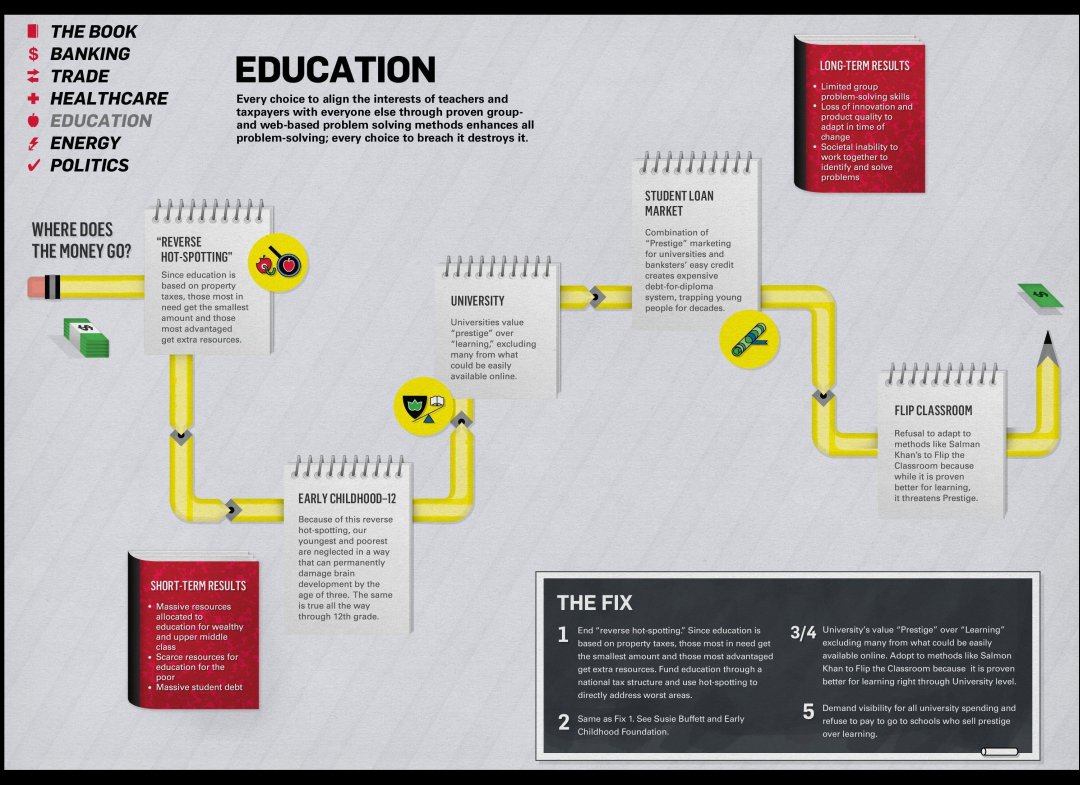
I'm talking about higher education, and student loans.  In my new book Greedy Bastards, I'm letting you into the tricks used by those who run our culture to profit from misdirection.  Like banks and oil companies, those who run our universities push the hidden risk they incur to taxpayers.  It's not as obvious as what we saw with subprime home loans, but it is potentially as destructive.
In President Obama's first speech to a joint session of Congress, he said "education in no longer a pathway to opportunity, it is a prerequisite."  It's no wonder - conventional wisdom says that those with college degrees earn roughly a million more dollars over their lives than those without them.  And there is a vast apparatus of lending institutions and Federal guarantees set up to help put people into college.  They do this not by keeping tuition free or low, as we did as a country after World War II, but by helping people get access to student loans.
This is the essence of what I've been calling The Very Bad Deal, where costs are deferred while benefits accrue upfront.  If you get a student loan, you get to attend college, and college is apparently the key to earning more over your lifetime, to "opportunity".  But student debt has some very nasty tricks and traps that most 18 year olds aren't aware of when they sign on the dotted line, and college may not be the opportunity gateway we've been assured it is.
The scale of the deal is vast and getting bigger - two thirds of those who attend college do so with borrowed money.  In August of 2010, the Wall Street reported that student loan debt surpassed credit card debt for the first time in history.  This amount is now sitting at roughly a trillion dollars.  Higher education inflation is the higher than health care inflation, and two and a half times the rate of normal inflation.  Are students really learning two and a half times as much?
Of course not.  What is happening is that universities have pricing power, and the Greedy Bastard behavior encourages them to compete on facilities and brand-name faculties rather than price and quality.  The Chronicle of Higher Education has described "an arms race of expenditures triggered by the pursuit of prestige."  Student debt also distorts pricing.  If students had to pay the full freight in college, they might be more price-sensitive consumers.  But since the costs of the education they are receiving are hidden, they don't pressure universities to reign in costs.  Lavish living environments, pointlessly luxurious sports facilities, and high salaries for administrators are just symptoms of a system where costs have become irrelevant.
Of course, someone must eventually pay that cost, which is increasingly borne by the current and future generation.  While college is supposedly a great investment, those who graduated in the midst of the Great Recession from 2008-2010 could not find the good jobs a college diploma supposedly assured them.  Tamara Draut, an expert on educational debt, told me that we now "have a whole generation twenty-four thousand dollars in debt... they have graduated but nobody will hire them.  They're back at home in their childhood bedroom."  It gets worse - student debt is not dischargeable in bankruptcy, so it's lifelong.  And there's no guarantee college degrees will serve the same income-producing function they have for decades.
Nearly everyone I've spoken to thinks this system is fixable if we get rid of the incentives that lead to Greedy Bastard--style profit-taking.  Much university spending doesn't go to learning, so if we made that spending transparent we could take on cost structures.  We don't have to go to the universities that do prestige marketing, we don't have to hire from them, and we don't have to spend our dollars with them.  This would lead to innovations in education that could take advantage of technology to increase learning.  And we can make student lending more equitable and transparent, so 18 year olds aren't signing their financial lives away.
We spoke with The Huffington Post's Chris Kirkham in depth on the topic -- take a listen below.

Auction 2012: How Greedy Bastards Rig Our Trade Rules


Dylan Ratigan

Posted: 02/ 2/2012 1:42 pm 
Auction 2012 is a week long series in partnership with The Huffington Post and United Republic.  
Did you know that China controls our food supply? It sounds crazy, but it's true. The food preservative "ascorbic acid", which is used to preserve nearly all the food that is on store shelves, is manufactured in one factory in China. Ascorbic acid was discovered by American scientists and produced by Americans, right until China bought our industry. Now, our food supply is at risk, held in the hands of the Chinese. We are bearing the cost of this risk, even though we don't see it. And the people who are benefitting are those who sold this vital technology to China. These kinds of risk transfers have become commonplace through the last twenty years, and it's time we begin reversing them.
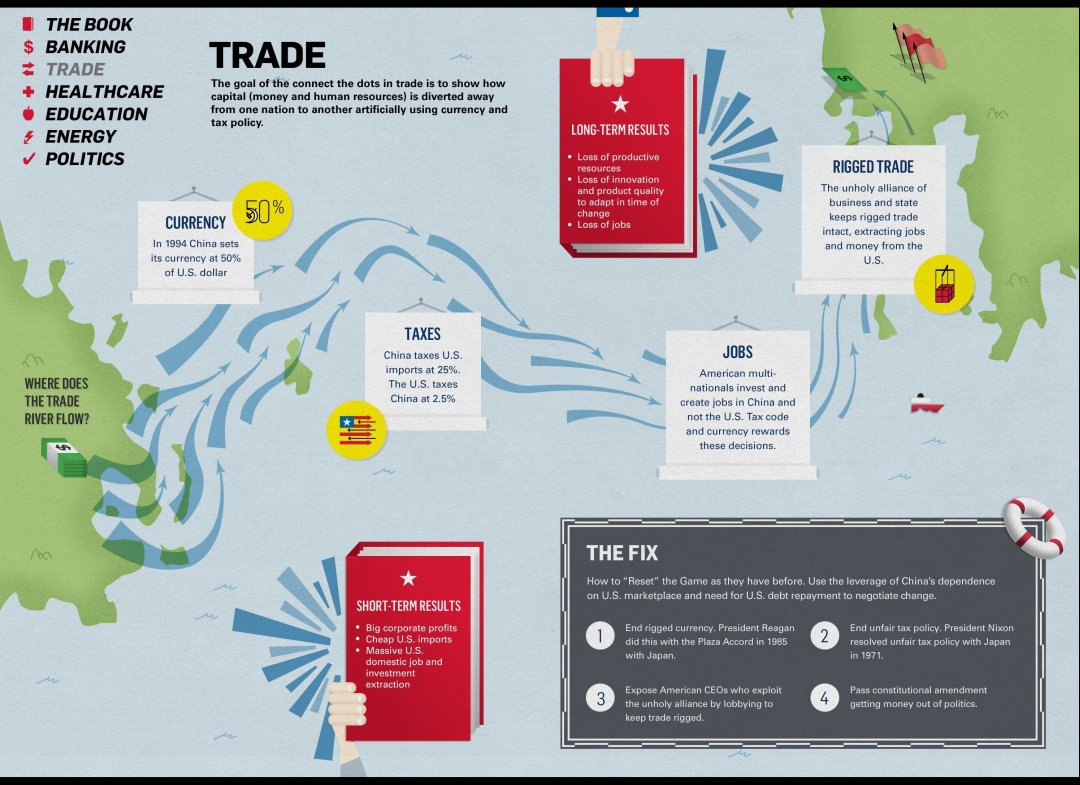
In doing research for my new book, Greedy Bastards, I realized that there's one basic con played on the public across all industries. It is what I call The Very Bad Deal, in which you are offered something that looks quite appealing but are never told about the large hidden costs. These costs often take the form of shoving hidden risk onto the backs of the public, through a Bought Government. So it is with trade. Many people think about globalization as an inevitable result of lower trade barriers, technology, and capital flows. But for Greedy Bastards in banking and trade, globalization is a great slogan to use for selling off American technology and pocketing the profits, while an American government stays prostrate.
This cuts against a two hundred year American tradition of self-sufficiency. In 1791, US Secretary of the Treasury Alexander Hamilton presented his Report on Manufactures to the recently formed US Congress. Hamilton, as a recent high ranking officer in the American revolutionary army, saw how the British used their supply advantage to nearly defeat the Americans. His own army lacked for ammunition, boots, and even winter coats. His conclusion was simple - America needed to make its own supplies.
Until 1991, American leaders took as self-evidently important the security of supply lines of critical material. Starting with NAFTA, and then through the granting of China the trading privileges, we tossed that advantage away. Today, General Electric makes its lightbulbs in China. Since 2009, GM has opened 15 car factories in China, and shuttered 13 here at home, and it now sells more cars over there than over here. And tariffs on American goods entering China are 25%, versus 2.5% for Chinese goods entering America. Entire distribution networks from Walmart to Apple computer rely on Chinese manufacturing.
Congressman Duncan Hunter made the point more explicitly when he said that for all intents and purposes, American multinationals are now Chinese companies. "They like the fact that they are subsidized by their new government, which is China, and that they're able to push American products that are made in the United States off the shelves."
We offer American corporations a host of tax and trade advantages for locating their factories in China, and these people, who are after all businesspeople out to make money, use them. As a result, from 2000-2011, the number of Americans working in manufacturing dropped from 17.1 million to 11.7 million. Sure, we got cheaper goods, and a flood of products that we could afford. But the cost, which was hidden, was the offshoring and outsourcing of our jobs, the loss of funding for community infrastructure, and the destruction of the security of our supply lines.
American corporate profits have never been higher. And the Chinese are piling high their stack of American Treasury bonds, as well as shipping over our industrial base to their shores piece by piece and idea by idea. It seems like a good deal. But as with every Very Bad Deal, the costs could be enormous. But we won't know that until China decides it won't sell us any more ascorbic acid. By then it will be too late.

MEET The PRESS - Web Only


January 26,2012


PRESS Pass: Director of the Consumer Protection Bureau Richard Cordray

Sunday mornings on NBC MEET The PRESS

Febuary 5, 2012

 ModeratorAdvertisement

Gingrich on ‘Meet the Press’

  The morning after the Nevada caucuses, the GOP presidential candidate discusses his path forward, why he believes Mitt Romney can’t beat Barack Obama, and the “war against religion” he believes is being waged in the United States.
  Exclusive — Post Show Thoughts: Gingrich keeps going

WATCH NOW: Gingrich Supporter J.C. Watts on PRESS Pass
Former Rep. J.C. Watts believes the GOP contest is now a "two-man race" between Newt Gingrich and Mitt Romney, and that Gingrich “does a better job of tapping in to the base, the foot soldiers." Watch PRESS Pass now.

Bloomberg, Patrick and Daniels on ‘Meet the Press’

  Independent New York City Mayor Michael Bloomberg, Massachusetts Democratic Gov. Deval Patrick, and Indiana Republican Gov. Mitch Daniels discuss the state of the economy, the 2012 primary race, gun control legislation, and the Super Bowl. Watch their full discussion here.

Getty Images file and AP file
MTP roundtable discusses GOP nomination fight
  Watch the entire roundtable with Rep. Xavier Becerra, The New York Times’ David Brooks, GOP strategist Alex Castellanos and MSNBC’s Rachel Maddow.


Obama proposes $5-10 billion for home refinancing


President Barack Obama speaks during a cabinet meeting in the Cabinet Room at the White House January 31, 2012 in Washington, DC. Obama has recently been discussing his efforts at job creation as the Republican presidential candidates vie in the Florida primary today.
The White House said the refinance program would be run by the Federal Housing Administration. The FHA has already been hard hit by rising defaults on mortgages it had insured, and its cash reserves reached a record low last year.
Many Republicans are likely to resist a larger role for the agency out of concerns taxpayers could be left on the hook for losses.
Obama's proposal, which needs congressional approval, would be open to borrowers who have been current on their payments for the last six months and have no more than one missed payment in the prior six months.
The administration also wants to broaden its Home Affordable Refinance Program, which seeks to provide refinancing options to underwater borrowers who have no equity in their homes.
The White House said the housing regulator overseeing Fannie Mae and Freddie Mac has exhausted its efforts to make HARP more widely accessible to lenders and borrowers, and now it will ask Congress to make changes. Among those requested changes, it will seek to eliminate the costs of appraisals.

Susan G. Komen Top Officials Resign As Backlash Gains Steam

Lisa Belkin

Lisa.Belkin@huffingtonpost.com

Susan G Komen
First Posted: 02/ 2/2012 4:08 pm Updated: 02/ 3/2012 11:23 am

Dr. Kathy Plesser, a Manhattan radiologist on the medical advisory board of Susan G. Komen for the Cure's New York chapter, said she plans to resign from her position unless Komen reverses its decision to pull grant money from Planned Parenthood.
"I’m a physician and my interest is women’s health, and I am disturbed by Komen’s decision because I am a very strong advocate for serving under-served women," Plesser told The Huffington Post. "Eliminating this funding will mean there’s no place for these women to go. Where are these women to go to have a mammography? Do they not deserve to have mammography?"
With her decision, Plesser joins Komen's top public health official, Mollie Williams, and the executive director of Komen's Los Angeles County chapter, Deb Anthony, both of whom also resigned in protest.
Susan G. Komen, the nation's largest breast cancer charity, announced on Tuesday that it had adopted a new rule against partnering with organizations that are under investigation, and that it would therefore sever ties with Planned Parenthood, which is currently under investigation in Congress. The groups that prompted that investigation are anti-abortion advocacy organizations that have long criticized Planned Parenthood, primarily a women's health and family planning organization, over the fact that some of its clinics offer abortions.
Komen has faced an increasing amount of pressure from the public, women's health groups, lawmakers and even some of its own regional affiliates to reverse the decision and continue its five-year partnership with Planned Parenthood. The $600,000 that Komen donated annually to the organization provided underserved women with free and low-cost breast exams.
Planned Parenthood announced Wednesday that it had received $400,000 in donations in the 24 hours following Komen's announcement. In addition, New York Mayor Mike Bloomberg said on Thursday that he would give $250,000 to Planned Parenthood to help make up for the loss.
“Politics have no place in health care,” he said in a statement. “Breast cancer screening saves lives and hundreds of thousands of women rely on Planned Parenthood for access to care. We should be helping women access that care, not placing barriers in their way."
A spokesperson for Rep. Mike Honda (D-Calif.) said that he personally called Komen founder Nancy Brinker to complain when he heard the news on Tuesday, and he and 22 other members of the House of Representatives have signed onto a letter asking her to reverse her decision.
"This is an alarming development resulting from political pressure from anti-women’s health organizations," the letter says. "We ask – in the strongest possible terms – that Susan G. Komen reconsider its decision, as the health of millions of brave women everywhere demands the same kind of bravery exhibited the Komen Foundation."
A similar letter was signed by two dozen senators.
Komen maintains that pressure from anti-abortion groups and the recent hiring of vice president Karen Handel, who ran for governor of Georgia on an anti-Planned Parenthood platform as a Republican in 2010, had nothing to do with the decision. Founder Nancy Brinker went on the defensive Thursday during an appearance on MSNBC, saying that the decision was a result of a number of congressional and state investigations into Planned Parenthood, and that most people actually applauded the decision to defund the family planning provider.
"All I can tell you is that the responses we're getting are very, very favorable," she told host Andrea Mitchell. "People who have bothered to read the material, who have bothered to understand the issues-- again, we work for a mission every day of our lives."
Honda, whose chief of staff is a breast cancer survivor, said he is concerned that Komen's decision will set a precedent, in which any politician can simply open an investigation into a group they disagree with now in order to jeopardize that group's funding.
"We know that breast cancer does not discriminate, nor should our support to vanquish the disease," he said.