Pages

Wednesday, January 11, 2012

The political psychology of Obama's Iran policy

Obama's Iran policies are falling prey to the same mistakes that overwhelmed the four previous administrations.
Last Modified: 10 Jan 2012 16:11


Reza Marashi
Reza Marashi
  is Director of Research at the National Iranian American Council.


US Treasury Secretary Timothy Geithner and Secretary of State Hillary Clinton announced new sanctions against Iran in an attempt to bolster their diplomatic efforts [GALLO/GETTY]
Washington, DC, United States - The Obama administration spent much of 2009 implementing a historic policy shift towards Iran. To its credit, a noticeable change in tone on the part of the US government vis-a-vis Iran was followed by private messages from President Obama to Supreme Leader Ali Khamenei on how the US and Iran might practically set up dialogue.
Then-Undersecretary for Political Affairs William Burns met privately with Iran's chief nuclear negotiator Saeed Jalili, emphasising the United States' desire for dialogue and finding new ways to engage on a range of issues - nuclear and otherwise.
After an interim confidence-building measure was agreed upon, Tehran balked. It was unable to sell the agreement at home in amid intense political fratricide.
With Congress coming at the Obama administration like a steamroller, Washington quietly abandoned diplomacy in favour of punitive measures. In 2010, the US withdrew its initial support for a revised confidence-building measure brokered by Turkey and Brazil, and instead led the charge for a new UN Security Council sanctions resolution.
The last meeting between Iran and the P5+1, in January 2011, ended with both sides refusing to budge from their respective entrenched positions. Since then, a powder keg overflowing with sanctions, stuxnet viruses, secret assassinations and dangerous threats of war have shown how easily a single incident can spark a wider conflict.
How did the "mutual interest and mutual respect" of 2009 revert back to "all options are on the table" in 2012?
Privately, senior US officials acknowledge they underestimated both the obstacles to normalising relations with Iran, and the difficulty of understanding Iranian government's decision-making. Yet these same officials increasingly believe that recycling demonstrably failed policies of pressure and containment will provide leverage, bring Iran to the negotiating table and perhaps hasten the end of the regime. As the drumbeat of war intensifies, it is crucial to understand the political psychology of Obama's Iran policy.

The turning point
Despite their best efforts, Turkey and Brazil had little chance of securing nuclear concessions from Iran that the US would have deemed acceptable. In private telephone conversations prior to the May 2010 Tehran summit, Secretary of State Hillary Clinton delivered tough messages to Turkish Prime Minister Erdogan and then-Brazilian President Lula da Silva: go to Tehran, see for yourself that Iran is not interested in a deal, then get on board with the UN sanctions process.
Rather than capitalise on Iranian concessions and test the Islamic Republic's ability to follow through, the Turkish-Brazilian initiative was perceived by Washington as part of a larger Iranian strategy to divide the international community and give sanctions naysayers something to hang their hats on.

Inside Story: Is Iran still defiant?
As the United States built up support for new UN sanctions in late 2009


and early 2010, most administration officials privately accepted the improbability of securing "yes" votes from Turkey, Brazil or Lebanon. Only a minority inside the administration argued that the troika would support a new sanctions resolution precisely because of how watered down it was.
The US acknowledged from the outset that any new Security Council resolution would be watered down and lack unanimity, with significant portions written in non-binding language.
Thus, UN Security Council sanctions secured in June 2010 under Obama's watch must be considered a failure - after nearly two years of working closely with the international community on Iran policy, the administration failed to secure a resolution as robust as the previous three ushered in by the wildly unpopular Bush administration.
The US pushed forward with a sanctions-based approach largely because key administration officials believed that sanctions strengthened the credibility and leverage of those who wanted to engage Iran, while preventing more violent actions by Israel.
They insisted that such an approach best addressed the myriad long-term mutual interests shared by the US and Iran. President Obama himself reached the conclusion that there were too few negative incentives to affect Iran's internal calculus, particularly regarding mutual interests. Based on this rationale, a policy of increasing pressure on Iran was constructed, predicated on the assumption that pressure would:
  • Bring the Iranians to the negotiating table
  • Affect Iran's internal calculus
  • Strengthen the credibility and leverage of the pro-engagement camps
  • Prevent more violent actions by Israel
As a general matter, senior administration officials believe US leverage vis-a-vis Iran is at its highest immediately before a new set of sanctions hits, which in turn provides political space to carry out "low-key engagement activities" with Iran. To date, few such activities have taken place, largely because US outreach has been reactive rather than proactive, so as to avoid impairing sanctions implementation.

Bush administration redux?
Despite its push for new sanctions, the vast majority of Obama administration officials privately acknowledge that sanctions are not a policy in and of themselves - even if they have in fact become the only policy pursued. This disconnect is reflective of the existing divisions on Iran within the White House, the absence of a concrete policy towards Iran and a reliance on tactics rather than strategy.
Over the past three years, two schools of thought about Iran have emerged within the administration. The first camp equates US security with Iranian democracy. It seeks to hasten a "colour" revolution in Iran by emphasising human rights and fortifying opposition groups in hopes of gaining the trust of the Iranian people and encouraging them to rebel.
The second camp points out that the US and Iran share too many common interests to ignore, including on Iraq and Afghanistan, among others. The resulting policy has become an attempt at compromise - publicly reiterating US commitment to diplomacy, but applying pressure to tip the scale to the more hardline end.
"Few in the Obama administration believe this mix of punitive measures will compel Iran to change its policies or its behaviour."
Most US officials believe keeping Iran's file in the UN Security Council (a political body) versus the IAEA (a technical body) supports a legal case for punitive measures by providing concrete evidence on the diversion of Iran's civilian nuclear programme toward military use. Nevertheless, these same officials acknowledge that Russia and China will veto any severe economic sanctions.
The Obama administration also realises that a military attack on Iran's nuclear installations by the United States or Israel remains a tough sell outside of Washington, London, Paris and Tel Aviv, as none of the aforementioned capitals have found the proverbial "smoking gun".
Here, senior Obama administration officials privately acknowledge two key points:
  • A preference for continuing to incrementally increase both Security Council and "coalition of the willing" sanctions
  • The risk/benefit ratio of an attack does not make sense, particularly losing the "pro-American" people of Iran
As such, in the future, the US will likely move forward with a policy of "coalition of the willing" sanctions with the EU and other allies, targeting Iran's financial and energy sector - foreign investment and financial transactions between Iran and multi-national corporations, including banks.
Together with Security Council resolutions, these unilateral sanctions seek to tighten the screws on Iran and reduce its financial manoeuverability. Yet few in the Obama administration believe this mix of punitive measures will compel Iran to change its policies or behaviour. Beyond the existing policy of sanctions, the administration does not have a policy in place for moving forwards.

The military's growing influence
US Central Command (CENTCOM) - the combatant command responsible for overseeing US security interests in the Middle East, Central Asia and North Africa - has standard planning objectives that provide the president with a set of military options to deal with Iran.
At present, there are essentially three scenarios for Obama to choose from:
  • Punish Iran for its involvement in Iraq and Afghanistan, and support for terrorism
  • Set back Iran's nuclear programme as significantly as possible
  • Contain and change the Iranian regime
Chairman of the Joint Chiefs of Staff General Martin Dempsey and CENTCOM Commander James Mattis, whose areas of command include Iraq and Afghanistan, have a keen interest in Iran because of its regional influence. For these reasons, they know that war with Iran is not viable - risking regional chaos and breaking the back of the US military.
Privately, Dempsey and Mattis both acknowledge that sanctions will also not work because they fail to achieve the primary US objective - changing Iranian government policies and behaviour. As a result, these men will be a leading voice inside the Obama administration, publicly encouraging diplomacy and communication while privately probing an unofficial long-term policy of containment and below-the-radar efforts to destabilise the Iranian government.
As the US moves away from sustained diplomatic engagement with the Iranian government, US military commanders will become an increasingly important voice on Iran policy - perhaps trumped only by President Obama himself.
Dempsey and Mattis are particularly influential. Nobody on the political right can attack them, few can say "no" to them and they have a nearly unrivalled ability to convince Congress and the administration on key national security issues. Even Obama is inclined to go along with their recommendations - a president can rarely go wrong politically when he says: "I'm going to listen to my generals."
Neither Obama nor his generals will advocate for the military to engage in the first two CENTCOM scenarios. In their view, the likelihood of failure far outweighs the chances of success. However, all three men increasingly believe that developing a strategy for the third scenario - containing and changing the regime - will provide political cover for the US to avoid engaging in kinetic tactics.
They acknowledge the "moderate risk" associated with influence operations and support for opposition groups inside Iran, but nonetheless seek to better understand what outreach to the various facets of Iran's disenchanted society might look like, including to opposition politicians, major industry, labour and transportation unions, government employees, bazaar merchants and oil workers.
They also seek to understand how the US can help these amorphous groups organise and coalesce. This long-term policy option is seen as providing flexibility, even if plans go awry. Barring a major and unforeseen Iranian concession on the nuclear front, this policy trajectory will be difficult to disrupt.

The US track record of implementing containment and destabilisation policies worldwide is far from noteworthy. In the case of Iran, it is abysmal.
With no on-the-ground presence and restricted interaction with Iranian counterparts, the US is largely unable to accurately assess the real strengths and weaknesses of any policy. As a result, US policy towards Iran under the Obama administration is rapidly falling prey to the same entrapments and mistakes that overwhelmed the four preceding US administrations.
Reza Marashi is Director of Research at the National Iranian American Council and a former Iran desk officer at the US Department of State.
Follow him on Twitter: @rezamarashi
A version of this article first appeared on Muftah.org.
The views expressed in this article are the author's own and do not necessarily reflect Al Jazeera's editorial policy.


Western leaders' current tactics to deter Iran from developing nuclear weapons will likely backfire, writes author. ( 04-Jan-2012 )

The New York Times misleading public on Iran

The paper has made faulty allegations about Iran's nuclear programme without running proper corrections.
Last Modified: 09 Jan 2012 18:44

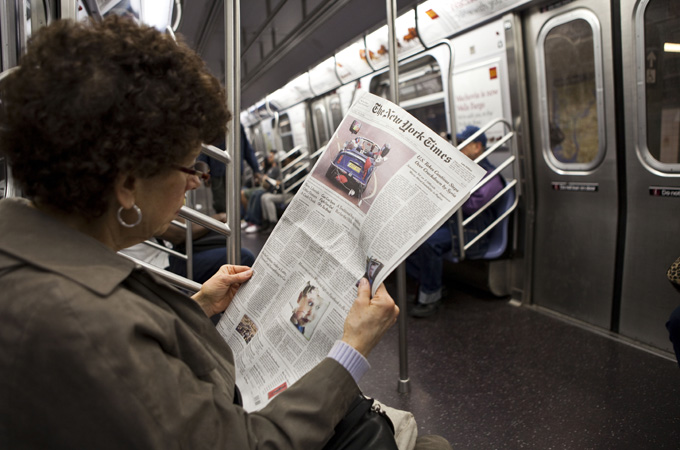
The NYT retracted questionable claims in an online article without informing their readers [GALLO/GETTY]


Washington, DC, United States - It's deja vu all over again. AIPAC is trying to trick the United States into another catastrophic war with a Middle Eastern country on behalf of the Likud Party's colonial ambitions, and the New York Times is misleading the public with allegations that say that the country is developing "weapons of mass destruction".
In an article attributed to Steven Erlanger on January 4 ("Europe Takes Bold Step Toward a Ban on Iranian Oil"), this paragraph appeared:
The threats from Iran, aimed both at the West and at Israel, combined with a recent assessment by the International Atomic Energy Agency that Iran's nuclear programme has a military objective, is becoming an important issue in the American presidential campaign [emphasis my own].
The claim that there is "a recent assessment by the International Atomic Energy Agency that Iran's nuclear programme has a military objective" is misguided.
As Washington Post's Ombudsman Patrick Pexton noted on December 9:
But the IAEA report does not say Iran has a bomb, nor does it say it is building one, only that its multiyear effort pursuing nuclear technology is sophisticated and broad enough that it could be consistent with building a bomb.
Indeed, if you try now to find the offending paragraph on the New York Times website, you can't. They took it down. But there is no note, like there is supposed to be, acknowledging that they changed the article, and that there was something wrong with it before. Sneaky, huh?
You can still find the original here.
Indeed (at least at the time of writing), if you go to the New York Times website and search with the phrase "military objective", the article pops right up. But if you open the article, the text is gone. But again, there is no explanatory note saying that they changed the text.
Note that in other contexts, the New York Times claims to be quite punctilious about corrections.
This is not an isolated example in the Times' reporting. On the very same day, January 4, they published another article, attributed to Clifford Krauss ("Oil Price Would Skyrocket if Iran Closed the Strait of Hormuz"), that contained the following paragraph:
Various Iranian officials in recent weeks have said they would blockade the strait, which is only 21 miles wide at its narrowest point, if the United States and Europe imposed a tight oil embargo on their country in an effort to thwart its development of nuclear weapons [emphasis again my own].
At time of writing, that text is still on the New York Times website.
Of course, referring to Iran's "development of nuclear weapons" without qualification implies that it is a known fact that Iran is developing nuclear weapons. But it is not a known fact: It is an allegation. Indeed, when US officials are speaking publicly for the record, they say the opposite.
As Washington Post's Ombudsman Patrick Pexton also noted on December 9:
This is what the US director of national intelligence, James R Clapper, told the Senate Armed Services Committee in March: "We continue to assess [that] Iran is keeping open the option to develop nuclear weapons in part by developing various nuclear capabilities that better position it to produce such weapons, should it choose to do so. We do not know, however, if Iran will eventually decide to build nuclear weapons.
To demand a correction, you can write to the New York Times here. To write a letter to the editor, you can write here. To complain to the New York Times' Public Editor, you write here.
Robert Naiman is Policy Director at Just Foreign Policy.
The views expressed in this article are the author's own and do not necessarily reflect Al Jazeera's editorial policy.
New Hampshire: Live free or die


Sometimes I get better coverage from news if I go outside the country.  Hmmmmmmmm.  I wonder Why?


Seeking a more accessible political climate, almost 1,000 libertarian-leaning migrants have moved to New Hampshire.
Last Modified: 11 Jan 2012 12:57


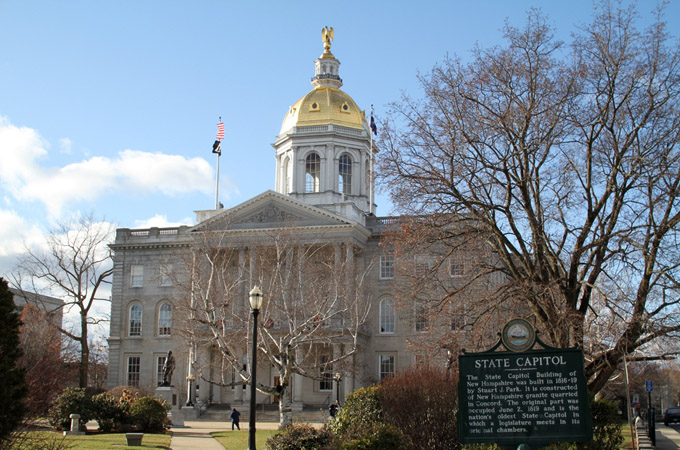
 In 2010, a wave of Free Staters won seats in New Hampshire’s House of Representatives [Thomas Bollier/Al Jazeera]


Loudon, New Hampshire - Yesterday, Republicans in the state of New Hampshire voted for their presidential nominee in the first primary in the nation.
With all eyes on the horse race between the six major Republican candidates, some interesting political trends within the state of New Hampshire itself have gone unexamined. The state - with an official motto of "Live Free or Die" - has a political culture steeped in a small-government mindset. And partly for that reason, almost 1,000 political migrants have moved to New Hampshire over the past several years as part of the Free State Project.
The idea behind the Free State Project began ten years ago. Jason Sorens - a libertarian, who believes in minimal government involvement in society and the economy - lamented the fact that few libertarians were being elected to public office in the US.
In-depth coverage of the US presidential election
So Sorens proposed that 20,000 libertarian-minded US citizens "establish residence in a small state and take over the state government". Members would pledge to work at "reducing government to the minimal functions of protecting life, liberty and property".
The Free State Project (FSP) was founded soon thereafter. In 2003, FSP participants voted to move to the northeastern state of New Hampshire, in part because of its low taxes and few regulations. Some participants also pointed out that New Hampshire, with a deep-water port and international border with Canada, could be a viable independent state if it were to secede from the rest of the US.
With a small population and the largest state legislature in the country, New Hampshire is also a relatively easy place to get elected to office.
The FSP itself has a limited scope; its only goal as an organisation is to convince pledge signers to move to New Hampshire. Once they move, participants are under no obligation to run for office or be politically active.
The Free State Project's mascot is the porcupine because - in the words of one participant - 'it's a peaceful gentle creature, but you don't want to miss with him'.
But there are some commonly held tenets. Sorens said FSP participants tend to think there should be big cuts in government spending and taxation, greater school choice for parents, "more of a market- and charity-oriented approach" to health care, and looser laws against marijuana, among others.
Since 2003, more than 11,000 people have pledged to move to New Hampshire, but just under a thousand people have actually moved.
Yet although fewer than the 20,000 initially called for, Free Staters have had an outsized influence on state politics - and many are quite active in the Republican primary as well.
Wave of support
The midterm elections in 2010 - widely seen as a backlash against President Obama and the Democratic Party - were a major success for Republicans. The party gained 63 seats in the federal House of Representatives and won big victories at the state level, too.
The landslide gave New Hampshire Republicans a lopsided 295-105 majority in the state House of Representatives. As many as 14 candidates identifying as "Free Staters" were elected - all as Republicans - as well as many more libertarian-leaning legislators not affiliated with the FSP. Libertarians tend to feel ideologically closer to the Republican Party, which has historically favoured a smaller federal government.
Since 2010, the New Hampshire state legislature has passed many measures favoured by libertarians that cut the state budget, reduce the size of government, and loosen regulations on businesses. A bill co-sponsored by two Free Stater legislators, among others, expanded New Hampshirites' ability to legally use deadly force for self-defence. And a largely Republican committee did away with a ban on guns in the statehouse.
When the state legislature began a new session last week, several bills quickly passed the House. One lets parents exempt their children from course material in school that they find objectionable; another prevents universities from banning firearms on campus; another removes some regulations on insurance companies. It remains unclear, however, whether these bills will be signed into law.
Unlike neighbouring states, New Hampshire’s political culture is suffused with a streak of libertarianism [Thomas Bollier/Al Jazeera]
Not all of the legislation's success can be chalked up to the efforts of Free Stater lawmakers - after all, they still number just over a dozen out of a chamber of 400.
But one FSP participant and legislator says that he now thinks only a few thousand people need to move to New Hampshire in order to achieve the project's goals. "I think if we get two or three thousand people here, game over. We'll be able to achieve what a lot of people want."
And Don Gorman, a New Hampshire native and former state legislator who works on campaigns for libertarian-leaning candidates, said the FSP participants in the legislature "support each other. They’re very independent as individuals, but they're a very tight-knit group".
Of the project's opponents, he said: "They're standing there jumping up and down throwing rocks, and we're quietly going and getting elected to this and that and the other thing."
Differences in method
State legislator and FSP participant Jennifer Coffey, however, downplays Free Staters' unity. Despite common goals, she says they're "not all cut from the same cloth". Many are interested in electoral politics, though a minority - about one-third, estimates Sorens - leans towards protests and civil disobedience instead.
Garret Ean is one of the latter. Ean, a 23-year-old who moved to New Hampshire in 1996 (before the FSP came into being), is involved with Occupy New Hampshire and runs a website that provides news about civil liberties activism in the state, often focusing on abuses of police power. Ean said he felt impelled to start the site in 2010 after several arrests in New Hampshire of people filming police officers on duty.
Some FSP participants - especially in western New Hampshire towns such as Keene - have held demonstrations that are legal, but controversial. For instance, in 2009, 18-year-old Cassidy Nicosia walked through Keene topless with a handgun strapped to her hip, causing a small uproar. Others do break the law: Some Free Staters have publicly played drinking games and smoked marijuana in downtown Keene to protest laws against what they say are victimless crimes.
The different approaches can cause tension. Coffey, who's twice co-sponsored a bill that would legalise medicinal marijuana, complained that some FSP participants' civil disobedience had undermined her work. "They were doing protests, and smoking dope, and violating the law, and creating what I thought was a negative scene, and it did cost us some votes."
The pushback
Meanwhile, some New Hampshirites resent what they see as a stealth campaign by FSP participants to gain political power in the state. Others are alarmed by participants' adamant small-government positions.
Victoria Parmele, a member of the town planning board in Northwood, New Hampshire, is wary of Free State Project participants’ approach towards state politics. "It takes some time to understand New Hampshire, and to consider whether libertarianism truly has a role to play in this state," said Parmele, an environmentalist opposed to bills backed by Free Stater legislators that would defund the state rail authority and end an energy efficiency programme. "I'd like to have a public discussion on this, as opposed to this 'we've decided that New Hampshire should be our bastion of liberty'."
And Caitlin Rollo, a former Democratic state representative, said that many FSP participants running for election in 2010 "did not advertise who they are, or what they're about, or that they moved to our state with the intent of running for public office to change our political system".
Of the FSP participants currently serving as state representatives, few mention the Free State Project on their personal websites. In August 2011, a local newspaper published an editorial charging that there had been "a concerted effort" on the part of the state Republican Party "to avoid an open and full discussion" of the fact that one of its candidates, Honey Puterbaugh, was an FSP participant.
Free Stater legislators say they don't deny their participation in the project. "I've always been honest and upfront about it if someone's asked me," said Coffey. And Cameron DeJong, a state representative from Manchester, explained that he does not mention the Free State Project on his website because of the media’s negative coverage. "They portray the side of the Free State Project that comes from places like Keene," he said.
DeJong stressed a conciliatory approach. "The key to the success has been those of us that have come here in the sense of saying, 'We're not here to take your state over. We're here to live beside you; we're here to be your neighbour, your friend. We're here to do what we can to fit in'."
Leaning towards Paul
New Hampshire votes on January 10 in the Republican Party's presidential primary. Could Free State participants make a difference in the outcome?
Purely on a numbers level, they're not likely to have a huge impact. Almost 235,000 people voted in the New Hampshire Republican primary in 2008, dwarfing the 985 people who have moved to the state as part of the Free State Project. And, says Coffey, FSP participants are in "every different camp", supporting candidates from Newt Gingrich to Jon Huntsman to Rick Santorum.
But a majority of Free Staters seem to support Texas congressman Ron Paul, whose opposition to US military intervention and a powerful federal government resonates with libertarians. At a Paul rally in Nashua, Scott Carlson - a high school teacher who recently moved from Chicago to New Hampshire as an FSP participant - said he admired Paul's opposition to legislation such as the Stop Online Piracy Act, which would expand the federal government's power over content on the internet; and the National Defence Authorisation Act, which allows for the indefinite detention of terror suspects without trial. "A lot of these police state things - I think it's really a shame," said Carlson.
A sizeable contingent of Free Staters had backed former New Mexico governor Gary Johnson for president - and some still do. But after Johnson dropped out of the Republican race to run for president as a member of the Libertarian Party, FSP participant Denis Goddard says "virtually everyone is now Ron Paul".
Free Staters' numbers may not be huge, but those that are involved in the Paul campaign are passionate. FSP participants are responsible for making many of the huge Ron Paul banners currently draped across overpasses on New Hampshire highways. And Ean says a political action committee affiliated with Paul’s campaign held a fundraiser with FSP participants in Manchester.
DeJong, the co-chair of Ron Paul's campaign in the city of Manchester, estimates that about 400 of the almost 1,000 Free Staters in New Hampshire are actively involved in the campaign, phone banking and going door-to-door to talk to potential voters about Ron Paul.
"That's a number we wouldn't have without the Free State Project."

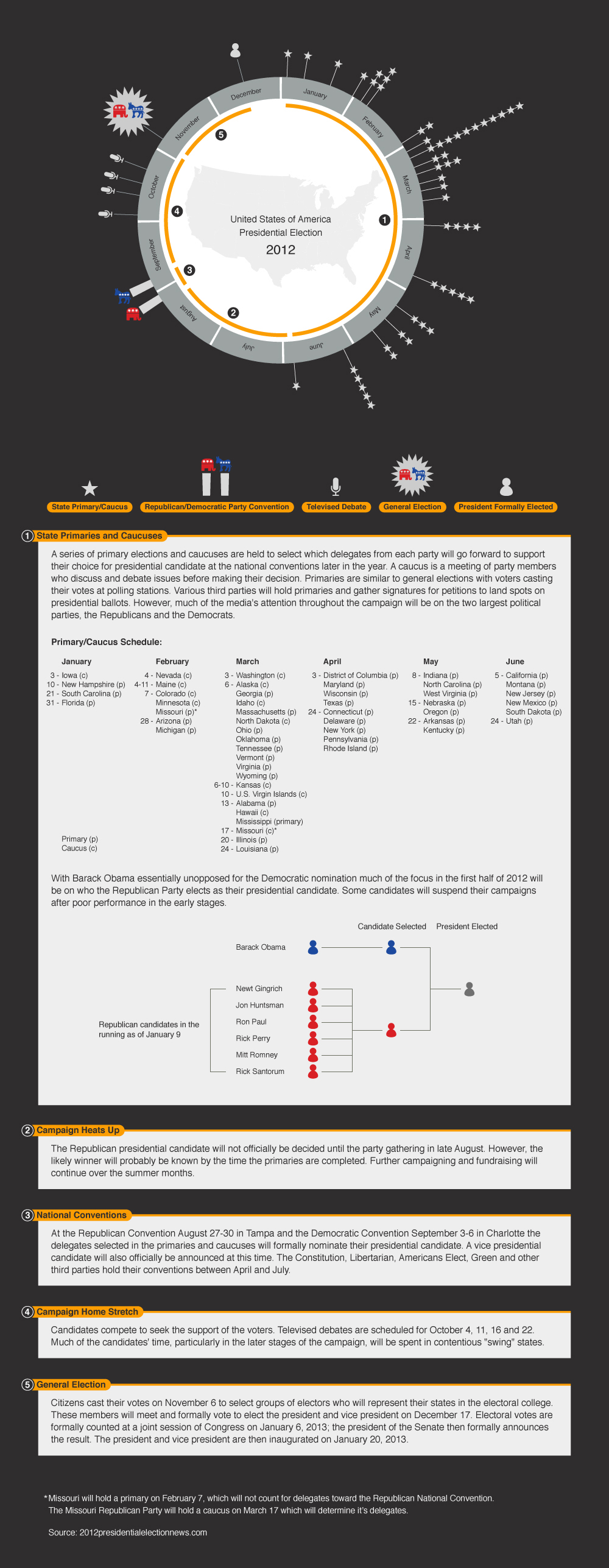
Infographic: US presidential election 2012

Explaining logistics of major quadrennial vote, from party primaries to conventions and electoral college.
Last Modified: 09 Jan 2012 20:01
  @AJEnglish: Visualization showing nuances of presidential election year in #US from #NewHampshire primary to Nov 6

Frontrunner Romney wins New Hampshire


Uploaded by on Jan 10, 2012
New Hampshire, the home of the first primary in the US presidential campaign for Republicans, has decided its choice in favour of Mitt Romney.Libertarian candidate Ron Paul was on the second spot, while Jon Huntsman managed to take third place.
Al Jazeera's Alan Fisher reports from Manchester in New Hampshire.


Ex-Massachusetts governor consolidates status as Republican leader with victory in first primary of US election race.
Last Modified: 11 Jan 2012 13:39

Mitt Romney has won the New Hampshire primary, building on his first-place finish in last week's Iowa caucuses and establishing himself as the man to beat for the Republican US presidential nomination.
Final results showed the former Massachusetts governor with 39 per cent of the vote, followed by Texas congressman Ron Paul with 23 per cent and former Utah governor Jon Huntsman with 17 per cent.
Former House Speaker Newt Gingrich and former Pennsylvania senator Rick Santorum trailed with 10 per cent and nine per cent, respectively, while Rick Perry, the governor of Texas who did not campaign in the state, polled just one per cent of votes.
Romney, who became the first non-incumbent Republican candidate to place first in both Iowa and New Hampshire in decades, said his latest win had "made history" and looked ahead to the next primary in South Carolina on January 21 as he established himself as the clear favourite to take on Barack Obama in November's presidential election.
"Americans know that our future is brighter and better than these troubled times," said Romney in front of a cheering crowd.
"The president has run out of ideas. Now, he's running out of excuses. And tonight, we are asking the good people of South Carolina to join the citizens of New Hampshire and make 2012 the year he runs out of time."
In-depth coverage of the US presidential election
Paul, a libertarian candidate who has found favour among so-called "Tea Party" conservatives, told supporters: "I sort of have to chuckle when they describe you and me as dangerous. They're telling the truth because we are dangerous to the status quo... We have had a victory for the cause of liberty tonight."
Huntsman and Santorum, who narrowly lost the Iowa caucuses, both told their supporters that they would continue their campaigns to South Carolina, with Huntsman drawing satisfaction from a late surge that pushed him into third place.
"Ladies and gentlemen, I think we're in the hunt!" he said at a rally. "I'd say third place is a ticket to ride!"
The New Hampshire primary is the traditional starting gun in the US primaries season, although in recent elections it has been preceded by the Iowa caucuses.
Although only 12 delegates are at stake, it is considered an important early test of a candidate's chances in a state that is typically more conservative than its New England neighbours.
Romney now has 18 delegates, but needs at least 1,144 from across the country to secure the nomination, with 50 up for grabs in Florida on January 31, 155 in Texas on April 3, and 95 in New York on April 24.
Eleven states hold Republican primaries on March 6, dubbed "Super Tuesday", while California, with 172 delegates at stake, does not vote until June, by which time the identity of the presumptive nominee will probably already have been decided.
'Paul phenomenon'Al Jazeera’s Alan Fisher, reporting from Manchester, New Hampshire, said: "Romney has now won New Hampshire and if you look at opinion polls in South Carolina, which have been pretty accurate throughout the whole process, then he is the leader there and also in Florida.
"The reality is if he wins in South Carolina money is going to leak from other campaigns and he is going to be the frontrunner and presumptive nominee for the Republican Party."
Eugene Robinson, a Washington Post columnist, told Al Jazeera: "It is a huge night for Romney. He is the first Republican to win both Iowa and New Hampshire.
"Romney is thought be more electable than other candidates. He is been running for office for several years and he might get the nomination," he said.
But Robinson said the strong second-place finish Ron Paul was "fascinating", given his distance from mainstream Republicanism on policies including getting rid of the Federal Reserve, abolishing income tax and his isolationist foreign policy that would bring home all US troops stationed abroad.
"His ideas are very much at odds with other Republican candidates and that’s an indication how complicated the Republican Party is these days," he said.
Race beginsWhile Romney's victory appears to give him a clear run at securing the Republican candidacy, his rivals can draw hope from the failure of recent winners in New Hampshire to press on and claim the nomination.
John McCain won the Republican primary in 2000 but subsequently lost out to George W. Bush. In 2008 Hillary Clinton won the Democratic primary but the party's choice eventually went to Obama.

Al Jazeera's Scott Heidler explains the mechanics behind the New Hampshire primary
Brad Marston, a Republican operative in New Hampshire,  said that with new rules regarding how the number of state delegates are allocated, the race for the nomination was still far from over.
"It's about how much does [Romney] wins by . . . clearly he is the odds-on favourite. I think one of the things people are forgetting about is that the Republican party has changed the rules this time. In the past it's always been 'winner-take-all': if you won New Hampshire with 35 per cent of the vote, you got 100 per cent of the delegates," he told Al Jazeera.
"That is not true this time. From now until April 1, we're allocating our delegates on a proportional basis. That makes it that much harder to score an early knockout.
"If I was advising a second-tier candidate, I'd be looking at the caucases. There could be won with volunteer organisations and volunteer efforts, and just doing enough to stay in the game and hope that Romney as the frontrunner stumbles."

Watch Ron Paul's Speech After New Hampshire Primary

Uploaded by PBSNewsHour on Jan 10, 2012 More from Ron Paul and the Campaign here: http://to.pbs.org/zaAq1 Texas Congressman Ron Paul addressed a crowd of supporters in Concord, New Hampshire after placing second in the state primary. He told the crowd, "We are dangerous to the status quo of this country."

QUICK TAKE: Paul Focuses on Revolution, Not White House, in Post-Primary Speech 

Updated: January 10, 2012 | 9:28 p.m.
January 10, 2012 | 9:21 p.m.
Rep. Ron Paul of Texas, fresh off a surprisingly strong second-place showing in New Hampshire’s primary, focused not on his bid for the White House but on the goals of the libertarian revolution he espouses when he addressed supporters on Tuesday night.
“There is no doubt, there is no doubt that this whole effort that we are involved in will not go unnoticed, let me tell you. I think the intellectual revolution going on now is well on the way. There is no way they are going to stop the momentum that we have started,” Paul said.
Paul said he and his followers were “dangerous to the status quo of this country.”
“That irate minority … it’s growing by leaps and bounds, will continue to grow by leaps and bounds, and we will restore freedom to this country,” he said.
The congressman's victory speech ranged across monetary reform to foreign policy and reigning in government spending, but unlike primary victor Mitt Romney, he did not attack President Obama or his GOP opponents by name.
“The other candidates are not talking about real [spending] cuts. They’re talking about cutting proposed increases out in ten years,” he said.
One reference to a fellow candidate came in the form of a joke.
“I wanted to thank the Union-Leader for not endorsing me,” he said, referring to the New Hampshire newspaper. The paper endorsed Newt Gingrich.

QUICK TAKE: Ron Paul Says It's Two-Man Race Now

Updated: January 10, 2012 | 8:57 p.m.
January 10, 2012 | 8:47 p.m.
“We’re next in line to [Romney]. I would say we’re the only ones really in the race with him,” Paul told CNN on Tuesday night.
He told CNN had had “no plans” for a third-party candidacy at this time.
“The people's attitudes have changed and my message got out. The country is in worse shape,” he said. “I've talked about financial problems in this country for 30 years. They realized some of the things I said came about.... I was the only one that offered cutting spending. I think it is a very popular message and the interest will continue to grow.”
The anti-establishment, libertarian candidate came in second in the “Live Free or Die” state with 25 percent of the vote. He had been expected to receive around 17 percent, according to the most recent WMUR/University of New Hampshire poll conducted between Jan. 5 and Jan. 8.
Paul came in third in the Iowa caucus last week, receiving 21 percent of the vote.


Republican presidential candidate, Rep. Ron Paul, R-Texas, speaks to supporters during an election night really in Manchester, N.H., Tuesday, Jan. 10, 2012. (AP Photo/Bill Sikes)

Ron Paul: I’m Electable

Updated: January 11, 2012 | 10:21 a.m.
January 11, 2012 | 8:20 a.m.
"The evidence is there," Paul said on MSNBC’s Morning Joe on Wednesday. Americans are disillusioned, frightened about the economy and debt and tired of wars, he added. "The country has changed."
Paul, who garnered nearly 23 percent of the vote on Tuesday, defended himself against those who say he isn’t a real threat or that he should run as a third-party candidate. Polls currently show him in fourth place in South Carolina, behind Mitt Romney, Rick Santorum and Newt Gingrich.
On the suggestion that he should run as a third-party candidate, Paul argued that he is, in fact, the most conservative of the GOP contenders.

"I think there's a lot of confusion on how you define conservative," he said on the Early Show. "I define it as less government, less spending, balanced budget."
But others in the Republican party, he said, have recently "drifted" from those basic tenets.
"I think what's happening is the American people are waking up. It's not just conservative Republicans. It's the Independents where I do so well and I got a lot of Democratic vote, too," he said.
Paul, who also took the youth vote in New Hampshire, said he thinks Republicans have fallen short in that regard, dismissing young people.
“But how do you build the Republican Party if you don't talk to young people?” he asked on Fox and Friends.
He also said he feels a lot younger than his 76 years "I think it's how young you are in spirit," he said on Fox. 


Republican Exit Polls


GRAPHIC: Iowa's Caucus-goers, And Their Picks

Updated: January 3, 2012 | 11:11 p.m.
January 3, 2012 | 10:40 p.m.

Here's a look at how the candidates played in Iowa, and what they need to do after Iowa to win the votes.

NOTE: Results by age for South Carolina and Florida are grouped as follows: 18-29, 30-44, 45-59, and 60+; results by ideology in Iowa combine moderate and liberal into one category.
SOURCE: Iowa Caucus Entrance Poll results via CNN


GRAPHIC: N.H. Primary Exit Poll Results

Updated: January 10, 2012 | 8:38 p.m.
January 10, 2012 | 1:54 p.m.
Here's a look at how the candidates fared in N.H. among demographic voting blocs, and how important those groups are -- in terms of their share of the electorate -- in upcoming contests.


NOTE: Results by age for South Carolina, Florida, and Nevada are grouped as follows: 18-29, 30-44, 45-59, and 60+; results by ideology for Iowa and N.H. combine moderate and liberal into one category.
SOURCE: New Hampshire Exit Poll results via CNN


New Hampshire for Dummies: Why the First Primary Is Important


Jan 10, 2012 6:00am


The first polls are now opening in New Hampshire, one week after Mitt Romney’s eight-vote win in the Iowa caucuses.
Will Mitt Romney win big? Can Jon Huntsman become the Granite State’s Rick Santorum? And, more importantly, what happens in New Hampshire and why is it important?
With its early vote, the Granite State has a chance to adjust expectations and momentum in the Republican presidential race, before the candidates move onto South Carolina and Florida. And it has a decent track record, slightly better than Iowa’s, of predicting eventual GOP nominees.
Heading into primary day, Mitt Romney figures to run away with the primary vote, but the contest for second place is in full swing. Romney (41 percent) holds a big lead in the latest major poll, conducted Jan. 5 – 8 by WMUR/UNH, trailed successively by Ron Paul (17 percent), Huntsman (11 percent), Santorum (11 percent) and Newt Gingrich (8 percent).
Romney’s big lead is nothing new. The former governor has led by double digits in all but one major New Hampshire poll since April. Huntsman, meanwhile, skipped Iowa and has dedicated the early part of his campaign to New Hampshire. If Huntsman shows well today, New Hampshire could do for him what Iowa did for Santorum, supplying a new wave of media attention, money and raised standing. If not, his campaign will likely struggle to gain traction going forward.
What Happens in New Hampshire
New Hampshire is drawing a lot of attention from candidates in 2012, but not as much as it did in 2008.
Like in Iowa, where spending on TV ads fell 85 percent from 2008, spending by candidates and independent groups is also way down in New Hampshire this year, according to a source who tracks ad buys in the state.
New Hampshire’s primary works quite differently from Iowa’s caucuses, where Republicans last week gathered in auditoriums and handed in paper ballots – in some cases, blank pieces of paper – with proceedings opened and closed by the gavels of precinct-caucus chairs. The New Hampshire primary is administered by New Hampshire’s Secretary of State, just like a regular election. The first polls open at 6 a.m. ET, and the last polls will close at 8 p.m. ET.
Independents can vote in today’s primary by re-registering as Republicans at polling places. (Democrats can’t re-register as Republicans on primary day.) If independents turn out in force, they could prove beneficial to Paul, in particular, whose support typically falls outside mainstream Republican bounds. New Hampshire has far more independents than Republicans: Of its 767,383 voters, 312,621 (41 percent) are registered as “undeclared,” while 231,611 (30 percent) are registered as Republicans.
New Hampshire has a decent track record of projecting the eventual Republican nominee. Since 1979, a state law has required New Hampshire Republicans to schedule their primary before any other state’s, and in years without an incumbent since 1980, New Hampshire has gone three for five (60 percent) in picking the eventual Republican nominee, the exceptions being John McCain’s 2000 victory over George W. Bush and Pat Buchanan’s win in 1996.
Iowa, by contrast, has gone two for five (40 percent) since 1980, picking only Bob Dole in 1996 and Bush in 2000.
See a list of past winners of the Iowa caucuses.
If Iowa deserves the criticism it has taken over un-representational demographics, as the nation’s first vote, then so does New Hampshire. Racially, New Hampshire has a larger proportional white population (94 percent) than the nation as a whole (72 percent) and a smaller Hispanic/Latino population (3 percent) than the nation (16 percent), according to 2010 Census data.
What’s at Stake?
To secure the GOP nomination, candidates will need to win delegates, and there aren’t many delegates to be won in New Hampshire.
New Hampshire will send 12 delegates to the Republican National Convention, out of 2,286 total, after losing half its delegates under a Republican National Committee (RNC) penalty for holding its primary before the approved February date range. The RNC adopted new rules in August to push back the start of the 2012 GOP race, but after Florida jumped the line, New Hampshire moved its date earlier along with Iowa and South Carolina.
That’s fewer delegates than Iowa will send (28), but the Hawkeye State’s delegates are “unbound,” free to support any candidate they choose, regardless of Romney’s narrow win. In that regard, New Hampshire is more important to the delegate race than its immediate predecessor on the primary-caucus calendar.
The Granite State will award its delegates proportionally, depending on how each candidate performs in the statewide vote. Every candidate who wins 10 percent of the vote will win one delegate, plus another delegate for each additional 10 percent won. It’s likely that not every candidate will meet the 10-percent threshold, and the remaining delegates will be awarded to the statewide winner. For instance, if Huntsman wins with 20 percent of the vote, he’ll collect two delegates, plus the remaining delegates not awarded to any candidate.
So while New Hampshire is important because of its timing, the momentum it can bestow and the attention it receives from candidates and media, if the GOP’s 2012 contest becomes a drawn-out battle for delegates, the first-in-the-nation primary won’t weigh as heavily on the outcome.

Apparent Google Glitch Shows New Hampshire Primary Results

This is so funny, for some candidates this is what they would have liked.  Glitchmorous love it!!!!

Updated: January 10, 2012 | 12:40 p.m. January 10, 2012 | 7:03 a.m.

What appears to have been a glitch had Google displaying results on Tuesday morning -- with 100 percent of precincts reporting -- for the New Hampshire primary.

The results, sourced to the Associated Press and displayed alongside searches for GOP hopefuls Mitt Romney and Buddy Roemer, showed front-runner Romney coming in sixth place, behind Newt Gingrich, Rick Santorum, Ron Paul, Jon Huntsman and Michele Bachmann, who ended her campaign after last week's Iowa caucuses. Romney has consistently led polls by a wide margin.

(PICTURES: Scenes from the New Hampshire Campaign Trail)

Here is a screenshot of the apparent error, which appears to have been fixed as of 7:05 a.m. EST:

 Correct Screen Shot


Watch Jon Huntsman's New Hampshire Primary Speech


Uploaded by PBSNewsHour on Jan 10, 2012 Click for more politics coverage: http://to.pbs.org/zaAq1M Former Gov. Jon Huntsman took third place Tuesday night in the New Hampshire primary. Addressing a crowd of supporters, he enthusiastically spoke saying "I think third place is our ticket to ride!"

QUICK TAKE: Huntsman's Faith in Political System 'Reborn' After Third-Place Win

Updated: January 10, 2012 | 9:57 p.m.
January 10, 2012 | 9:47 p.m.
GOP hopeful Jon Huntsman credited his third-place finish in Tuesday’s New Hampshire primary to old-fashioned, on-the-ground campaigning.
“This state we have worked hard and diligently…. We have won people over person by person. This is the old way to get politics done in New Hampshire and my confidence in the system is reborn,” he told supporters on Tuesday night.
Huntsman received 17 percent of the Granite State vote. He was expected to tie with Rick Santorum with 11 percent of the vote, according to the most recent WMUR/University of New Hampshire poll conducted between Jan. 5 and Jan. 8. He credited his strong showing to his consistent presence in New Hampshire. He campaigned heavily there, making close to 170 public appearances.
“This state wants its candidates to earn it the old-fashioned way. That’s on the ground, handshake by handshake, conversation by conversation, vote by vote,” he said.
The former Utah governor reportedly called primary winner Mitt Romney after the results came in. “You’re a good man. You looked great up there with your family on stage,” he said, according to MSNBC’s Rachel Maddow. “I’ll see you in South Carolina.”


QUICK TAKE: Huntsman: Three Tickets Out of N.H.

Updated: January 10, 2012 | 8:32 p.m.
January 10, 2012 | 8:31 p.m.
Former Utah Gov. Jon Huntsman said that his campaign will continue on to South Carolina, even as early poll results showed him coming in third place in New Hampshire, telling CNN that “there are at least three tickets out of New Hampshire.”
Huntsman, who has bet his entire campaign thus far on New Hampshire, was considered a potential second-place finisher in the Granite State on Tuesday night, although he has insisted for months that he would carry on to South Carolina as long as the campaign was able to “beat market expectations.”
Huntsman reinforced that in comments to CNN, saying that despite a likely third-place finish, “where we stand right now is a solid, comfortable, confident position and we go south from here.”

Mitt Romney New Hampshire Primary Victory Speech (2012)


By National Journal Staff
Updated: January 11, 2012 | 8:08 a.m. January 10, 2012 | 8:37 p.m.  

Following is Mitt Romney's New Hampshire victory speech, as prepared for delivery:

Thank you, New Hampshire! Tonight, we made history!
This state has always been a special place for our family.  Ann and I made a home here and we’ve filled it with great memories of our children and grandchildren.  And this Granite State moment is one we will always remember.
(PICTURES: The Best Campaign Buttons in New Hampshire)
Tonight, we celebrate.  Tomorrow, we go back to work.
We remember when Barack Obama came to New Hampshire four years ago.
He promised to bring people together.
(CAMPAIGN 2012: Why the Veepstakes Matters for Romney)
He promised to change the broken system in Washington.
He promised to improve our nation.
Those were the days of lofty promises made by a hopeful candidate.  Today, we are faced with the disappointing record of a failed President.  The last three years have held a lot of change, but they haven’t offered much hope.
(POLL: Obama Makes No Gains in Florida)
The middle class has been crushed. Nearly 24 million of our fellow Americans are still out of work, struggling to find work, or have just stopped looking.  The median income has dropped 10% in four years.  Soldiers returning from the front lines are waiting in unemployment lines.  Our debt is too high and our opportunities too few.
And this President wakes up every morning, looks out across America and is proud to announce, “It could be worse.”
It could be worse? Is that what it means to be an American? It could be worse?
Of course not.
What defines us as Americans is our unwavering conviction that we know it must be better.
That conviction guides our campaign.  It has rallied millions of Americans in every corner of this country to our cause.
Over the last six months, I’ve listened to anxious voices in town meetings and visited with students and soldiers.  In break rooms and living rooms, I’ve heard stories of families getting by on less, of carefully planned retirements now replaced by jobs at minimum wage.  But even now, amidst the worst economy since the Great Depression, I’ve rarely heard a refrain of hopelessness.
Americans know that our future is brighter and better than these troubled times.  We still believe in the hope, the promise, and the dream of America.  We still believe in that shining city on a hill.
We know that the future of this country is better than 8 or 9% unemployment.
It is better than $15 trillion in debt.
It is better than the misguided policies and broken promises of the last three years – and the failed leadership of one man.
The President has run out of ideas.  Now, he’s running out of excuses.  And tonight, we are asking the good people of South Carolina to join the citizens of New Hampshire and make 2012 the year he runs out of time.
President Obama wants to put free enterprise on trial. In the last few days, we have seen some desperate Republicans join forces with him. This is such a mistake for our Party and for our nation.  This country already has a leader who divides us with the bitter politics of envy. We must offer an alternative vision.  I stand ready to lead us down a different path, where we are lifted up by our desire to succeed, not dragged down by a resentment of success. In these difficult times, we cannot abandon the core values that define us as unique -- We are One Nation, Under God.
Make no mistake, in this campaign, I will offer the American ideals of economic freedom a clear and unapologetic defense.
Our campaign is about more than replacing a President; it is about saving the soul of America.  This election is a choice between two very different destinies.
President Obama wants to “fundamentally transform” America. We want to restore America to the founding principles that made this country great.
He wants to turn America into a European-style entitlement society.  We want to ensure that we remain a free and prosperous land of opportunity.
This President takes his inspiration from the capitals of Europe; we look to the cities and small towns of America.
This President puts his faith in government.  We put our faith in the American people.
He is making the federal government bigger, burdensome, and bloated.  I will make it simpler, smaller, and smarter.
He raised the national debt.  I will cut, cap, and balance the budget.
He enacted job-killing regulations; I’ll eliminate them.
He lost our AAA credit rating; I’ll restore it.
He passed Obamacare; I’ll repeal it.
When it comes to the economy, my highest priority as President will be worrying about your job, not saving my own.
Internationally, President Obama has adopted an appeasement strategy.  He believes America’s role as leader in the world is a thing of the past.  I believe a strong America must – and will – lead the future.
He doesn’t see the need for overwhelming American military superiority.  I will insist on a military so powerful no one would think of challenging it.
He chastises friends like Israel; I’ll stand with our friends.
He apologizes for America; I will never apologize for the greatest nation in the history of the Earth.
Our plans protect freedom and opportunity, and our blueprint is the Constitution of the United States.
The path I lay out is not one paved with ever increasing government checks and cradle-to-grave assurances that government will always be the solution. If this election is a bidding war for who can promise more benefits, then I’m not your President.  You have that President today.
But if you want to make this election about restoring American greatness, then I hope you will join us.
If you believe the disappointments of the last few years are a detour, not our destiny, then I am asking for your vote.
I’m asking each of you to remember how special it is to be an American.
I want you to remember what it was like to be hopeful and excited about the future, not to dread each new headline.
I want you to remember when you spent more time dreaming about where to send your kids to college than wondering how to make it to the next paycheck.
I want you to remember when you weren’t afraid to look at your retirement savings or the price at the pump.
I want you to remember when our White House reflected the best of who we are, not the worst of what Europe has become.
That America is still out there.  We still believe in that America.
We still believe in the America that is a land of opportunity and a beacon of freedom.  We believe in the America that challenges each of us to be better and bigger than ourselves.
This election, let’s fight for the America we love.  We believe in America.
Thank you.  God bless you.  And God bless the United States of America.
Want to stay ahead of the curve? Sign up for National Journal’s AM & PM Must Reads. News and analysis to ensure you don’t miss a thing.

ABC News Projects Mitt Romney Will Win New Hampshire Primary

video platformvideo managementvideo solutionsvideo player
Romney: Tonight We Celebrate. Tomorrow, We Go Back to Work  
New Hampshire Primary Results: Romney Wins
ABC News projects that Mitt Romney will win the nation's first primary in New Hampshire, marking the first time since 1976 that a Republican candidate has won both the Iowa caucus and the New Hampshire primary.
Based on the exit poll data and ABC News' analysis of the vote in so far, Rep. Ron Paul is projected to be second and Jon Huntsman will place third.
Crowds at Romney's headquarter in New Hampshire erupted in cheers as the results were announced.
"The president has run out of ideas. Now he's running out of excuses," Romney said at his victory speech, as the crowd chanted "Mitt, Mitt, Mitt." "And tonight, we're asking the good people of South Carolina to join the citizens of New Hampshire and make 2012 the year he runs out of time."
The former governor of neighboring Massachusetts spoke off a teleprompter and delivered a new line of attack against the president, speaking more confidently and louder than he ever has on the campaign trail.
In a race in which electability was the top concern for voters, most picked Romney as the GOP candidate most likely to beat President Obama. Underscoring Republican unhappiness with the current administration, exit polls showed that eight in 10 New Hampshire primary voters were either dissatisfied or downright angry with the Obama administration, mainly stemming from economic discontent.
ABC News estimates that the turnout for the New Hampshire Republican primary will be about 25 percent of the voting eligible population, which is up slightly from 2008, when it was 23 percent.
Independents turned out in greater-than-usual numbers in the primaries, a trend that could bode well for Romney in November if he nabs the nomination. Independent voters are expected to play a crucial role in this swing state for both the incumbent president and his challenger.
Exit polls show that concerns about electability, economic discontent and a less conservative but more divided base than in Iowa last week helped shape the New Hampshire primary.
Though experts say the race for the Republican nomination is far from decided, the Granite State has a good track record of picking the party's eventual nominee. The GOP winner in New Hampshire has gone on to be the party's the eventual nominee in four out of the six past contests.
It was clear well ahead of today's primary that Romney would be victorious. But the real contest was for the No. 2 spot. Huntsman's campaign gained momentum in the past week, buying additional television ads and upping media appearances, but a weaker ground game may have hurt him. Fewer than half of Huntsman's voters said they had gotten a call from his campaign, compared to the majorities of Romney and Paul supporters.
The former Utah governor gave no indication tonight that he's dropping out of the race. His campaign told ABC News they are moving "onward with confidence," noting that he was at only seven percent in the polls just last week.
"I'd say third place is a ticket to ride, ladies and gentleman," Huntsman told his supporters tonight. "Hello, South Carolina."
As in Iowa, Paul garnered broad support among young voters and his grassroots network helped fuel momentum for the libertarian-leaning candidate.
"We're nibbling at his heels," Paul said to an excited crowd tonight, referring to Romney. "He had a victory but we have had a victory for the cause of liberty tonight."
Read more about ABC News' preliminary exit poll results here.
As candidates look to the next primary state of South Carolina, where Texas Gov. Rick Perry has already begun campaigning, Romney is likely to face tougher questions about his business background.
Under attack from some of his rivals for his leadership at venture capital group Bain, Romney provided even more material for criticism on Monday by saying, "I like being able to fire people who provide services to me." Even though he was talking about how individuals can fire their insurance companies if they don't like them, the quote quickly became fodder for his competitors.
Huntsman played to Republican concerns about such quotes being dissected by Democrats if Romney is elected the GOP presidential candidate.
"Listen, if you're going to make statements like that, you become pretty much unelectable," he told reporters today. "Because if it isn't a Republican, it's going to be the Chicago campaign machine with a billion dollars at their sails that's going to take after comments like that."
Perry, who skipped New Hampshire after the debates this weekend, likened companies such as Bain Capital -- without saying its name -- to "vultures".
"Allowing these companies to come in and loot the, loot people's jobs, loot their pensions, loot their ability to take care of their families and I will suggest they're just vultures," Perry said today at a town hall in Fort Mill, S.C. "They're vultures that sitting out there on the tree limb waiting for the company to get sick and then they swoop in, they eat the carcass. They leave with that and they leave the skeleton."
Romney, however, found some sympathy from others, including Paul who defended his rival's statement in an interview with ABC News' Jonathan Karl.
"I think they're wrong," Paul said of Romney's critics. "I think they're totally misunderstanding the way the market works. They are either just demagoguing or they don't have the vaguest idea how the market works."
Rick Santorum told ABC News' Jake Tapper that Romney's comment sends the wrong message, but he also cut his rival some slack.
"I am not too sure that is a very good message to a lot of folks out there," he said today. "It was certainly an inarticulate way of phrasing what he wanted to phrase, but it's a little bit of a gotcha."
Nevertheless, Romney's comment could pick up steam as candidates head to South Carolina on Wednesday, a state where the unemployment rate of nearly 10 percent stands above the national average.
"The Republican party in South Carolina is not based in big business," Republican strategist and ABC News consultant Matthew Dowd said. "It's working class. Blue collar. It's much more populist."
ABC News' Gary Langer, Elizabeth Hartfield, Emily Friedman, Arlette Saenz and Shushannah Walshe contributed to this report.