Pages

Saturday, May 14, 2011

CBS News previews town hall with President Obama on the economy


May 9, 2011 10:56 AM
CBS News chief Washington correspondent Bob Schieffer previews a special CBS News town hall on the economy with President Obama.
Obama on GOP tax cooperation
May 11, 2011 2:56 PM
During an exclusive CBS town hall meeting, President Obama comments on his chances of getting the Republicans to agree to tax increases. Watch the full town hall meeting Thursday, May 12, at 8am ET on "The Early Show," only on CBS.

Obama tells local farmer "revamping" of farm system necessary
May 12, 2011 7:11 AM
In a town hall hosted by CBS News on the economy, President Obama told a local farmer that farm support systems needed "revamping" and said the government could impose income caps on federal subsidies.

Obama reiterates: Reduce deficit with scalpel, not machete
May 12, 2011 7:16 AM
Answering a question on deficit and debt reduction at a town hall on the economy hosted by CBS News, President Obama reiterated a line he's used frequently, "it's very important to reduce our deficit using a scalpel and not a machete."


White House follows up with "the pregnant lady"
Clip 5:04
President Obama used his clout to help out "the pregnant lady" who gained fame by asking him to put himself in her shoes during a CBS News town hall.


Obama on reining in gas prices
Clip 4:15
High gas prices affect how Americans feel about the state of economy, says President Obama at a CBS town hall meeting. Obama talks to a concerned citizen about how he intends to rein in the cost.


Obama's plans for the housing market
Clip 4:24
During an exclusive CBS Town Hall meeting, President Obama addresses America's mortgage crisis and what his plans are for the future of the housing market.


Obama: U.S. is in a better place
Clip 3:01
President Obama says the U.S. has seen significant improvements to the economy and the unemployment rate since he's taken office, but addresses how Americans may still feel anxious.


Obama town hall after show: What did the audience think?
May 12, 2011 7:21 AM
After CBS News' town hall with President Obama, CBS News political analyst John Dickerson, joined by Money Watch editor Jill Schlesinger, spoke with the live audience on whether they were satisfied with responses to their questions and his remarks on gas prices, jobs and deficit.


What you didn't see: Behind-the-scenes at Obama town hall
May 12, 2011 10:23 AM
During commercial breaks in CBS News' town hall with President Obama that aired on "The Early Show" Thursday, the cameras were still rolling. Check out some of the lighter moments the live audience shared with the president.


Audience: Not confident federal jobs return, as Obama said
May 12, 2011 3:08 PM
Karin Gallo shared a personal story at the town hall with President Obama- seven months pregnant and recently laid off of a government job. After, Gallo told CBS News' John Dickerson she was happy Obama wanted to hear more about her situation, but was not confident federal jobs would be back.


Graham, DeMint, Alexander Introduce Job Protection Act

Senator Graham Press Releases
Contact: Meghan Hughes (202) 224-5972 / Kevin Bishop (864) 250-1417
Date: 05/12/2011

WASHINGTON – U.S. Senators Lamar Alexander (R-Tenn.), Lindsey Graham (R-S.C.), and Jim DeMint (R-S.C.) today introduced the Job Protection Act (S. 964), a bill to preserve federal law’s existing protections of state right-to-work laws. 
On April 20, the acting general counsel of the National Labor Relations Board moved to stop Boeing from building airplanes at a nonunion plant in South Carolina, suggesting that unionized American company cannot expand its operations into one of the 22 states with right-to-work laws, which protect a worker’s right to join or not join a union. 
Alexander said: “This is not just about South Carolina and it’s not just about making airplanes – this is about jobs in every state in the country, and whether or not manufacturers are going to be able to make in the United States what they sell in the United States. I can’t think of one single action the federal government would take that would make it harder to create new jobs in Tennessee than this Boeing complaint, if it’s allowed to move forward.” 
Graham said: “The NLRB is doing the bidding of the unions at a great cost to South Carolina and our nation’s economy. I do not believe unelected bureaucracies should be allowed to go down the road the NLRB is charting. The foundation of the NLRB complaint against Boeing would destroy the American business community’s ability to negotiate and make rational business decisions. Our legislation prohibits the use of statements made during negotiations – involving legitimate business concerns – to be used as a legal basis for a violation of the National Labor Relations Act. It is time for Congress to speak out in a common-sense way against the outrageous and frivolous complaint by unelected bureaucrats at the NLRB.” 
DeMint said: “Right to work states are winning the future for America's economy, yet this administration seems intent on stamping out this model of success. Right to work states have more business growth, more new jobs, and faster rising incomes than forced-unionism states. What the NLRB has done in the Boeing case is a threat to workers and businesses in every state. The NLRB is encouraging companies to take their jobs and investment overseas. This is a reprehensible act and an obvious kickback to union bosses the President is depending on helping his reelection. Unless we pass this bill, every worker and business in this nation is under the threat that if they don't do what union bosses want, this administration will come after you. Businesses have the right to invest in any state in America and states shouldn’t be penalized for protecting the rights of their citizens not to be forced to pay union dues. Right to work states should be applauded, not attacked, as they are attracting new investment and creating new jobs precisely because their policies encourage innovation and competition.” 
The bill would:
·         clarify that the NLRB would not be able to order an employer to relocate jobs from one location to another. 
·         guarantee an employer the right to decide where to do business within the United States.
·         protect an employer's free speech regarding the costs associated with having a unionized workforce without fear of such communication being used as evidence in an anti-union discrimination claim.

Friday, May 13, 2011

Voters Want Spending Cuts And Budget Reforms Tied To Debt Limit Increase

This is just what Dr. Boehner orders, a Republican think tank with Haley Barbour on the Advisory board and we know who he is, who whip out these polls that are as lop-sided, leaning way to the right making absurd innuendos that the American people want all these spending cuts, and think Dr. Boehner is just what the People want To fix their debt crisis. I hope that people wake up be4 they find out the absolute truth behind the Tea Party/Republican Mad House.  Unfortunately I do not think that will happen, the Democrats are in a lazy haze, and do not have the balls to stand up and take their voice and use it to protect our Democracy.  I am disappointed, there are times I do not want to do this anymore.  It gets to be to much.  I love my country, I love what it use to stand for.  Right now I do not know what this country stands for or where it will end up, all i can do is pray for my country.


Resurgent Republic Advisory Board

  • Haley Barbour
    Governor of Mississippi and Former RNC Chairman
  • Bill Paxon
    Former Chairman of the National Republican
    Congressional Committee (NRCC)
  • Vin Weber
    Former Member of the House Republican Leadership
  • Mary Matalin
    Former Assistant to the President and Former
    Executive Director of the Republican National Committee


Posted on April 26, 2011 | Polling Analysis
President Obama’s request that Congress pass another increase in the federal debt limit and his argument that it should be a "clean" debt ceiling increase without preconditions limiting spending meets with overwhelming opposition from voters clearly frustrated by mounting federal debt. And in a time of continuing concern over job creation and rising gas prices, voters are more inclined to believe that too many federal government regulations are more harmful than helpful; that the U.S. government should be developing our own energy resources offshore rather than subsidizing Brazil to develop its offshore energy supply; and despite the widespread coverage of the nuclear plant disaster in Fukushima, Japan, continue to support more domestic nuclear energy.
President Obama’s policy of raising the federal debt limit without any preconditions relating to limiting spending, i.e. a "clean debt limit," is supported by only one-out-of-ten voters, the least popular option of three presented in a Resurgent Republic survey conducted jointly with the American Action Forum.
The second-ranking option overall is "not raising the debt limit under any circumstances." That option places second among Independents and Democrats, and is the top preference for Republicans.
The preferred option, drawing support from a plurality of voters overall, is "raising the debt limit, but only in exchange for substantial spending cuts and a commitment to reduce the deficit." The days of "routine" debt limit increase votes may be history, with voters holding firm views about the debt ceiling vote in a time of concern over the economy and a pervasive view that "we have got to stop spending money we don’t have," as has been seen in previous Resurgent Republic polling.
Increasing the Debt Limit
The survey asked voters about increasing the debt limit given three options, and in a Congressman A versus Congressman B simulated debate. Regardless of the formulation, voters overwhelmingly oppose increasing the debt limit unless strong conditions are attached.
  1. When presented with three options, a plurality of voters supports raising the debt limit, "but only in exchange for substantial spending cuts and a commitment to reduce the deficit."

    Forty-seven percent of registered voters overall prefer that approach, compared to 35 percent who oppose raising the debt limit under any circumstances and 11 percent who want to raise it without preconditions. Among Democrats, 49 percent want to raise the debt limit in exchange for spending cuts, 23 percent oppose raising the limit at all, and 18 percent want to raise the limit without preconditions. Among Independents, 49 percent want to raise the debt limit in exchange for cuts, 33 percent oppose raising the limit at all, and 11 percent want to raise the limit without preconditions. 

    Half of Republicans – 50 percent – oppose raising the debt limit under any circumstances. Forty-three percent want to raise the limit in exchange for spending cuts, and only 3 percent want to raise the limit without preconditions. Among those most strongly opposed to raising the debt limit under any circumstances are voters with a very favorable view of the Tea Party movement. Among those voters, 58 percent oppose raising the debt limit under any circumstances, and 37 percent support raising it in exchange for spending cuts.
  2. When presented with two options giving opposing arguments, a majority of voters in all three partisan groups wants any increase in the debt limit tied to specific cuts in federal spending.

    Congressman A says that Congress needs to raise the debt ceiling, because it is the only responsible thing to do. Tying the debt increase to spending cuts is just a political move by politicians who do not want to raise taxes on the wealthy.

    Congressman B says that any increase in the federal debt limit should be tied to specific cuts in federal spending. We have got to stop spending money we don't have.


    It is not surprising that Republicans and Independents prefer Congressman B's argument to tie the debt limit increase to spending cuts, by margins of 80 to 16 percent and 64 to 31 percent, respectively. Nor is it surprising that voters with a very favorable view of the Tea Party movement prefer Congressman B's argument by 81 to 16 percent. What is surprising is that a majority of Democrats agree with Congressman B, by 50 to 42 percent.

    Intensity falls overwhelmingly on the side of tying the debt limit increase to spending cuts. Among Republicans, those strongly supporting Congressman B's argument lead those strongly supporting Congressman A's argument by 59 to 10 percent; among Independents that margin is 37 to 18 percent. But even more Democratsstrongly agree with Congressman B (31 percent) than Congressman A (26 percent).

    Clearly the national debate has shifted from "should we cut federal spending?" to "what federal spending should we cut?"
Conditions for Increasing the Debt Limit
  1. Making entitlement programs financially solvent in the future leads the list of conditions for increasing the debt limit, followed by substantial spending cuts to prevent the country from having to increase the debt limit in the future.

    Respondents were read a list of conditions that might be tied to a vote to increase the debt limit, and asked if each condition would make them more likely or less likely to support increasing the debt limit. Making entitlement programs like Medicare, Medicaid, and Social Security solvent placed at the top of the list. While the question did not specify exactly how those programs should be made solvent, their placement at the top of the list demonstrates their importance to American voters.

    The following arguments are ranked by the percentage of voters who say that condition would make them more likely to increase the limit. "Tea Party" refers to voters with a very favorable opinion of the Tea Party movement.
Regulations
  1. American voters clearly see too many federal government regulations as more of a threat than too few. 

    By a margin of 55 to 36 percent, voters are more concerned that the federal government has too many regulations that will hurt the economy, rather than too few regulations to hold private businesses accountable. Republicans are more concerned about too many regulations by 77 to 16 percent, as are Independents by 55 to 35 percent. Only Democrats are concerned about too few regulations by 56 to 36 percent.
  2. As a general rule, Republicans and Independents believe that regulation of businesses should be conducted by state and local rather than the federal government, while Democrats are split on which level of government is preferable.

    Congressman A says that most regulations of businesses should be issued only by the federal government. Regulations should cover the entire country, and it is easier for businesses to deal with one set of national regulations rather than 50 different sets of state regulations.

    Congressman B says that most regulations of businesses should be issued exclusively by state and local governments. These governments are closer to the people, and they understand what will and will not work better than the federal government with its "one size fits all" mindset.


    Voters overall prefer state and local regulations by almost a two-to-one margin – 60 to 32 percent. Republicans overwhelmingly prefer state and local regulations by 69 to 25 percent, as do Independents by 65 to 30 percent. Democrats split, with 48 percent preferring state and local regulation and 44 percent favoring federal regulation. As with views about too many versus too few regulations, Independents think more like Republicans than Democrats.
  3. Voters to the FCC: Leave the Internet alone. All three partisan groups believe that the Internet has thrived on its own, and the federal government should stay away absent a major problem.

    Congressman A says that, unless the federal government regulates the Internet, the big companies that own the cable and telephone lines will limit access to any websites that they do not own or control. The federal government should regulate the Internet now to ensure open access for all consumers.

    Congressman B says that the Internet has thrived without the interference of the federal government. Private companies have proven capable of working out issues involving the Internet. The federal government should leave the Internet alone until there is a problem and not mess up a good thing.


    Republicans and Independents strongly oppose the federal government regulating the Internet by margins of 75 to 20 percent and 64 to 28 percent, respectively. While Democrats are somewhat more supportive of regulation, even they oppose the federal regulation of the Internet by 49 to 42 percent.
Energy
  1. Despite the problems of the Fukushima plant in Japan, voters still support the development of nuclear power in the United States. In last June’s Resurgent Republic survey, we found support for loan guarantees for nuclear power plants and opening the Yucca Mountain storage facility for nuclear waste by a 52 to 39 percent margin. This year we included a wording change to acknowledge the current situation in Japan:

    Congressman A says that Japan proves there are too many unanswered questions about the safety of nuclear power, such as dealing with natural disasters and disposing of nuclear waste. The government should not encourage the building of more nuclear power plants in the U.S.

    Congressman B says nuclear power provides a proven source of safe, affordable, low-carbon energy, which is why some countries rely on it for 80 percent of their electricity. We should provide loan guarantees to stimulate the construction of more nuclear plants in the U.S.


    Voters agree with Congressman B by a 50 to 43 percent margin overall now, including a 59 to 34 percent margin among Republicans and a 49 to 45 percent margin among Independents. Democrats agree with Congressman A by a 51 to 41 percent margin.
  2. Voters oppose helping Brazil develop its oil reserves while we have a moratorium on offshore exploration in the United States, preferring instead to develop energy supplies and good jobs here.

    Congressman A says we should assist countries like Brazil with technology and support to safely develop oil reserves. By becoming one of Brazil’s best customers, we will develop a strategic energy partnership and increase secure energy supplies coming into the United States instead of depending on oil from the Middle East.

    Congressman B says we should not send taxpayer dollars to Brazil so they can increase offshore drilling while there is a moratorium on offshore exploration and drilling in this country. Instead of becoming more dependent on foreign oil, the United States should develop our own energy supplies and create good paying jobs at home.


    Voters agree with the second statement by a wide 76 to 18 percent margin, including a 68 to 24 percent margin even among Democrats (82 to 15 percent among Republicans and 80 to 16 percent among Independents).
  3. Voters split almost evenly on whether the Environmental Protection Agency should regulate carbon without a law being passed by Congress.

    Congressman A says the Environmental Protection Agency should regulate carbon pollution, even without direct congressional approval. The scientific consensus is overwhelming that carbon pollution harms the environment, and the EPA has the responsibility to protect our environment from all known threats.

    Congressman B says the Environmental Protection Agency should not regulate carbon without a law being passed by Congress. The EPA does not have the authority to establish new regulations that could dramatically drive up our energy costs without congressional approval.


    By a narrow 49 to 46 percent margin, voters agree with Congressman B that the EPA does not have the authority to regulate carbon without Congress passing a law allowing it. Republicans overwhelmingly support Congressman B's argument by 65 to 30 percent, and Independents do so narrowly by 50 to 45 percent. Democrats believe the EPA should regulate carbon even without direct Congressional approval by 61 to 35 percent.
  4. A majority of voters supports federal subsidies for alternative energy.

    Congressman A says the federal government should subsidize promising forms of alternative energy like solar, wind, and electric cars. Becoming less dependent on foreign oil is so important that we need to help alternatives get off the ground.

    Congressman B says the federal government should not pick winners and losers in our energy future. We should eliminate all government subsidies and let consumers decide which energy sources are the most cost effective.


    Overall voters support Congressman A's argument that the federal government should subsidize promising alternative energy sources by 53 to 41 percent. On this issue, Independents think more like Democrats than like Republicans. Democrats support Congressman A's argument for federal subsidies by 67 to 29 percent, and Independents agree by 56 to 40 percent. Republicans support Congressman B's argument to let the market decide by 57 to 38 percent.
Methodology
This survey of 1000 registered voters was conducted April 17-20, 2011. Respondents were selected randomly from a random-digit-dialing sample including both cell phone and landline telephone numbers. All respondents confirmed that they are registered to vote in the county in which they live. Quotas were set for state, age, and race based on state registration and previous turnout. The sample was minimally weighted to reflect the current Pollster.com Democratic advantage of four points over Republicans. This sample has 34 percent Democrat, 32 percent Independent, and 30 percent Republican.
The margins of error for responses with an even split – 50 percent for one response and 50 percent for another response – is ±3.10 percent for the full sample, ±5.66 percent for Republicans, ±5.43 percent for Independents, and ±5.31 percent for Democrats. The margin of error is smaller when one response receives a higher level of support. For example, the margin of error is ±2.68 percent when 75 percent of respondents in the full sample choose one response and 25 percent choose another response.

Americans Agree: No Debt Limit Increase Without Spending Cuts & Budget Reforms

The next blog has the poll from this blog. No wonder Dr. Boehner likes it.......the poll that is


Posted by Don Seymour on May 12, 2011
Luke Frans with Resurgent Republic writes today that “Speaker John Boehner echoed strong voter sentiment in calling for real spending cuts and budgetary reforms to accompany any debt limit increase” in his remarks to The Economic Club of New York.
In fact, Frans says a recent survey by RR shows a bipartisan majority of “voters strongly oppose giving a blank check to President Obama and want those who control Congress to stop spending money the nation doesn’t have.” Here’s how it breaks down:


AMONG ALL VOTERS
: Frans says “[a]n overwhelming 89 percent of voters oppose President Obama’s policy to raise the debt limit without limiting spending.”
AMONG DEMOCRATS: “Only 1 in 5 Democrats support raising the debt limit without preconditions,” writes Frans. “In addition, Democrats agree that ‘any increase in the federal debt limit should be tied to specific cuts in federal spending’ rather than ‘Congress needs to raise the debt ceiling because it is the only responsible thing to do’ by 50 to 42 percent.
AMONG INDEPENDENTS: “Independents are more aligned with Republicans in this debate,” and “favor tying spending cuts to a debt limit increase by 64 to 31 percent.”

No wonder Democrats are panicking over the strong stand by Republicans and Speaker Boehner.
The Wall Street Journal reports that “U.S. government revenue grew in April” but the federal budget deficit for the month still totaled $40.49 billion, “widening on mounting interest payments and entitlement spending.” The report says “[t]he Obama administration has projected the country will run a $1.65 trillion deficit in 2011. That would be the biggest shortfall in U.S. history.”
This is why House Republicans passed The Path to Prosperity, a plan that would put us on a path to balance the budget and pay down our debt over time. The plan would spur job growth, stop Washington from spending money it doesn’t have, and save critical health and retirement programs like Medicare. Learn more about it here.

Democrats “Befuddled,” Panicked Over GOP Demand for Spending Cuts & Budget Reforms
Posted by Don Seymour on May 12, 2011
Quin Hillyer with the American Spectator says liberals are “befuddled” and “rocked back on their heels” as Republicans fight to cut government spending and create a better environment for private sector job growth. “The left is in retreat,” says Hillyer, and “[f]iscal conservatives are on the move.” Here’s why:
REPUBLICANS ARE UNITED:


On Monday, for example, Speaker Boehner argued that “without significant appending cuts and changes to the way we spend the American people’s money, there will be no debt limit increase.” Boehner also said spending cuts need to be in excess of any increase in the debt limit. Hillyer said Boehner’s proposal is “nigh brilliant.”

Majority Leader Eric Cantor (R-VA) echoed Boehner’s remarks yesterday, saying “it is reckless for us to increase the credit limit of this country without cutting spending” and “getting our fiscal house in order.” “It is trillions, not billions, that we are talking about,” said Cantor. “Anything less is not serious.”

And according to The Hill, Republican Whip Kevin McCarthy (R-CA) says “[a] bill to raise the debt limit without spending cuts attached would not get a single Republican vote in the House."
DEMOCRATS ARE DIVIDED:


McClatchy says Democrats in Congress are “split” and “torn” over the spending debate in Washington. Some – like President Obama – want Congress to raise the debt limit without cutting spending or making meaningful budget reforms.

Others “see significant spending cuts as necessary.” For example, Michael Tanner with CATO pointed out that “a number of prominent Democrats are on record opposing a debt-limit increase without substantial reductions in spending.”

McClatchy says Democrats “also disagree on taxes.” One group wants “to impose more taxes and another “wants no tax increases as long as the economy remains sluggish.”

Republicans are united on that point too: Speaker Boehner has taken tax hikes off the table. House Budget Committee Chairman Paul Ryan (R-WI) explained on Fox News yesterday that “[y]ou really can't tax your way out of the problem” – tax hikes will only “hurt the economy.”
REPUBLICANS ARE LISTENING TO THE AMERICAN PEOPLE:


Luke Frans highlighted a recent survey by Resurgent Republic that shows “[a]n overwhelming 89 percent of voters oppose President Obama’s policy to raise the debt limit without limiting spending.”
In other words, Democrats have good reason to be “befuddled” and panicked. Republicans have taken a strong stand against White House demands for an increase the debt limit without spending cuts or meaningful budget reforms -- and the American people are on their side.

Susan Levine on the Surprising History Behind School Lunch

GUEST BLOG:
Susan Levine //May. 13, 2011 // 10:32 AM


There’s more to school lunch than greasy chicken nuggets and tasteless peas.
The National School Lunch Program is the only publicly funded nutrition program for school-aged children. Everyday, over 34 million children eat federally subsided school meals. Over 20 million children eating school lunch are from low-income families who qualify for free and reduced price meals. Since its start in 1946, the program has been housed and protected by the United States Department of Agriculture. This has been both its greatest strength and its greatest weakness.
The National School Lunch program got it start during the Great Depression of the 1930s. Farm prices plummeted and midwestern and western corn and wheat farmers, along with their allies in the Agriculture Department, convinced Congress to buy up “surplus” food in order to keep prices up.
The problem was, what to do with the food?
The USDA’s first solution – destroy the crops and bury the hogs – ended in a public relations disaster. No one wanted to see food destroyed while Americans across the country stood in bread lines and sent their children to school hungry.
At the same time, teachers, school principals and child welfare advocates reported increasing numbers of children showing up in school hungry and malnourished. Indeed, as World War II loomed on the horizon, Selective Service Director Lewis B. Hershey warned that as many as one-third of the new Army recruits were underweight and unfit for service.
A national school lunch program appeared to solve both of these problems. Gaining support in Congress for a permanent, federally funded program, however, proved tricky. Liberal New Dealers like California Congressman Jerry Voorhies thought school lunch belonged under the purview of the Commissioner of Education. School lunch, he believed, should combine children’s welfare with nutrition education.
Georgia Senator Richard Russell, an old-style Southern Democrat, also supported the idea of feeding poor children in the nation’s schools. But Russell, a staunch segregationist, bitterly fought federal legislation that might challenge Jim Crow, particularly in the schools.
Ultimately, Russell, backed by the powerful farm bloc, convinced Congress to bypass education and instead, put the Secretary of Agriculture in charge of school lunches. Child welfare advocates agreed to this compromise rather than see the program scrapped entirely.
The decision to put the National School Lunch Program in the Department of Agriculture had a significant impact on school menus, the operation of lunchrooms, and on which children received free or reduced price meals.  Although the USDA set minimum nutrition standards, the program relied heavily on surplus milk, cheese, beef, corn and rice.
In addition, for the first 15 years of its operation, the National School Lunch Program fed very few poor children. Subsidized meals went mainly to middle-class school districts. When poor children participated in the program, they were often required to stand in separate lines, take different trays, and even clean and sweep the lunchroom. There were no national standards for determining who was poor, so teachers, principals and social workers ended up deciding who deserved free lunch and who did not.
During the early 1960s, a coalition of civil rights organizations, anti-hunger campaigners, and women’s groups began to demand a “right to lunch” for poor children. Hungry children, these groups insisted, were a blight on the nation’s conscience.
In the Cold War world, the United States promoted democracy and prosperity as the antidote to Communism. The school lunch coalition publicly embarrassed Congress and the Department of Labor by featuring hungry children and exposing the limits of the National School Lunch Program. Ultimately, it was President Nixon who promised to feed the nation’s hungry by Thanksgiving 1970 and who mandated that every poor child in the country receive a free school lunch.
This mandate dramatically transformed the National School Lunch Program. The number of children eating at school increased significantly. But the federal subsidy paid only for food – not for equipment, labor, storage or delivery. Local school districts had to scramble to find enough money to cover the costs of free meals. They turned to large foodservice corporations to deliver the meals. Because most schools did not have full kitchens, lunch consisted of pre-packaged and frozen foods.
During the 1980s, the Reagan Administration, in its effort to cut back federal funding for public programs, tried to restrict the cost of school lunch by declaring ketchup a vegetable.
The public outcry was immediate and loud – an indication of just how popular the school lunch program was. Indeed,  the National School Lunch Program stands with Social Security as one of the nation’s most popular public programs.
Calls for reform in the National School Lunch Program focus mainly on the menu. But as the program’s history reveals, school lunch is about more than the food on the tray and children’s choices in the cafeteria line. It is about the political choices we, as Americans, make about what foods will be subsidized, which children deserve free meals, and, ultimately, who is responsible for our next generation’s health and nutrition.
Susan Levine is the director of the Institute for the Humanities at the University of Illinois at Chicago. Her book, "School Lunch Politics: The Surprising History of America's Favorite Welfare Program," is published by Princeton University Press.

ConocoPhillips angers senator by declaring tax proposal 'un-American'

 In the Video in previous blog if you go to time 1:39:38 to 1:46:20 you will hear this conversation between Conoco and Sen. Menendez

Washington (CNN) - A Democratic senator blasted oil giant ConocoPhillips for using the term "un-American" to describe his proposal to strip tax subsidies from the five largest oil companies in the U.S. and use the savings to pay down the deficit.
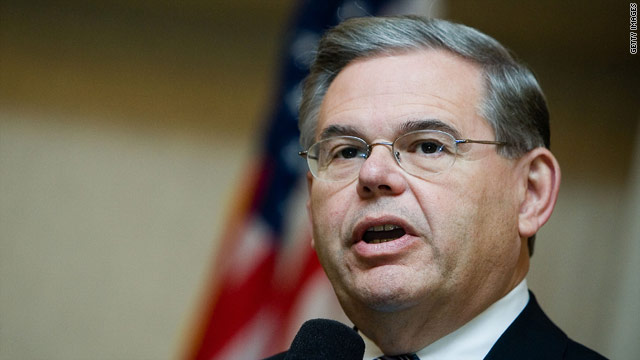
Sen. Robert Menendez, D-New Jersey, said it is "truly outrageous" for ConocoPhillips to use the term in a press release it issued Wednesday and said he expects the company's top executive to apologize when he appears at a Senate hearing Thursday examining the tax proposal.

"For ConocoPhillips to question the patriotism of those public officials who believe they do not deserve billions of dollars in wasteful subsidies is simply beyond the pale and I expect an apology from the CEO tomorrow at tomorrow's hearing, Menendez said at a news conference staged at an Exxon gas station on Capitol Hill to highlight the Democrats' proposal. "It is simply not acceptable."
A press release posted on the company's main web site page is headlined: "ConocoPhillips Highlights Solid Results and Raises Concerns Over Un-American Tax Proposals at Annual Meeting of Shareholders."
The controversial word doesn't appear in the body of the release but the statement does cite the company's concerns about the "challenging political environment facing the energy industry, in particular, the potential impacts of increased regulatory burdens and proposed tax increases."


"These unprecedented proposed taxes, targeted at only five companies, would have serious effects on our company," CEO James Mulva says in the release.
Nancy Turner, a spokesperson for ConocoPhillips, declined to answer a CNN inquiry about why the word was used. Responding by email, she said only that Mulva "will discuss our views on the tax proposals in tomorrow's testimony."