Was on @MitchellReports to discuss my trip to Afghanistan, START Treaty & Paycheck Fairness vote. Video is here:
Outrageous that GOP blocked a vote on Paycheck Fairness Act today. We must eliminate pay disparities btw women & men.
Wednesday, November 17, 2010

Reid Hits GOP For Delaying Obama Meeting, Gibbs Says White House Not Insulted

Posted: 11-17-10 11:49 AM
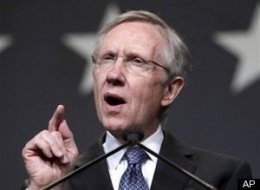
WASHINGTON -- The blame game over who, exactly, is responsible for the cancellation of a White House meeting with congressional leaders began in haste on Wednesday as Democrats saw an opening to cast the GOP as uncommitted to bipartisan outreach.
In a tweet from his account, Senate Majority Leader Harry Reid (D-Nev.) accused Republicans of wasting time while "millions of [people are] looking [for] work."
"My GOP colleagues should have accepted the President's offer 2 meet this week."
Why Republicans didn't accept the invitation has spurred a bit of genuine curiosity among political observers, who have posited that some deeper message or meaning was meant by the snub.
An anonymous Republican aide told Politico that the party wasn't yet willing to walk into a meeting with Obama, unprepared, after the debacle that happened when the president addressed the House GOP Caucus during the height of the health care debate.
A Democratic aide on the Hill suggested that Republicans were sending a bad, if not direct, message about the years of Congress-White House relations in the years ahead.
"When the President invites you to the White House," the aide said, "you go."
More settled, it seems, is the issue of how Republican leadership let it be known that they couldn't make the Thursday night summit. Both Senate Minority Leader Mitch McConnell (R-Ky.) and House Minority Leader John Boehner (R-Ohio) say that Obama presented the November 18 date without consultation.
No one "pulled out" of the meeting, a senior GOP leadership aide stressed. "When the date was first announced, members noted that this was organization/new member week and asked if another date was possible (that was Nov 3rd or 4th). The schedulers all worked amicably to find a new date. Yesterday the White House offered November 30th, which worked for everyone. The meeting will happen."
This was, generally, the tick-tock that White House spokesman Robert Gibbs offered on Wednesday morning, though with some uncertainty about when Boehner or McConnell initially expressed their concerns about the timing.
"Bipartisanship is happening," Gibbs declared, tongue in cheek. "We agreed it was inconvenient to have the meeting when it was originally happening. We moved the date.
"There is another meeting date that is on the schedule. We are flexible. We are ready to sit down with them tomorrow, on the 30th. I presume, as I said a minute ago, we will meet with them as well going forward."
Was this a bad first step for White House-GOP relations going forward? "We don't see it that way. Again I don't think this will be the first meeting that we have or the last meeting that we have," Gibbs replied. "The test of this is not when the meting is held. The test will ultimately be whether you have two sides capable of working together to make progress."
Feinstein and Boxer Call for HSR Money to be Redirected to California
As newly elected Republican governors in Wisconsin and Ohio threaten to reject hundreds of millions of dollars in federal funding to build desperately needed high speed rail projects, Senators Dianne Feinstein and Barbara Boxer have stepped up to call on those funds to be redirected to California should they become available. Here’s the full text of the letter as emailed to me today by Senator Feinstein’s office:
November 16, 2010This is an excellent move by California’s two Senators. The people of California have twice now shown their support for high speed rail, both with the approval of Prop 1A in November 2008 and their rejection of anti-HSR candidate Meg Whitman in the November 2010 election. Recent polling from across California and on the Peninsula shows HSR is still widely popular.
The Honorable Ray LaHood
Secretary
U.S. Department of Transportation
1200 New Jersey Ave., SE
Washington, DC 20590
Dear Secretary LaHood:
It has come to our attention that several states plan to cancel their high-speed rail projects. We ask that you withdraw the Federal grants to these states and award the funds to states that have made a strong financial commitment to these very important infastructure projects.
California voters have committed over $9 billion in bonds to high-speed rail, putting our state in a unique position to advance this initiative quickly. Our state’s plan has widespread, bipartisan support because of the impressive potential for job growth, its impact on energy independence and its transformational role in how Californians move throughout the state. No other state is as ready, as able, or as determined to develop a high-speed rail system in the near future.
California stands ready to be a pioneering partner with the U.S. Department of Transportation. Awarding our state’s plan with these funds would have the greatest and most immediate impact in advancing the kind of high-speed rail system envisioned by both California and the Obama Administration.
Thank you for considering this request. We look forward to working with you on this matter.
Sincerely,
Dianne Feinstein
United States Senator
Barbara Boxer
United States Senator
Californians understand that high speed rail is necessary to the state’s economic recovery – we want the jobs it will bring. Californians understand that high speed rail is necessary to improve our transportation system – we want the fast, reliable, convenient travel options it will bring. Californians understand that high speed rail is necessary to improve our environment and deliver energy independence – we want to slow global warming and reduce carbon emissions by using high speed rail.
We also want to see a broader national HSR system built. We need to improve passenger rail across the country, and that includes states like Wisconsin and Ohio. It’s worse than shameful – it is tragic – if their right-wing governors want to shackle their states to driving and risk their economic futures through dependence on oil. But if they do succeed in rejecting the money, it ought to be redirected to a state where the HSR plans are sufficiently advanced where we can put it to immediate use – and that’s here in California.
With Republicans like new House Transportation Committee chair John Mica agreeing that California’s HSR project is worth funding, now is the time to increase our funding allocation. If that comes from states whose governors foolishly rejected it, well, at least we know the money will be used effectively.
The Paycheck Fairness Act: Fact vs. Fiction
http://www.nationalpartnership.org/site/DocServer/Paycheck_Fairness_Act_Myths_and_Realities_2009.pdf?docID=5721

The GAO cautioned that the report did not prove discrimination against women: "Our analysis neither confirms nor refutes the presence of discriminatory practices. Some of the unexplained differences in pay seen here could be explained by factors for which we lacked data or are difficult to measure, such as level of managerial responsibility, field of study, years of experience, or discriminatory practices, all of which can be found in the research literature as affecting earnings."
Mothers made up 14 percent of managers, a figure little changed in seven years. "When working women have kids, they know it will change their lives, but are surprised to learn it also changes their paychecks," said Maloney. "At a time when families are increasingly relying on the wages of working moms, paycheck fairness is one sure way to boost family incomes and improve kitchen table budgets all across America."
The pay gap for women in management has narrowed slightly over the past decade and women remain underrepresented in management positions, according to a report from the Government Accountability Office.
In 2007, even though they made up 47 percent of the U.S. workforce, women filled 40 percent of management positions -- an increase of one percent since 2000. Female managers earned 81 cents for every dollar earned by male managers in 2007, up from 79 cents in 2000. That's an average salary of $52,000 for women and $75,000 for men.
Compared with their male counterparts, "female managers in 2007 had less education, were younger on average, were more likely to work part-time, and were less likely to be married or have children," the GAO reported.
But women in the workforce have made strides in terms of education. Fifty-one percent of women managers had a college education, compared with 56 percent for men. The proportion of women managers with a college degree has tripled since 1970, according to GAO.
"Women are closing the education gap, but as this report underscores that hasn't translated into closing the pay gap," said Rep. Carolyn Maloney D-N.Y.), chairwoman of the Joint Economic Committee, which is holding a hearing on the report on Tuesday. "It is disappointing that management moms earn 79 cents for every dollar management dads earn and that number hasn't budged since 2000."
The pay gaps varied across industries, from 78 to 87 cents compared with male managers, and in the construction and transportation industries, women were more than proportionately represented in management positions.
"The persistence of pay gaps between men and women managers in the same industries underscores the urgent need for Congress to act on the Paycheck Fairness Act, to strengthen Equal Pay protections and help erase wage discrimination from the workplace," said Christine Owens, director of the National Employment Law Project. "The GAO report also underscores how much more needs to be done to make sure our public policies and private employment practices support working families and provide them the flexibility they need to achieve and advance in the workplace while also caring appropriately for their families."
Click HERE to download a PDF of the GAO's report. (it takes a few minutes to load)
Pay Gap Persists For Women In Management
First Posted: 09-28-10 09:08 AM | Updated: 09-28-10 12:27 PM
The GAO cautioned that the report did not prove discrimination against women: "Our analysis neither confirms nor refutes the presence of discriminatory practices. Some of the unexplained differences in pay seen here could be explained by factors for which we lacked data or are difficult to measure, such as level of managerial responsibility, field of study, years of experience, or discriminatory practices, all of which can be found in the research literature as affecting earnings."
Mothers made up 14 percent of managers, a figure little changed in seven years. "When working women have kids, they know it will change their lives, but are surprised to learn it also changes their paychecks," said Maloney. "At a time when families are increasingly relying on the wages of working moms, paycheck fairness is one sure way to boost family incomes and improve kitchen table budgets all across America."
The pay gap for women in management has narrowed slightly over the past decade and women remain underrepresented in management positions, according to a report from the Government Accountability Office.
In 2007, even though they made up 47 percent of the U.S. workforce, women filled 40 percent of management positions -- an increase of one percent since 2000. Female managers earned 81 cents for every dollar earned by male managers in 2007, up from 79 cents in 2000. That's an average salary of $52,000 for women and $75,000 for men.
Compared with their male counterparts, "female managers in 2007 had less education, were younger on average, were more likely to work part-time, and were less likely to be married or have children," the GAO reported.
But women in the workforce have made strides in terms of education. Fifty-one percent of women managers had a college education, compared with 56 percent for men. The proportion of women managers with a college degree has tripled since 1970, according to GAO.
"Women are closing the education gap, but as this report underscores that hasn't translated into closing the pay gap," said Rep. Carolyn Maloney D-N.Y.), chairwoman of the Joint Economic Committee, which is holding a hearing on the report on Tuesday. "It is disappointing that management moms earn 79 cents for every dollar management dads earn and that number hasn't budged since 2000."
The pay gaps varied across industries, from 78 to 87 cents compared with male managers, and in the construction and transportation industries, women were more than proportionately represented in management positions.
"The persistence of pay gaps between men and women managers in the same industries underscores the urgent need for Congress to act on the Paycheck Fairness Act, to strengthen Equal Pay protections and help erase wage discrimination from the workplace," said Christine Owens, director of the National Employment Law Project. "The GAO report also underscores how much more needs to be done to make sure our public policies and private employment practices support working families and provide them the flexibility they need to achieve and advance in the workplace while also caring appropriately for their families."
Click HERE to download a PDF of the GAO's report. (it takes a few minutes to load)
Vote Today on Wage Equality for Women
Democratic Caucus's Senate Journal
November 17, 2010
Today
the Senate will vote at 11 AM ET on the Paycheck Fairness Act, a bill that strengthens elements of the Equal Pay Act and acts as a companion piece to the Lilly Ledbetter Act. While the Equal Pay Act addresses fair pay issues, loopholes remain that allow businesses to come up with reasons for pay disparities between their male and female employees. The Paycheck Fairness Act would strengthen penalties for discrimination and give women the tools they need to identify and confront unfair treatment.
According to Amie Newman, Managing Editor at RHRealityCheck.org, many American workers “have not been expressly permitted to discuss wages at work without fear of potential repercussions from employers. The Paycheck Fairness Act remedies this by stating that employees may be allowed to discuss each other's wages, without recrimination.” The Paycheck Fairness Act would prohibit employer retaliation against employees for sharing salary information with their co-workers --- so now men and women can better understand wage disparities and determine whether they're experiencing wage discrimination or not.
In advance of today’s vote, Senate Majority Leader Harry Reid -- an original co-sponsor of this legislation -- sent a message to his Republican colleagues, saying:
Will my GOP colleagues do the right thing & vote today in support of wage equality for women? Vote's @ 11am ET. Stay tuned. #fairpay
We’re hopeful that Senate Republicans -- many of whom voted in support of the Lilly Ledbetter bill -- will heed Reid’s advice and vote to support fair pay today.
According to Amie Newman, Managing Editor at RHRealityCheck.org, many American workers “have not been expressly permitted to discuss wages at work without fear of potential repercussions from employers. The Paycheck Fairness Act remedies this by stating that employees may be allowed to discuss each other's wages, without recrimination.” The Paycheck Fairness Act would prohibit employer retaliation against employees for sharing salary information with their co-workers --- so now men and women can better understand wage disparities and determine whether they're experiencing wage discrimination or not.
In advance of today’s vote, Senate Majority Leader Harry Reid -- an original co-sponsor of this legislation -- sent a message to his Republican colleagues, saying:
Will my GOP colleagues do the right thing & vote today in support of wage equality for women? Vote's @ 11am ET. Stay tuned. #fairpay
We’re hopeful that Senate Republicans -- many of whom voted in support of the Lilly Ledbetter bill -- will heed Reid’s advice and vote to support fair pay today.
Al Franken: Institutionalist?
By Eric Black | Published Tue, Nov 16 2010 10:53 am
The New Republic’s legal affairs reporter Jeffrey Rosen is up with a fresh (and fairly adoring) profile of Al Franken. The themes are familiar from a raft of profiles that ran in Franken’s first months: the need for Franken to curb the edgiest parts of his sense of humor, his effort as a rookie senator to emulate Hillary Clinton, who also had to overcome assumptions that her pre-Senate celebrity would give her attitude issues, his determination to at least get along with and maybe even work with his Republican colleagues, and the obligatory discovery that after a career in comedy, Franken can be smart and serious.
Rosen concludes that “Franken has self-consciously chosen[to try to become an] institutionalist who can achieve bipartisan consensus but also successfully champion liberal legislation.”
In fact, the piece is titled: “Franken Sense: The very serious senator from Minnesota.” The full version appears to be for subscribers only, but you can get the first page here. A couple of excerpts:
Rosen concludes that “Franken has self-consciously chosen[to try to become an] institutionalist who can achieve bipartisan consensus but also successfully champion liberal legislation.”
In fact, the piece is titled: “Franken Sense: The very serious senator from Minnesota.” The full version appears to be for subscribers only, but you can get the first page here. A couple of excerpts:
When Franken launched his campaign for the Senate, it wasn’t obvious that the former comedian and Air America pundit would become a devotee of the rituals of senatorial comity. As an entertainer, Franken had mastered a combative political persona in which he tackled his ideological opponents head-on. Given the opportunity to interview George W. Bush, then a presidential candidate, he asked Bush whether he’d ever manufactured crystal meth. He famously got into a shouting match with Bill O’Reilly at a C-SPAN panel discussion, and, in another of his books, Lies and the Lying Liars Who Tell Them, he recounted that he’d once called up National Review editor Rich Lowry and challenged him to a fight in a parking garage. When Franken arrived in Washington, many expected him to be a bombastic, no-holds-barred partisan.
But Franken has self-consciously chosen a different model: the institutionalist who can achieve bipartisan consensus but also successfully champion liberal legislation. During his brief time in office, Franken has emerged as a throwback to the successful progressives of a distant era when senators knew what they were talking about and spent long hours working on worthy policy proposals to make the lives of their constituents better. As unlikely as it may appear, at a time when it seems as if every politician wants to be a celebrity, Franken has used his celebrity to become a serious senator.
My favorite bits from the piece were the concrete examples Rosen used of Franken using facts and logic to make his case, like this one:I saw evidence of Franken’s careful preparation firsthand, when I testified in a Senate Judiciary Committee hearing last March on the Citizens United campaign-finance case that enabled unlimited corporate spending in election campaigns. One of the witnesses, Bradley Smith, had criticized a provision of a bill Franken had introduced which said that if a foreign national controls more than 20 percent of a company, that company shouldn’t be allowed to spend unrestricted amounts on American elections. When Smith confidently stated that 20 percent ownership didn’t constitute corporate control, Franken pounced:
FRANKEN: Yes or no, please. Do you know how Delaware, the leading state for corporate law, defines a controlling shareholder?
SMITH: No, I do not, nor do I think it is relevant to the question of whether control ...
FRANKEN: I asked you to respond yes ... or no, sir, and you said no, you do not. ... Now, the fact is that thirty-two states that define control with a number, thirty-one of them define it as twenty percent ownership or less, most of them less.
Franken is not an attorney, but with a few deft questions he had demonstrated that Smith, a law professor, didn’t know what he was talking about. “It’s clear to me that he could have been a world-class litigator, and his ability to take people down the slippery slope is just fabulous,” said his friend Norman Ornstein, a congressional expert at the American Enterprise Institute. “I saw a hearing on health care where a witness was talking about how our system was the best in the world and how awful others are, and Al asked,‘Do you know how many bankruptcies there were as a result of health care in Switzerland?’” When the witness said no, Franken said “[t]he answer is zero,” and then went through a list of other countries that had no bankruptcies. “The witness was just filleted,” Ornstein said.
And lastlyFranken’s staff told me that his ultimate model is not Hillary Clinton but Teddy Kennedy—a master of working across the aisle to advance an unequivocally liberal agenda. Whether Franken can fill Kennedy’s shoes will hinge on his ability to combine legislative skills with a fiery economic populism that is as progressive as the Tea Party’s populism is conservative. Although Franken has been a relatively successful institutionalist, he hasn’t yet demonstrated Kennedy’s ability to bend ideologically in order to cut a deal. (Of course, bipartisan deal-making may also be less possible in today’s polarized Senate than it was during Kennedy’s long tenure in office.)
Massive Mortgage Servicing Problems Exposed
New Strategies Required to Make Mortgage Modifications Effective, Reverse the Flood of Foreclosures, and Revive the Economy
November 16, 2010 Washington, D.C. – Oregon’s Senator Jeff Merkley, a member of the Senate Banking Committee, issued the following statement Tuesday after the committee’s hearing on the major problems in the national mortgage servicing industry:“As we strive to create jobs and place American families on sound financial footing, we have to address the problem that plunged the nation into recession in the first place. The housing crisis remains a massive anchor holding back economic growth and hampering financial security for American families.
“Today’s hearing exposed a glaring problem in the mortgage modification process: mortgage servicers are negotiating loan modifications with a homeowner while they simultaneously conduct foreclosure proceedings with the same family. Under this dual-track system, a responsible family can work with their lender to apply for a mortgage modification, submit all of the required paperwork, make trial payments on time, and all the while continue to receive foreclosure notices from the same lender.
“This dual-track model is extremely confusing for homeowners and can cause serious instability and strain within a family. I recently heard from Rebekah and Lawrence Allen of Redmond, Oregon about their attempt to receive a mortgage modification from the Bank of America. The Allens signed a loan modification and were approved for a trial loan modification in 2009. They began making their new payments, but continued to receive foreclosure notices. Confused, they called the bank and were told everything was fine, so they should continue making their payments. They continued to make their loan payments for a year. Then, when the Allens went out of town for a few days, a foreclosure notice was posted on their door. Before long, a representative from the mortgage company came to their home and questioned whether they occupied the property. Despite their attempts to do the right thing, the Allens were subject to enormous levels of stress and embarrassment. It’s wrong that the Allens and millions of families like them been sentenced to suffer through bureaucratic nightmare in an effort to keep their home.
“The Obama Administration has developed the Home Affordable Modification Program to stem the tide of foreclosures, but the program, better known as HAMP, has made too little progress. Even with the HAMP program in place, it has been extremely difficult for homeowners to get permanent mortgage modifications approved by their loan servicers. In its first year and a half, the HAMP program created 466,000 permanent loan modifications. The problem is that we have now seen over 300,000 foreclosure filings each month for 20 consecutive months.
“Swift action is required to stop the trend from continuing and prevent further damage to the economy. To keep families in their homes, we must address this unproductive dual-track modification system, cut down the piles of paperwork that families are forced to sift through, and make mortgage modifications faster and more effective.
Outlook poor for long-term unemployed
By Dan Chapman
The Atlanta Journal-Constitution
5:43 a.m. Monday, October 4, 2010
Nothing, at first, seemed unusual about the listing for a McDonough warehouse job.
Minimum three years of experience. Ability to lift 75 pounds. Reliable transportation.
But one requirement, in bold type and uppercase letters, jumped from Abacus Corporation’s online listing in July:
“If you have not worked since 2009, do not apply!”
Ron Bouchard, who lost his Covington grading and pipeline job 20 months ago, was “outraged.”
“I’ve got all this experience and talent they’re looking for and they don’t even want to talk to me because I’ve been out of work longer than six months?” he said. “Talk about discrimination. That should be illegal.”
No agency tracks the frequency of job postings that restrict applicants based on length of unemployment, and the Georgia Labor Department says it is not widespread. Anecdotally, though, reports of the practice have grown this year.
It also infuriates the long-term unemployed -- half of Georgia's 500,000 unemployed workers have been jobless at least six months. Many consider it unfair, particularly with five unemployed people for every job opening.
Companies that restrict applicants counter that, due to the lousy economy, they’re inundated with resumes, phone calls and emails and eliminating the long-term unemployed helps them keep the applicant pool manageable. Currently employed workers are safer bets, they add, especially as many companies have laid off less valuable workers.
“When it comes to fork lift drivers in particular, where a slip of the hand could mean somebody doesn’t go home that night, you need to make sure you’re hiring the safest and most qualified person,” said Michael Brady, chief operating officer for Baltimore-based Abacus.
He said he was unaware of the do-not-apply job listing in McDonough and that his company doesn't routinely use such wording. But he added: “We typically want people with recent experience who are employed or recently unemployed.”
While the practice doesn't appear to be an obvious violation of law, it is being reviewed.
Labor experts, including Judy Conti with the National Employment Law Project in Washington, say some human resource directors believe there must be something wrong with a potential hire if he or she has been unemployed for a long time.
Jim Link, human resources director for Randstad US, the staffing firm headquartered in Atlanta, said companies do themselves a disservice by ruling out the long-term unemployed.
“The quality of the candidate available on the market has really never been better,” Link said. “And they’re out there through no fault of their own. Employers may indeed be missing out on fantastic opportunities by ignoring these people.”
Georgia Labor Commissioner Michael Thurmond said the practice isn't illegal, but labeled it "disappointing and troubling" in an interview Thursday.
Job postings sometimes use language like “unemployed candidates will not be considered,” or “must be currently employed” to cull candidates. In some cases, the language has been removed after media inquiries.
Sony Ericsson, for example, announced last May the relocation of its headquarters to Buckhead and the hiring of 180 people. It contracted with The People Place, an Orlando-area job recruitment agency, to find applicants. Its job board included a listing for a marketing/public relations job.
"No unemployed candidates will be considered at all,” it read, in part.
Lauren Haralson, a spokeswoman for Sony Ericsson, said this week that “due to a miscommunication, a mistake was made” in the job posting, and blamed The People Place. However, she also acknowledged Sony wanted the posting to bring in applicants who already have jobs. Sony has received “a heavy load of unemployed applicants through our own postings and a request was made to recruiters to reach potential candidates who have jobs,” she explained in an email.
The People Place didn’t return calls this week. But another posting on its website earlier this year, for a Texas electronics company, said “client will not consider/review anyone NOT currently employed regardless of the reason.”
In June, a South Carolina recruiter listed grocery store manager jobs across the Southeast with similar don’t-bother-to-apply language.
The Abacus Corp., which fills jobs for governments and corporations nationwide, sought warehouse workers and forklift drivers in July for a McDonough warehouse. The jobs paid between $8.50 and $11 an hour. To be considered, though, a prospect “must have worked within the last 6 months,” its on-line posting read.
“I can understand it if these were high-risk people who had DUIs or there was something on their resume that indicated a red flag,” said Bouchard, an ex-AT&T manager who later drove trucks and heavy equipment for a pipeline company. “But most of the people out of work for six months are hungry, eager for a job. We’ve been burned by this economy and would be more than happy to be at work.”
Brady said Abacus is simply being prudent by trying to avoid the hiring of bad employees.
“A person’s motivation is important to us. If they say, ‘My unemployment (benefits) are going to expire next week and I really need a job,’ we note that in the screening process,” Brady said. “People who are currently employed … are the kind of people you want as opposed to people who get cut.”
Bouchard, 63, has applied for maybe 1,200 jobs. He said last year he didn’t come across a single posting that imposed time restrictions. This year, he said, he has seen maybe a dozen notices.
Conti, the lobbyist for the nonprofit National Employment Law Project in Washington, said restricting job seekers by length of unemployment could be discriminatory and illegal. The black jobless rate, for example, is nearly double the rate for whites.
“Across the country, long-term unemployment is affecting people of color disproportionately,” said Conti, whose organization advocates for low-income workers. “So if employers have policies that seem neutral on their face, but may have a ‘disparate impact’ on people of color, that may run afoul of the law.”
Conti said the federal Equal Employment Opportunity Commission “is looking into” companies that restrict job applicant pools. An EEOC spokeswoman said “confidentiality requirements bar us from discussing specific charges of discrimination.”
Jan Ferrara of Decatur, who was laid off from CNN in February 2009, said it should be illegal for companies to summarily weed out any job applicant.
“In this economy, when people have been out of work so long, it’s blatantly unfair to discriminate this way,” said Ferrara who hasn't encountered the tactic in her own job search. “It can only be good for the economy and society to hire the long-term unemployed.”
Nothing, at first, seemed unusual about the listing for a McDonough warehouse job.
Minimum three years of experience. Ability to lift 75 pounds. Reliable transportation.
But one requirement, in bold type and uppercase letters, jumped from Abacus Corporation’s online listing in July:
“If you have not worked since 2009, do not apply!”
Ron Bouchard, who lost his Covington grading and pipeline job 20 months ago, was “outraged.”
“I’ve got all this experience and talent they’re looking for and they don’t even want to talk to me because I’ve been out of work longer than six months?” he said. “Talk about discrimination. That should be illegal.”
No agency tracks the frequency of job postings that restrict applicants based on length of unemployment, and the Georgia Labor Department says it is not widespread. Anecdotally, though, reports of the practice have grown this year.
It also infuriates the long-term unemployed -- half of Georgia's 500,000 unemployed workers have been jobless at least six months. Many consider it unfair, particularly with five unemployed people for every job opening.
Companies that restrict applicants counter that, due to the lousy economy, they’re inundated with resumes, phone calls and emails and eliminating the long-term unemployed helps them keep the applicant pool manageable. Currently employed workers are safer bets, they add, especially as many companies have laid off less valuable workers.
“When it comes to fork lift drivers in particular, where a slip of the hand could mean somebody doesn’t go home that night, you need to make sure you’re hiring the safest and most qualified person,” said Michael Brady, chief operating officer for Baltimore-based Abacus.
He said he was unaware of the do-not-apply job listing in McDonough and that his company doesn't routinely use such wording. But he added: “We typically want people with recent experience who are employed or recently unemployed.”
While the practice doesn't appear to be an obvious violation of law, it is being reviewed.
Labor experts, including Judy Conti with the National Employment Law Project in Washington, say some human resource directors believe there must be something wrong with a potential hire if he or she has been unemployed for a long time.
Jim Link, human resources director for Randstad US, the staffing firm headquartered in Atlanta, said companies do themselves a disservice by ruling out the long-term unemployed.
“The quality of the candidate available on the market has really never been better,” Link said. “And they’re out there through no fault of their own. Employers may indeed be missing out on fantastic opportunities by ignoring these people.”
Georgia Labor Commissioner Michael Thurmond said the practice isn't illegal, but labeled it "disappointing and troubling" in an interview Thursday.
Job postings sometimes use language like “unemployed candidates will not be considered,” or “must be currently employed” to cull candidates. In some cases, the language has been removed after media inquiries.
Sony Ericsson, for example, announced last May the relocation of its headquarters to Buckhead and the hiring of 180 people. It contracted with The People Place, an Orlando-area job recruitment agency, to find applicants. Its job board included a listing for a marketing/public relations job.
"No unemployed candidates will be considered at all,” it read, in part.
Lauren Haralson, a spokeswoman for Sony Ericsson, said this week that “due to a miscommunication, a mistake was made” in the job posting, and blamed The People Place. However, she also acknowledged Sony wanted the posting to bring in applicants who already have jobs. Sony has received “a heavy load of unemployed applicants through our own postings and a request was made to recruiters to reach potential candidates who have jobs,” she explained in an email.
The People Place didn’t return calls this week. But another posting on its website earlier this year, for a Texas electronics company, said “client will not consider/review anyone NOT currently employed regardless of the reason.”
In June, a South Carolina recruiter listed grocery store manager jobs across the Southeast with similar don’t-bother-to-apply language.
The Abacus Corp., which fills jobs for governments and corporations nationwide, sought warehouse workers and forklift drivers in July for a McDonough warehouse. The jobs paid between $8.50 and $11 an hour. To be considered, though, a prospect “must have worked within the last 6 months,” its on-line posting read.
“I can understand it if these were high-risk people who had DUIs or there was something on their resume that indicated a red flag,” said Bouchard, an ex-AT&T manager who later drove trucks and heavy equipment for a pipeline company. “But most of the people out of work for six months are hungry, eager for a job. We’ve been burned by this economy and would be more than happy to be at work.”
Brady said Abacus is simply being prudent by trying to avoid the hiring of bad employees.
“A person’s motivation is important to us. If they say, ‘My unemployment (benefits) are going to expire next week and I really need a job,’ we note that in the screening process,” Brady said. “People who are currently employed … are the kind of people you want as opposed to people who get cut.”
Bouchard, 63, has applied for maybe 1,200 jobs. He said last year he didn’t come across a single posting that imposed time restrictions. This year, he said, he has seen maybe a dozen notices.
Conti, the lobbyist for the nonprofit National Employment Law Project in Washington, said restricting job seekers by length of unemployment could be discriminatory and illegal. The black jobless rate, for example, is nearly double the rate for whites.
“Across the country, long-term unemployment is affecting people of color disproportionately,” said Conti, whose organization advocates for low-income workers. “So if employers have policies that seem neutral on their face, but may have a ‘disparate impact’ on people of color, that may run afoul of the law.”
Conti said the federal Equal Employment Opportunity Commission “is looking into” companies that restrict job applicant pools. An EEOC spokeswoman said “confidentiality requirements bar us from discussing specific charges of discrimination.”
Jan Ferrara of Decatur, who was laid off from CNN in February 2009, said it should be illegal for companies to summarily weed out any job applicant.
“In this economy, when people have been out of work so long, it’s blatantly unfair to discriminate this way,” said Ferrara who hasn't encountered the tactic in her own job search. “It can only be good for the economy and society to hire the long-term unemployed.”
112TH CONGRESS: Reid reinstalled as Democratic leader
Nov. 16, 2010
Copyright © Las Vegas Review-Journal
Senators in both parties re-elect leaders

Democrats and Republicans re-elected leaders who will guide the Senate through compromise and confrontation in the two years leading up to the 2012 presidential elections.
"My team was just re-elected," Reid announced after the Democrats' meeting held in the historic Old Senate Chamber.
Democrats re-elected as Reid deputies were Sens. Richard Durbin of Illinois, Chuck Schumer of New York and Patty Murray of Washington.
Reid further appointed Schumer to be head of the Democratic Policy Committee, where he will have more power to shape the party's messages.
Republicans re-elected Sen. Mitch McConnell of Kentucky to lead them in the session that will begin in January.
Sens. Jon Kyl of Arizona, Lamar Alexander of Tennessee and John Thune of South Dakota also were returned to the GOP leadership.
Reid, 70, has headed the Democrats for six years, two when they were in the minority and four when they controlled the Senate.
He survived his toughest re-election this month in a nationwide Republican surge that otherwise saw the GOP gain six seats in the Senate.
That gives the Democratic caucus only a 53-47 edge for the upcoming session, compared to a 59-seat bulge in the session coming to an end.
Murray, who also was involved in a hard-fought re-election, nominated Reid to return as leader, according to Sen. Joe Lieberman of Connecticut, one of two independents who caucus with the Democrats.
Reid accepted, spoke briefly and was re-elected by acclamation.
"It was totally unanimous," Lieberman said. "Harry has a personal relationship with every member of the caucus."
Addressing the senators, Reid reflected on his re-election race against Sharron Angle, who challenged him with support from Tea Party advocates, national Republicans and conservative interest groups that spent millions of dollars on advertising.
"With everything they threw at me, if I could win, anybody could win," Reid said, according to a Democrat who asked not to be identified and related what was said behind closed doors.
According to several senators, Reid got down to business immediately following his re-election as majority leader, laying out proposals for caucus policies.
Meanwhile, as a post-election lame duck session enters its third day, the outlook for Senate action on major tax and budget issues remained uncertain.
Reid said little about how he plans to move forward, saying he is still taking the temperature of Democrats as to what might be possible.
But on one issue the Nevadan remained clear. He repeated his support for earmarked spending, as Senate Republicans adopted a policy for their caucus not to seek pet funding for their states in spending bills.
"I believe personally we have a constitutional responsibility to do congressionally directed spending," Reid said. "I am not in favor of delegating my personal responsibility to the White House."
Critics have equated earmarks -- spending that lawmakers direct to home state projects -- to be wasteful spending and a symbol of what is wrong with Congress.
Taxpayers for Common Sense, a watchdog group that monitors earmarks, has estimated $6 billion in earmarks are in 2011 spending bills approved by the Senate Appropriations Committee, which is less than 1 percent of the $1.1 trillion in the legislation.
"People say it is a small portion of the overall budget, but it is still a significant symbolic gesture to say this is how we are going to start to control spending," said Rep.-elect Joe Heck, a Nevada Republican attending orientation at the Capitol on Tuesday.
Republicans and several Democrats including Sen. Claire McCaskill of Missouri say they will seek a Senate vote to outlaw earmarks.
Reid said he would agree to set up a debate on the topic, but did not specify when that might be.
In the meantime, Reid rejected the idea that doing away with earmarks amounts to meaningful budget reform.
"I don't accept that," he said. "I think I have an obligation to the people of Nevada to do what is important for Nevada, not what is important to some bureaucrats with green eyeshades."
Reid reiterated that Democrats will seek Republican input on bills as a gesture in the new Congress.
"The American people want us to work together, that is our goal," he said. "We feel very sound in our approach to this lame duck, and of course next year and the year after that."
McConnell said the message Republicans got from the election was that voters "would like us to cut spending, cut the debt and get private sector job creation going again. It is our hope we can work with the (President Barack Obama) administration on all those issues."
Stephens Washington Bureau reporter Peter Urban contributed to this report. Contact Stephens Washington Bureau Chief Steve Tetreault at stetreault @stephensmedia.com or 202-783-1760.
Copyright © Las Vegas Review-Journal
Senators in both parties re-elect leaders

WASHINGTON -- Senate Democrats on Tuesday reinstalled Harry Reid as their leader for the upcoming Congress, entrusting the Nevadan with another two years running the upper house for their scaled-back majority.
Leadership elections for the upcoming 112th session of Congress were drama-free in closed-door meetings in the Capitol.
Leadership elections for the upcoming 112th session of Congress were drama-free in closed-door meetings in the Capitol.
Democrats and Republicans re-elected leaders who will guide the Senate through compromise and confrontation in the two years leading up to the 2012 presidential elections.
"My team was just re-elected," Reid announced after the Democrats' meeting held in the historic Old Senate Chamber.
Democrats re-elected as Reid deputies were Sens. Richard Durbin of Illinois, Chuck Schumer of New York and Patty Murray of Washington.
Reid further appointed Schumer to be head of the Democratic Policy Committee, where he will have more power to shape the party's messages.
Republicans re-elected Sen. Mitch McConnell of Kentucky to lead them in the session that will begin in January.
Sens. Jon Kyl of Arizona, Lamar Alexander of Tennessee and John Thune of South Dakota also were returned to the GOP leadership.
Reid, 70, has headed the Democrats for six years, two when they were in the minority and four when they controlled the Senate.
He survived his toughest re-election this month in a nationwide Republican surge that otherwise saw the GOP gain six seats in the Senate.
That gives the Democratic caucus only a 53-47 edge for the upcoming session, compared to a 59-seat bulge in the session coming to an end.
Murray, who also was involved in a hard-fought re-election, nominated Reid to return as leader, according to Sen. Joe Lieberman of Connecticut, one of two independents who caucus with the Democrats.
Reid accepted, spoke briefly and was re-elected by acclamation.
"It was totally unanimous," Lieberman said. "Harry has a personal relationship with every member of the caucus."
Addressing the senators, Reid reflected on his re-election race against Sharron Angle, who challenged him with support from Tea Party advocates, national Republicans and conservative interest groups that spent millions of dollars on advertising.
"With everything they threw at me, if I could win, anybody could win," Reid said, according to a Democrat who asked not to be identified and related what was said behind closed doors.
According to several senators, Reid got down to business immediately following his re-election as majority leader, laying out proposals for caucus policies.
Meanwhile, as a post-election lame duck session enters its third day, the outlook for Senate action on major tax and budget issues remained uncertain.
Reid said little about how he plans to move forward, saying he is still taking the temperature of Democrats as to what might be possible.
But on one issue the Nevadan remained clear. He repeated his support for earmarked spending, as Senate Republicans adopted a policy for their caucus not to seek pet funding for their states in spending bills.
"I believe personally we have a constitutional responsibility to do congressionally directed spending," Reid said. "I am not in favor of delegating my personal responsibility to the White House."
Critics have equated earmarks -- spending that lawmakers direct to home state projects -- to be wasteful spending and a symbol of what is wrong with Congress.
Taxpayers for Common Sense, a watchdog group that monitors earmarks, has estimated $6 billion in earmarks are in 2011 spending bills approved by the Senate Appropriations Committee, which is less than 1 percent of the $1.1 trillion in the legislation.
"People say it is a small portion of the overall budget, but it is still a significant symbolic gesture to say this is how we are going to start to control spending," said Rep.-elect Joe Heck, a Nevada Republican attending orientation at the Capitol on Tuesday.
Republicans and several Democrats including Sen. Claire McCaskill of Missouri say they will seek a Senate vote to outlaw earmarks.
Reid said he would agree to set up a debate on the topic, but did not specify when that might be.
In the meantime, Reid rejected the idea that doing away with earmarks amounts to meaningful budget reform.
"I don't accept that," he said. "I think I have an obligation to the people of Nevada to do what is important for Nevada, not what is important to some bureaucrats with green eyeshades."
Reid reiterated that Democrats will seek Republican input on bills as a gesture in the new Congress.
"The American people want us to work together, that is our goal," he said. "We feel very sound in our approach to this lame duck, and of course next year and the year after that."
McConnell said the message Republicans got from the election was that voters "would like us to cut spending, cut the debt and get private sector job creation going again. It is our hope we can work with the (President Barack Obama) administration on all those issues."
Stephens Washington Bureau reporter Peter Urban contributed to this report. Contact Stephens Washington Bureau Chief Steve Tetreault at stetreault @stephensmedia.com or 202-783-1760.
Get the Facts on Uber-Polluting Koch Industries

by Brian Merchant, Brooklyn, New York  on 11.15.10
Before last year, many had never heard of Koch Industries. Even though it's the second largest company in the US, and it rakes in nearly $100 billion every year, it's still something of an unknown entity to most Americans. And that's how company head David Koch prefers it -- he's fond of saying his company is "the biggest company you've never heard of." The majority of its business is in oil refining, coal, and manufacturing. And over the last year, a series of reports surfaced that revealed the company's huge monetary influence, and the murky activist involvement of its bosses, on efforts to kill clean energy bills, overturn environmental regulations, and so on. Finally, someone is giving us the straight facts on Koch Industries:
The new website Koch Industries Facts, run by the clean energy group Repower America, has been launched to act as a simple information depot on Koch Industries. Aptly enough, it's a series of frankly presented facts, with links to the source material, that reveal the extent to which Koch Industries has been a leading force pushing back against both clean energy, climate science, and green policy across the US.
Here's a sampling of the facts collected at the site:
The site makes for a solid but breezy compendium of information on everything Koch -- it makes for a straightforward introduction to Koch's influence and activities, and serves as a good reminder of the scope of both. Check it out at Koch Industries Facts. More on Koch Industries
Billlionaire David Koch : 25 Years of Disinformation Campaigns and Polluter Front Groups
'Financial Kingpin' of Climate Change Denial Exposed: Koch Industries
Koch Industries Backs Formaldehyde Council, Fighting Regulation
Here's a sampling of the facts collected at the site:
- Koch is responsible for over 300 oil spills in the U.S. and has leaked 3 million gallons of crude oil into fisheries and drinking waters. (EPA)
- Koch Industries spent more than $48.5 million from 1997 to 2008 funding climate science opposition groups.
- Koch Industries operates oil refineries in Texas, Alaska and Minnesota, and controls roughly 4,000 miles of oil pipelines.
- Koch Industries has spent $16,922,000 so far in the 111th Congress on lobbying.
- Koch Industries spent $1 million trying to roll back California's clean energy law - and failed.
The site makes for a solid but breezy compendium of information on everything Koch -- it makes for a straightforward introduction to Koch's influence and activities, and serves as a good reminder of the scope of both. Check it out at Koch Industries Facts. More on Koch Industries
Billlionaire David Koch : 25 Years of Disinformation Campaigns and Polluter Front Groups
'Financial Kingpin' of Climate Change Denial Exposed: Koch Industries
Koch Industries Backs Formaldehyde Council, Fighting Regulation
Lawmakers warned off compromise
House and Senate leaders are cautiously weighing how to proceed on legislation in the post-election session as lawmakers in both parties come under increasing pressure to resist compromises on taxes and spending.
During a rally Monday on the Capitol grounds, the conservative group Americans for Prosperity told Republicans to block an omnibus fiscal 2011 appropriations package and demand a permanent extension of expiring tax rates for all taxpayers during the lame-duck session.
“There must be no compromise on preventing a tax increase on any American,” House Republican Conference Chairman Mike Pence of Indiana said at the event.
Democratic lawmakers are under pressure from liberal groups to allow upper-bracket income tax rates to increase and extend a program providing extra unemployment benefits.
The liberal Campaign for America’s Future, MoveOn.org and labor unions want Democrats to block the extension of tax rates enacted in 2001 and 2003 (PL 107-17, PL 108-27) for individuals earning more than $200,000 and couples making more than $250,000. AFL-CIO President Richard Trumka called an extension of the tax rates for wealthy taxpayers “absolute insanity.”
With no sign of any post-election consensus, House Speaker Nancy Pelosi, D-Calif., and Senate Majority Leader Harry Reid, D-Nev., have held off on setting any firm agenda for the remainder of the 111th Congress, at least until after Tuesday’s caucus meetings with rank-and-file lawmakers returning from the six-week election recess.
Democratic and Republican congressional leaders will also discuss pending legislation with President Obama during a Nov. 18 White House meeting. The meetings will help set the stage for legislative action after the House and Senate leave town again for a week-long Thanksgiving break and reconvene Nov. 29 for a final push.
House Majority Leader Steny H. Hoyer, D-Md., said Monday that the strategy for dealing with taxes and appropriations will hinge on discussions between House leaders and Reid, and that much will depend on what Reid “thinks is possible” in the Senate.
After a Monday meeting of the House Democratic leadership team, Hoyer said several options are being considered, including a proposal to increase the family income cutoff for tax rate extensions from $250,000 to $1 million.
Hoyer said the House will not act until it sees if the Senate votes to extend unemployment benefits and to block a scheduled reduction in payments to doctors treating Medicare patients. The 23 percent cut in the Medicare physician reimbursements and expiration of the extended unemployment benefits are both scheduled for Nov. 30.
The only other legislation likely to see House action this week is a bill intended to encourage federal telework (HR 1722).
Vice President Joseph R. Biden Jr., who was in the Capitol on Monday to swear in two new Democratic senators, said he would meet with Senate Minority Leader Mitch McConnell, R-Ky., late Monday to discuss the lame-duck agenda. “I’m not concerned,” Biden said. “We’ve got a lot to get done, and we have to get it done.”
Reid said Monday that the stalled economy will remain the primary focus of the chamber’s activity during the lame-duck session, but he provided no specific agenda.
“I will work with my caucus and with Sen. McConnell, who will, of course, work with his caucus,” Reid said in a Senate floor speech. “We will see what we can get done before the start of the 112th Congress in January.”
The Senate will not be in session Tuesday. Democratic and Republican senators and their newly elected colleagues will meet in the morning to elect leadership teams for the 112th Congress. The current top leaders are all expected to keep their jobs.
Both parties will hold regular policy luncheons, at which they will likely discuss their strategy for dealing with taxes, spending and other matters during the lame-duck session. The first Senate votes are expected Wednesday.
House Democrats and Republicans will not elect their leadership teams until Wednesday, but the two caucuses will meet separately Tuesday — the Republicans in the morning and the Democrats at noon — to discuss the legislative agenda. The House will vote on bills under suspension of the rules.
Interest Groups Make Their Case
Although the campaign season recently ended, interest groups have mobilized once again in an effort to convince lawmakers to press various liberal or conservative causes.
Conservative activists at the Monday rally threatened to mount primary challenges against Republicans who vote for an omnibus spending bill or against a moratorium on earmarks that House and Senate Republicans will consider at their organizational meetings this week.
The first challenge for the activists would be to have the secret balloting on the latter issue made public.
A few hours after the rally, McConnell announced his support for the earmark ban, all but ensuring its adoption for the Republicans on Tuesday. A veteran member of the Appropriations Committee, McConnell previously expressed skepticism about a ban on earmarks.
On the Democratic side, Pelosi is under pressure from members of the Congressional Hispanic Caucus to push through the House a bill known as the DREAM Act (HR 1751, S 729), which would create a path to citizenship for the children of illegal immigrants who attend college or join the military.
Xavier Becerra of California, the Democratic Caucus vice chairman, said House action will probably depend on whether the Senate will act on the bill as well. No House vote is expected before Thanksgiving, he said.
The uncertainty surrounding legislative action during the remainder of the 111th is leaving individuals and businesses uncertain about their tax rates for next year.
Sen. Thomas R. Carper, D-Del., said the question marks about tax policy, the budget, energy and infrastructure development are keeping companies from hiring new workers.
“My hope is we can somehow find some common ground in the next month or so on some of these fronts to eliminate some of the uncertainty,” he said. “Less uncertainty, more predictability, more job creation.”
The senators sworn in Monday were Joe Manchin III, D-W.Va., and Chris Coons, D-Del., winners of Nov. 2 special elections.
Republican winners of House special elections in Indiana and New York are scheduled to be sworn in Tuesday, although Tom Reed of New York might not take his oath until Wednesday because of minor health problems.
Reed is filling the seat formerly held by Democrat Eric Massa, while Marlin Stutzman will take the Indiana seat vacated by Republican Mark Souder. Massa and Souder resigned earlier this year.
-- Brian Friel, Alan Ota and Sam Goldfarb, CQ Staff
During a rally Monday on the Capitol grounds, the conservative group Americans for Prosperity told Republicans to block an omnibus fiscal 2011 appropriations package and demand a permanent extension of expiring tax rates for all taxpayers during the lame-duck session.
“There must be no compromise on preventing a tax increase on any American,” House Republican Conference Chairman Mike Pence of Indiana said at the event.
Democratic lawmakers are under pressure from liberal groups to allow upper-bracket income tax rates to increase and extend a program providing extra unemployment benefits.
The liberal Campaign for America’s Future, MoveOn.org and labor unions want Democrats to block the extension of tax rates enacted in 2001 and 2003 (PL 107-17, PL 108-27) for individuals earning more than $200,000 and couples making more than $250,000. AFL-CIO President Richard Trumka called an extension of the tax rates for wealthy taxpayers “absolute insanity.”
With no sign of any post-election consensus, House Speaker Nancy Pelosi, D-Calif., and Senate Majority Leader Harry Reid, D-Nev., have held off on setting any firm agenda for the remainder of the 111th Congress, at least until after Tuesday’s caucus meetings with rank-and-file lawmakers returning from the six-week election recess.
Democratic and Republican congressional leaders will also discuss pending legislation with President Obama during a Nov. 18 White House meeting. The meetings will help set the stage for legislative action after the House and Senate leave town again for a week-long Thanksgiving break and reconvene Nov. 29 for a final push.
House Majority Leader Steny H. Hoyer, D-Md., said Monday that the strategy for dealing with taxes and appropriations will hinge on discussions between House leaders and Reid, and that much will depend on what Reid “thinks is possible” in the Senate.
After a Monday meeting of the House Democratic leadership team, Hoyer said several options are being considered, including a proposal to increase the family income cutoff for tax rate extensions from $250,000 to $1 million.
Hoyer said the House will not act until it sees if the Senate votes to extend unemployment benefits and to block a scheduled reduction in payments to doctors treating Medicare patients. The 23 percent cut in the Medicare physician reimbursements and expiration of the extended unemployment benefits are both scheduled for Nov. 30.
The only other legislation likely to see House action this week is a bill intended to encourage federal telework (HR 1722).
Vice President Joseph R. Biden Jr., who was in the Capitol on Monday to swear in two new Democratic senators, said he would meet with Senate Minority Leader Mitch McConnell, R-Ky., late Monday to discuss the lame-duck agenda. “I’m not concerned,” Biden said. “We’ve got a lot to get done, and we have to get it done.”
Reid said Monday that the stalled economy will remain the primary focus of the chamber’s activity during the lame-duck session, but he provided no specific agenda.
“I will work with my caucus and with Sen. McConnell, who will, of course, work with his caucus,” Reid said in a Senate floor speech. “We will see what we can get done before the start of the 112th Congress in January.”
The Senate will not be in session Tuesday. Democratic and Republican senators and their newly elected colleagues will meet in the morning to elect leadership teams for the 112th Congress. The current top leaders are all expected to keep their jobs.
Both parties will hold regular policy luncheons, at which they will likely discuss their strategy for dealing with taxes, spending and other matters during the lame-duck session. The first Senate votes are expected Wednesday.
House Democrats and Republicans will not elect their leadership teams until Wednesday, but the two caucuses will meet separately Tuesday — the Republicans in the morning and the Democrats at noon — to discuss the legislative agenda. The House will vote on bills under suspension of the rules.
Interest Groups Make Their Case
Although the campaign season recently ended, interest groups have mobilized once again in an effort to convince lawmakers to press various liberal or conservative causes.
Conservative activists at the Monday rally threatened to mount primary challenges against Republicans who vote for an omnibus spending bill or against a moratorium on earmarks that House and Senate Republicans will consider at their organizational meetings this week.
The first challenge for the activists would be to have the secret balloting on the latter issue made public.
A few hours after the rally, McConnell announced his support for the earmark ban, all but ensuring its adoption for the Republicans on Tuesday. A veteran member of the Appropriations Committee, McConnell previously expressed skepticism about a ban on earmarks.
On the Democratic side, Pelosi is under pressure from members of the Congressional Hispanic Caucus to push through the House a bill known as the DREAM Act (HR 1751, S 729), which would create a path to citizenship for the children of illegal immigrants who attend college or join the military.
Xavier Becerra of California, the Democratic Caucus vice chairman, said House action will probably depend on whether the Senate will act on the bill as well. No House vote is expected before Thanksgiving, he said.
The uncertainty surrounding legislative action during the remainder of the 111th is leaving individuals and businesses uncertain about their tax rates for next year.
Sen. Thomas R. Carper, D-Del., said the question marks about tax policy, the budget, energy and infrastructure development are keeping companies from hiring new workers.
“My hope is we can somehow find some common ground in the next month or so on some of these fronts to eliminate some of the uncertainty,” he said. “Less uncertainty, more predictability, more job creation.”
The senators sworn in Monday were Joe Manchin III, D-W.Va., and Chris Coons, D-Del., winners of Nov. 2 special elections.
Republican winners of House special elections in Indiana and New York are scheduled to be sworn in Tuesday, although Tom Reed of New York might not take his oath until Wednesday because of minor health problems.
Reed is filling the seat formerly held by Democrat Eric Massa, while Marlin Stutzman will take the Indiana seat vacated by Republican Mark Souder. Massa and Souder resigned earlier this year.
-- Brian Friel, Alan Ota and Sam Goldfarb, CQ Staff
Subscribe to:
Posts (Atom)